Last updated October 30, 2026
 Sweep & inspection
 Caps & crowns
 Flue relining
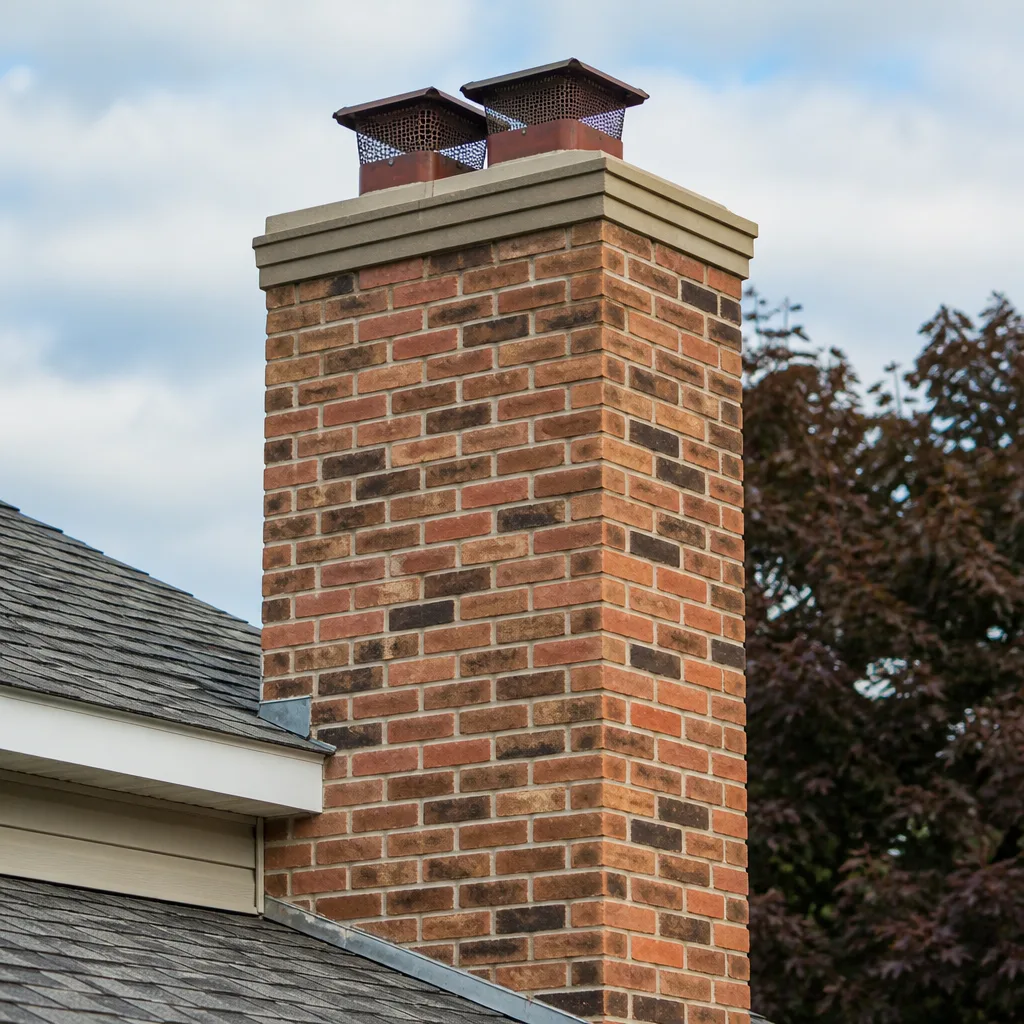 Masonry repair
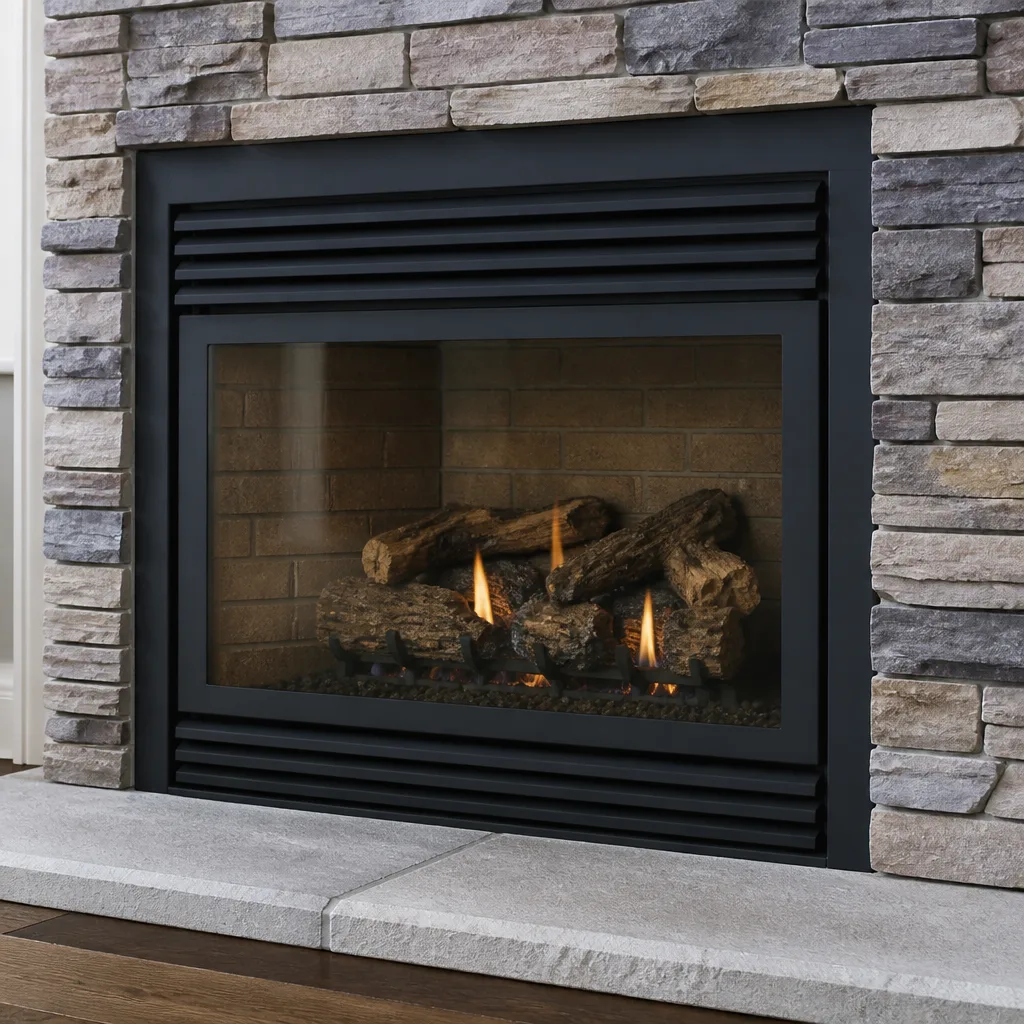 Gas fireplace service
Level 1 sweep and inspection to the NFPA 211 annual standard - flue, crown, cap, and flashing checked and photographed
Chimney sweep logs do not sweep chimneys. They loosen some creosote - which then falls where a brush and vacuum still have to collect it.
Chimney Cleaning Warning Signs: A Bolingbrook Homeowner’s Reference Guide
A white stain on your chimney exterior and a musty smell inside your firebox are both “warning signs.” But they point to completely different failure modes, and treating one does nothing for the other. Most Bolingbrook homeowners spot a symptom and guess at the cause. This guide teaches you to read the sign correctly, understand which component is failing, and avoid paying for work that misses the actual problem. For Chimney Sweep Troubleshooting: Common Problems and How to Fix Them, see our dedicated guide.
Quick Answer
Chimney warning signs in Bolingbrook homes fall into three categories: exterior moisture damage (cracked crowns, spalling brick, efflorescence), interior air-quality problems (creosote odor, mold smell, backdraft), and structural indicators inside the firebox (rust patterns, cracked refractory panels). Each sign points to a specific failing component, and identifying the component, not just the symptom, determines the correct repair path. Our Chimney Sweep Maintenance Checklist for Bolingbrook Homeowners can help you track these signs systematically.
Styles & brands we work with
Table of Contents
- Exterior Warning Signs: What Your Chimney’s Outside Is Telling You
- Interior Odors: Separating Creosote, Mold, and Backdraft
- Smoke Behavior Diagnostics: What Your Draft Is Saying
- The Firebox Floor and Back Wall: Rust Patterns and Heat Damage
- Hidden Signs: Water Damage in Living Spaces, Not at the Chimney
- Bolingbrook Climate Factors That Accelerate Chimney Deterioration
- Common Mistakes to Avoid
- When to Call a Professional
- Frequently Asked Questions
- The Bottom Line
Exterior Warning Signs: What Your Chimney’s Outside Is Telling You
The outside of your chimney is the first line of defense against water, and water is the enemy of every masonry structure in Illinois. When you walk around your Bolingbrook home and look up at the chimney, you’re looking at a system of components, each with a specific job. When one fails, the evidence shows up in predictable ways.
Here’s what we tell homeowners to look for, component by component.
Crown Cracking
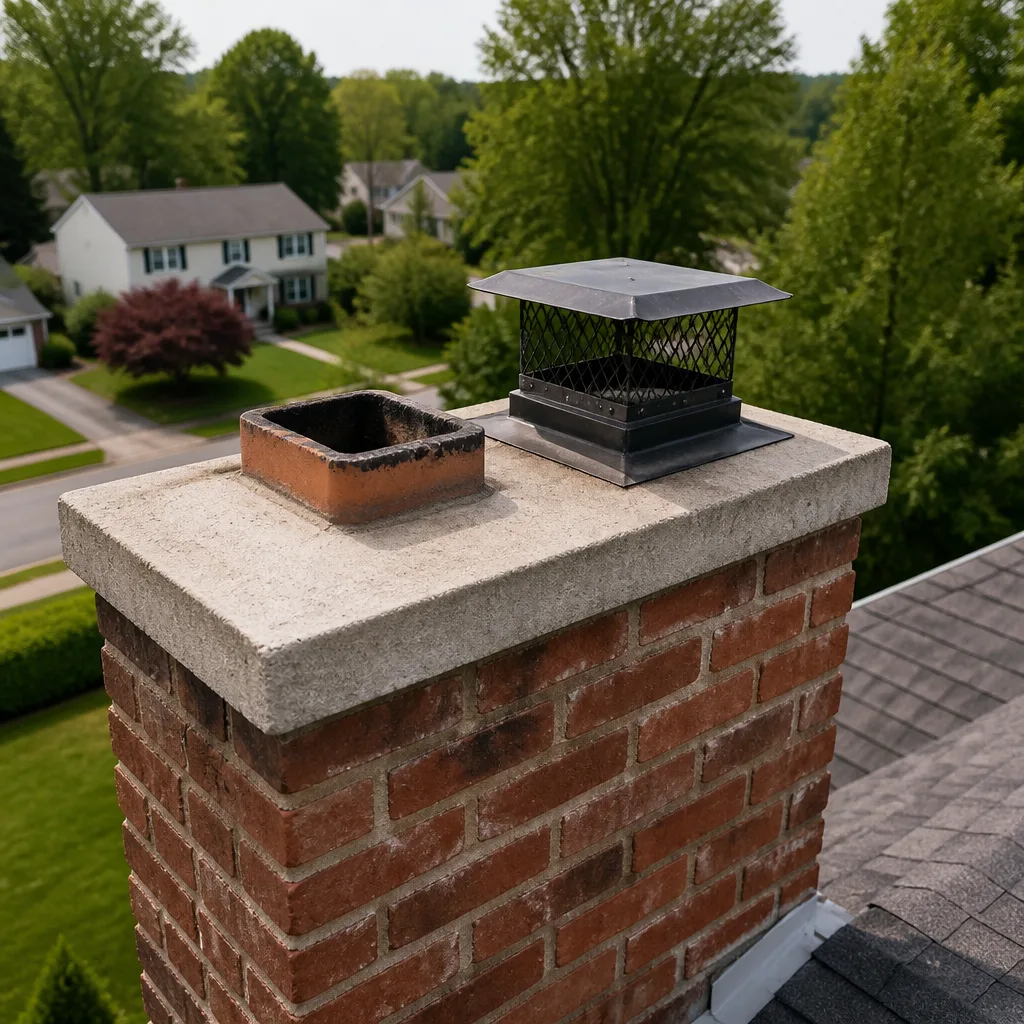
The crown is the concrete slab that caps the top of a masonry chimney. Its one job is to shed water away from the flue and onto the roof. When a crown develops hairline cracks, water seeps through and begins a freeze-thaw cycle that Bolingbrook winters make particularly punishing. Each winter, trapped water expands as it freezes, widening cracks and allowing more water to enter. A cracked crown shows up as small fissures visible from the ground, or as pieces of concrete found in the gutter or on the roof near the chimney.
Spalling Brick
Spalling is what happens when water penetrates the brick face, freezes, and pops the outer layer off. You’ll see brick fragments on the roof or ground, and the chimney face will show recessed areas where the brick face used to be. In Bolingbrook, older homes built in the 1960s and 70s often have chimneys with soft, absorbent brick that spalls faster than modern materials. Once spalling starts, it accelerates because the exposed inner brick is even more porous than the original face.
Failing Chimney Cap
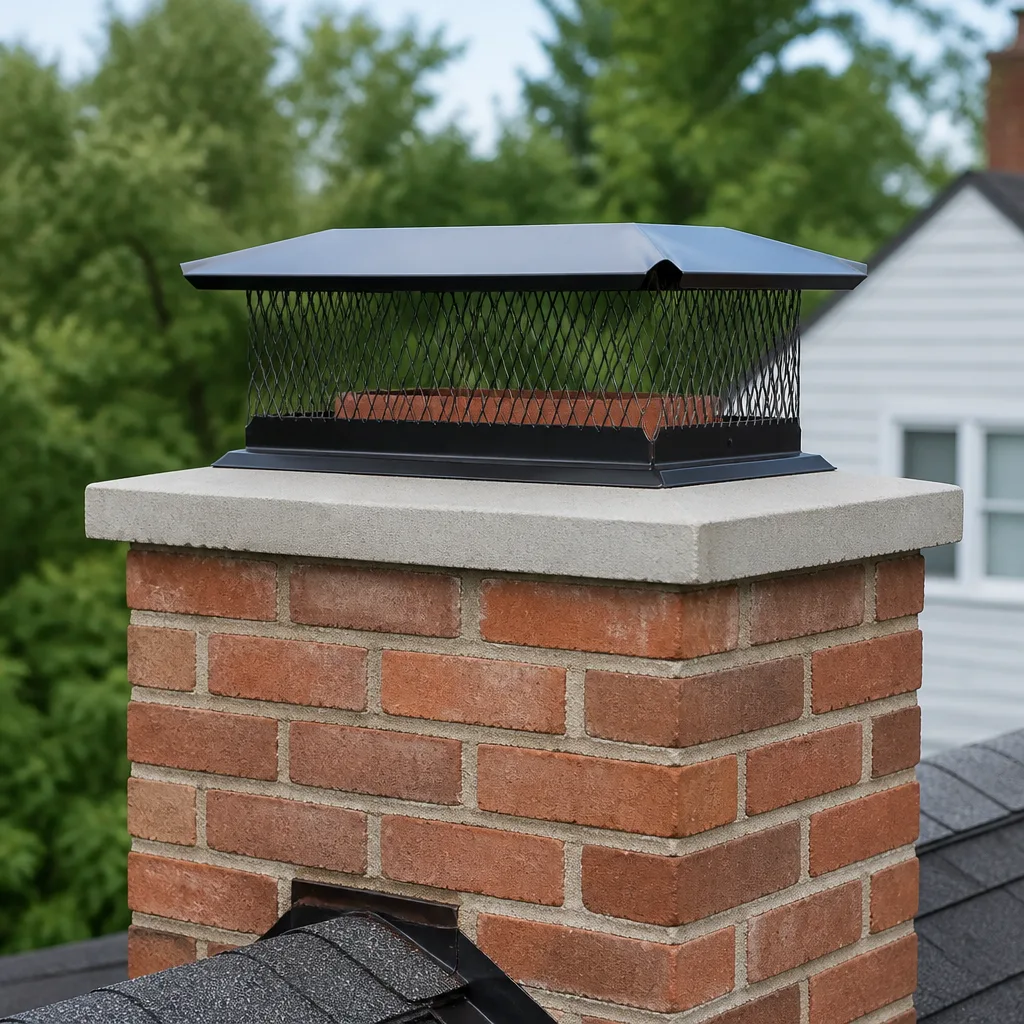
A chimney cap sits on top of the flue and keeps rain, snow, animals, and debris out. A failing cap is easy to spot: rusted metal, missing mesh sides, or a cap that’s partially detached. Without a functional cap, your flue becomes an open pipe for every Bolingbrook rainstorm. In our experience, a missing or damaged cap is the single most common cause of water damage we diagnose in fireboxes.
Efflorescence
That white, chalky stain on your chimney exterior has a name: efflorescence. It’s not a structural problem by itself, but it’s a diagnostic signal. Efflorescence forms when water enters the masonry, dissolves naturally occurring salts inside the brick and mortar, and carries them to the surface. When the water evaporates, the salts remain as a white deposit. If you see efflorescence on your Bolingbrook chimney, water is moving through your masonry. The stain tells you water is present; figuring out where it enters is the next step.
The exterior signs matter because they predict interior problems. Water that gets past the crown, through spalled brick, or around a failing cap eventually reaches the flue liner, the damper, and the firebox. By the time you smell it inside, the exterior damage has been underway for months or years.
Interior Odors: Separating Creosote, Mold, and Backdraft
Odors are the warning sign homeowners notice first, but many people misread them. Three distinct smells come from chimneys, and each means something different. Here’s how to tell them apart.
Creosote Odor
Creosote smells like a sharp, acrid, campfire smell, especially noticeable on humid days or after rain. It’s most common in wood-burning fireplaces and comes from creosote deposits inside the flue reacting to moisture. A heavy creosote smell usually means the flue needs cleaning, but it can also signal a bigger problem: a flue liner that’s allowing moisture to reach the creosote layer. Creosote is the substance responsible for most chimney fires, and its odor is a warning that buildup has accumulated beyond what a seasonal sweep should address.
Mold and Mildew Odor
Mold smells damp, musty, and earthy, like a basement that’s been closed up. If you smell this near your fireplace, water is entering somewhere and not drying out. Common entry points in Bolingbrook homes include a cracked crown, spalling brick, a failed cap, or missing flashing where the chimney meets the roof. Mold odor in a fireplace almost always means there’s a moisture source that needs to be fixed, not just cleaned. Treating the smell without addressing the water entry means the smell returns.
Combustion Backdraft Smell
A backdraft smell is a stale smoke or exhaust odor that appears when the fireplace isn’t in use, or that fills the room when you first light a fire. This isn’t about deposits in the flue. It’s about airflow. The chimney is designed to create an upward draft that carries combustion gases out. When indoor air pressure conditions in the home override that draft, exhaust gets pulled back into the living space. Common causes include an improperly sized flue, a clogged flue, a partially closed damper, or competing exhaust appliances like bathroom fans or a dryer running simultaneously.
If you can identify which of these three smells you’re experiencing, you can describe it accurately over the phone and get a faster diagnosis. “It smells like wet campfire” points to creosote. “It smells like a damp basement” points to water entry. “It smells like old smoke when the heat kicks on” points to draft reversal.
Smoke Behavior Diagnostics: What Your Draft Is Saying
How smoke behaves when you light a fire is a diagnostic tool. The draft system in your chimney follows physics, and when it’s working correctly, smoke rises vertically and exits the flue. When it isn’t, the specific failure pattern tells you what’s wrong.
Lateral Drift
Lateral drift is when smoke rises but leans or drifts sideways inside the flue, sometimes curling back toward the room. This usually indicates an obstruction in the flue, such as a bird nest, accumulated creosote, or fallen debris. In Bolingbrook, where spring and summer bring nesting birds and squirrels, fall is when homeowners discover these obstructions on the first fire of the season. Lateral drift can also indicate that the flue liner has cracked or shifted, creating a ledge that disrupts airflow.
Delayed Draw
Delayed draw is when you light a fire and smoke lingers in the firebox or enters the room for the first several minutes before the chimney starts pulling properly. This means the flue is cold, which is normal to some degree in a winter climate like Bolingbrook’s. But a persistent delay often points to an oversized flue that takes too long to warm, or a damper that isn’t opening fully. The fix depends on which: an oversized flue may need the liner sized down or insulated, while a damper problem is a mechanical repair.
Intermittent Backdraft
Intermittent backdraft is the most confusing smoke behavior because it comes and goes. One fire draws fine; the next fills the room with smoke. This usually means the chimney is competing with other air-moving equipment in the home. A running dryer, a bathroom exhaust fan, a kitchen range hood, even a furnace drawing combustion air, all create negative pressure inside the house. When that negative pressure exceeds the chimney’s draft, smoke gets pulled backward. In modern Bolingbrook homes that are tightly sealed for energy efficiency, this competition is more pronounced than in older, leakier houses. The fix often involves evaluating the home’s overall ventilation and possibly adding a combustion air source or adjusting the flue setup.
We’ve diagnosed more smoke problems in Bolingbrook homes than we can count, and the one constant is this: smoke behavior is a system-level symptom. The flue, the damper, the home’s air pressure, and the appliance all interact. Fixing just one variable often leaves the problem in place.
The Firebox Floor and Back Wall: Rust Patterns and Heat Damage
The interior of your fireplace holds warning signs that most homeowners never look for because they’re subtle. But the firebox floor and back wall are where water and heat leave their fingerprints.
Rust Patterns on the Firebox Floor
If you have a metal firebox or a fireplace insert, look at the floor of the firebox for rust patterns. Rust means water is getting in from above. But the pattern of the rust tells you more. A thin, even rust coating across the entire floor points to moisture entering through the flue opening, usually a failed cap. Concentrated rust in one corner or along one wall points to a localized water path, often a crack in the crown directly above that spot, or flashing that’s failing on one side of the chimney.
In Bolingbrook, where fall rain arrives just before freezing temperatures, rust in wood-burning fireplaces often increases from October through March. Water enters, sits in the firebox, and the freeze-thaw cycle does its work.
Condensation Rust in Gas Fireplaces
Gas fireplaces present a different rust pattern. If you see rust forming on the inside of a gas fireplace or insert even though the chimney crown and cap are in good condition, the likely culprit is condensation, not roof leaks. This happens when an oversized flue is venting a gas appliance. The flue is too large to warm properly, and the warm, moist exhaust from the gas flame hits cold flue walls and condenses. The resulting acidic water runs back down and rusts the firebox. This is a common finding in Bolingbrook homes where a wood-burning fireplace was converted to gas without addressing the flue size.
Cracked Refractory Panels
The back and side walls of a prefabricated or factory-built fireplace are lined with refractory panels, the white or gray panels that absorb and reflect heat. Hairline cracks in these panels are normal wear. But larger cracks, crumbling edges, or panels that have separated from the wall indicate that the fireplace has been over-fired or that water has compromised the panel material. A cracked refractory panel exposes the metal shell behind it to direct flame, which is a fire hazard. In our experience, a panel with a crack wide enough to fit a coin needs replacement, not patching.
Hidden Signs: Water Damage in Living Spaces, Not at the Chimney
Some of the most telltale chimney warning signs show up nowhere near the fireplace. They appear in rooms adjacent to the chimney chase or near the ceiling where the flue terminates. Because they look like ordinary household issues, homeowners misdiagnose them as roof leaks or plumbing problems, and the chimney keeps leaking.
Wall Staining Near the Chase
In Bolingbrook homes with a chimney chase (the framed enclosure that hides a factory-built chimney pipe), water that enters the chase often travels along the framing and shows up as brown or yellow staining on interior walls near the chimney. The chase itself is usually hidden behind drywall, so homeowners see the stain on an adjacent wall or ceiling and assume it’s a roof leak. It may be a roof leak, but if the stain is near the chase, the chimney should be checked too. A chase cover that’s rusted through, or a storm collar that’s slipped, allows water to run down the outside of the chimney pipe and into the chase, where it eventually reaches interior finishes.
Ceiling Discoloration Near the Flue Termination
When a chimney pipe passes through the ceiling and roof, water that gets past the flashing or the storm collar often travels down the outside of the pipe and soaks the ceiling around the penetration. The result is a circular or oval stain on the ceiling, sometimes with peeling paint or a soft spot. This is one of the most common misdiagnosed problems we see in Bolingbrook. The homeowner calls a roofer, the roofer re-seals the roof penetration, and the stain returns because the leak is actually at the chimney pipe’s storm collar or chase cover, above the roof line.
If you have water staining in any room near your chimney or along a wall adjacent to where the chimney runs, have the chimney inspected before assuming the roof is the problem.
Bolingbrook Climate Factors That Accelerate Chimney Deterioration
Bolingbrook sits in a climate zone that’s unusually hard on chimneys. Understanding why helps homeowners anticipate problems before a visual inspection reveals them.
First, we experience a wide temperature swing between seasons. Summer highs regularly reach the 80s and 90s, and winter lows routinely dip below zero. That’s a spread of nearly 100 degrees over the course of a year, and masonry expands and contracts with every degree. The stress accumulates in mortar joints and crowns, which develop hairline cracks that invite water.
Second, the freeze-thaw cycle here is relentless. A single Bolingbrook winter can produce 20 or more freeze-thaw events, where daytime temperatures rise above freezing and nighttime temperatures drop below it. Each cycle pushes trapped water deeper into brick and mortar as it freezes and expands. This is why crowns and brick faces that looked fine in September show visible cracking by March.
Third, our seasonal rain pattern concentrates moisture in spring and fall. Spring rain hits chimneys that have just endured winter, and fall rain arrives just before the freeze season begins. Water that enters in October doesn’t dry out until spring; it sits in the masonry and freezes repeatedly for months.
Finally, many Bolingbrook homes were built during the suburban expansion of the 1960s through the 1990s, and chimneys from that era often used materials that weren’t designed for modern expectations of longevity. Brick of that period is softer and more porous than today’s denser materials, and many original crowns were poured too thin and without proper overhang. If you own one of these homes and haven’t had the chimney inspected recently, assume the exterior components are approaching the end of their original service life. Our Choosing the Right Chimney Cleaning Brand: A Buyer’s Guide for Bolingbrook explains what to look for when selecting a service provider.
See the difference
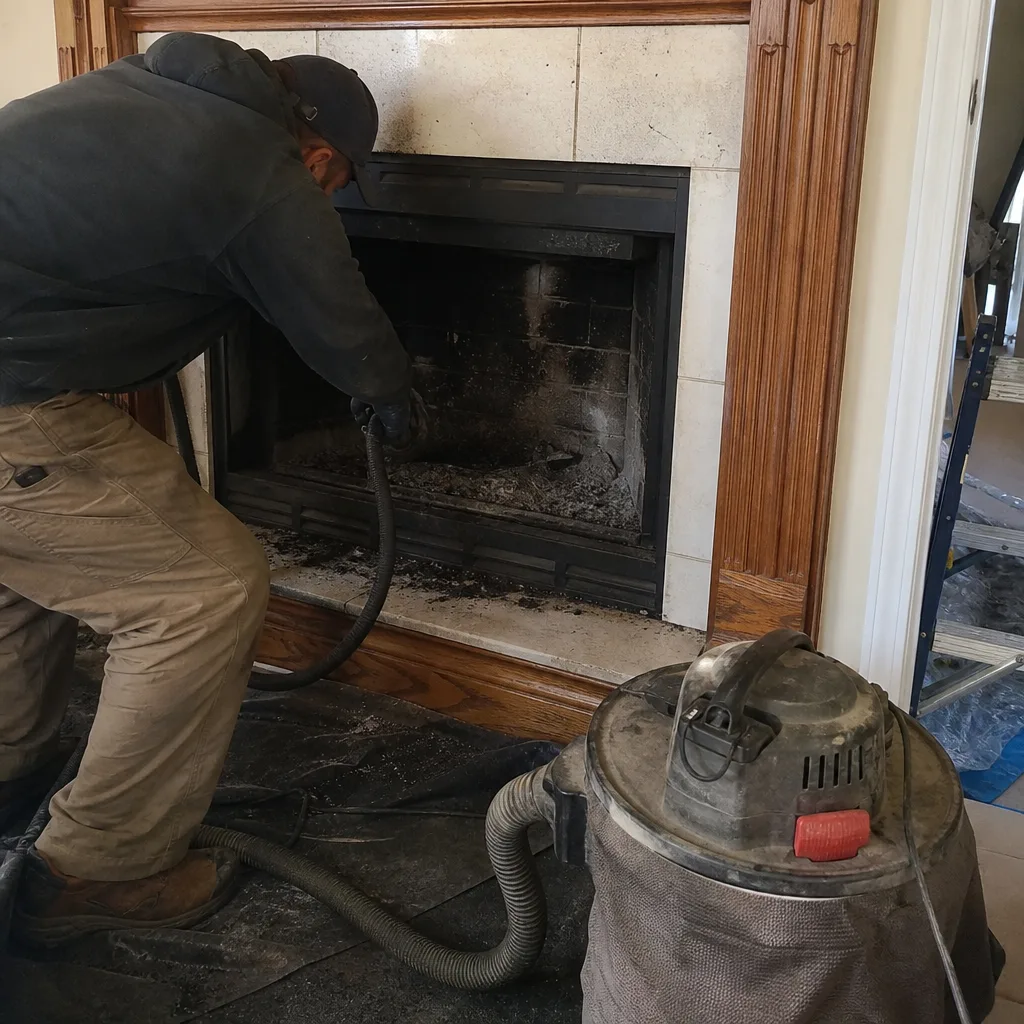 Before
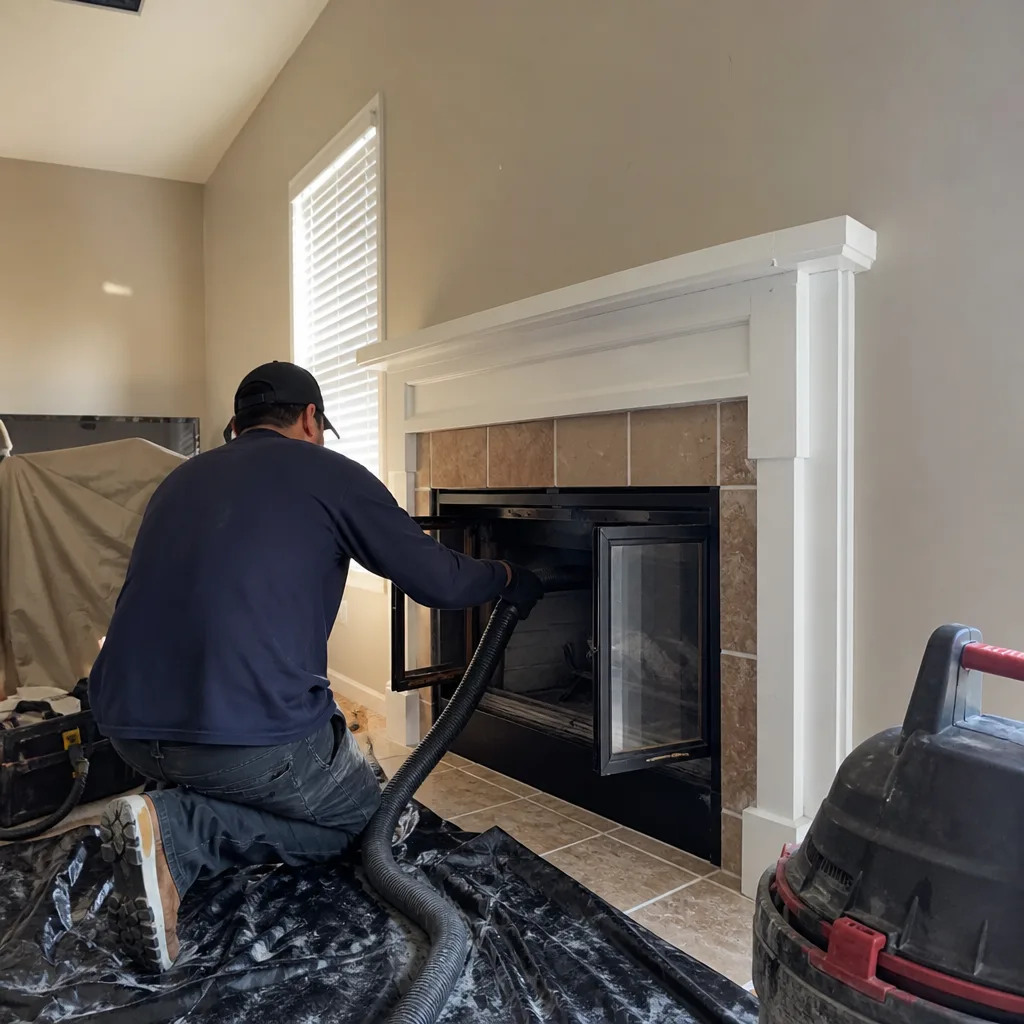 After
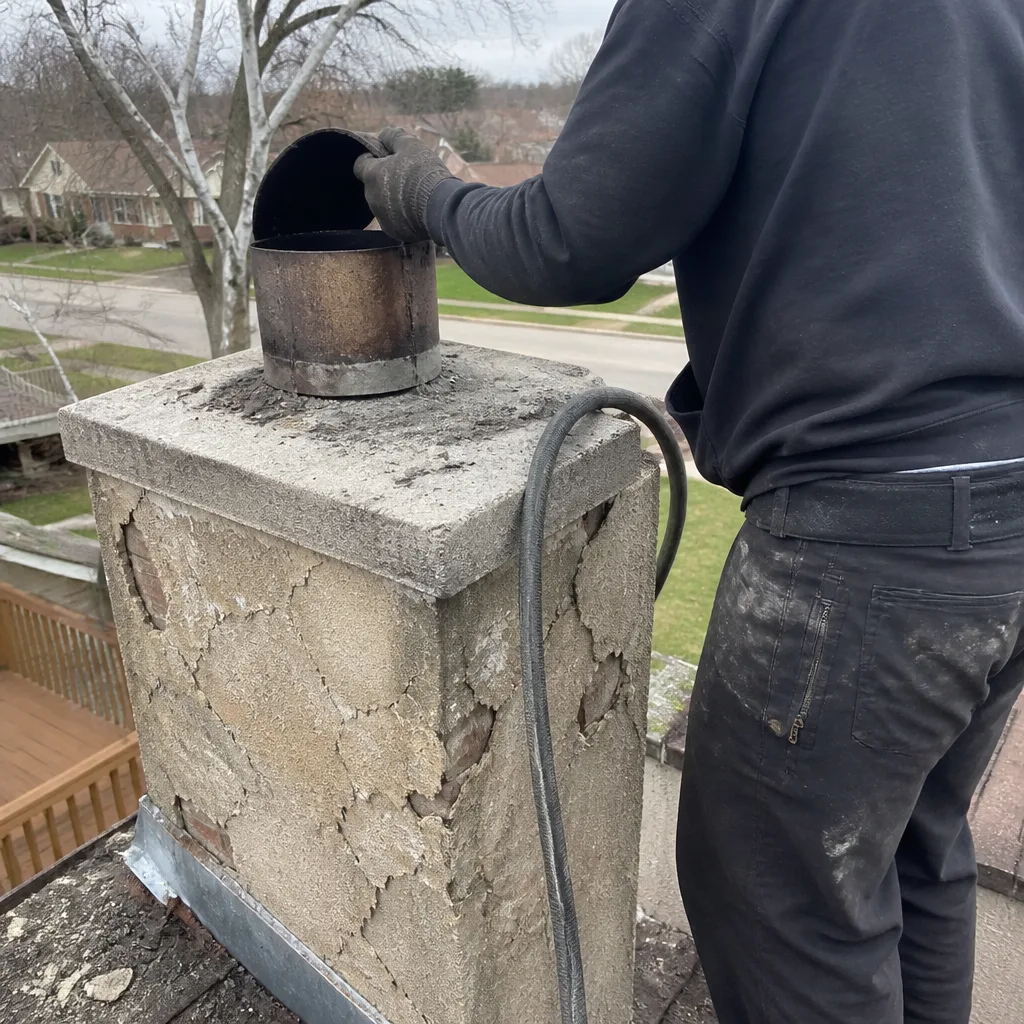 Before
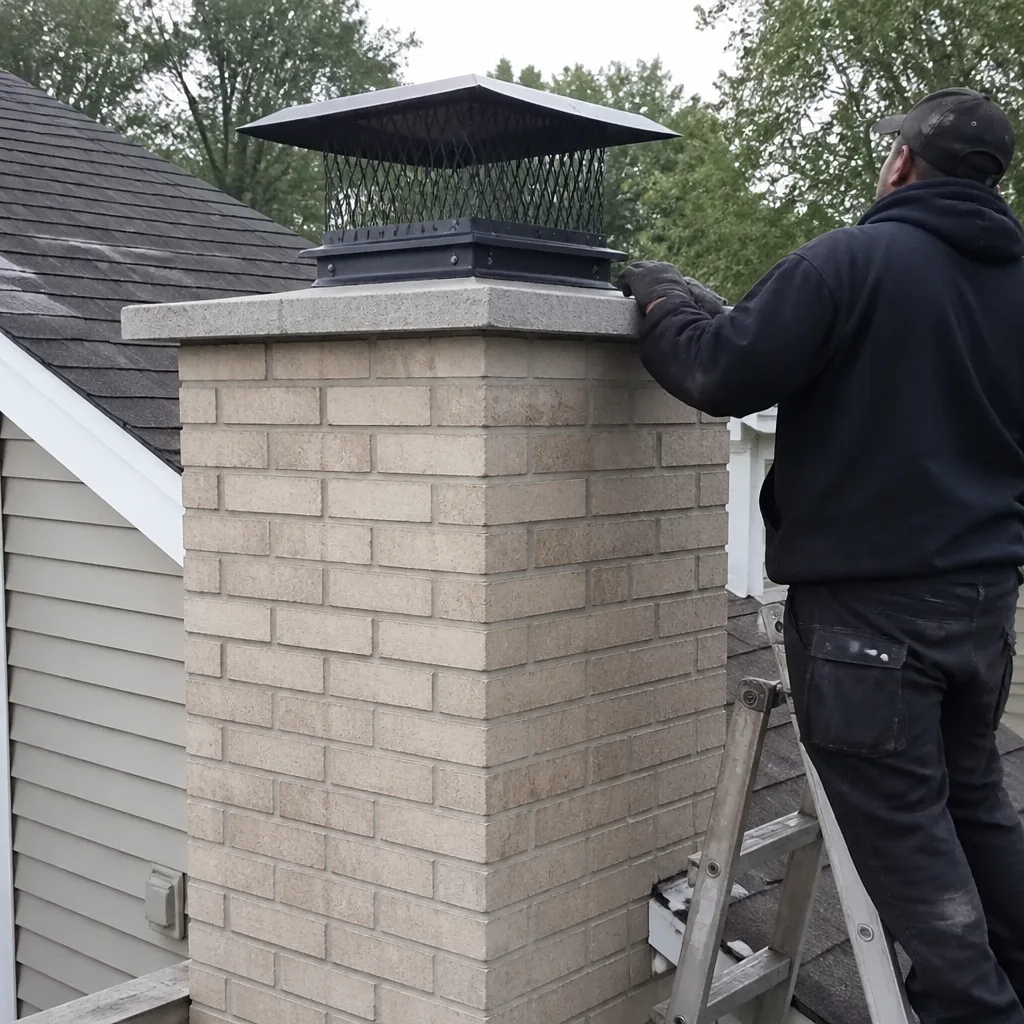 After
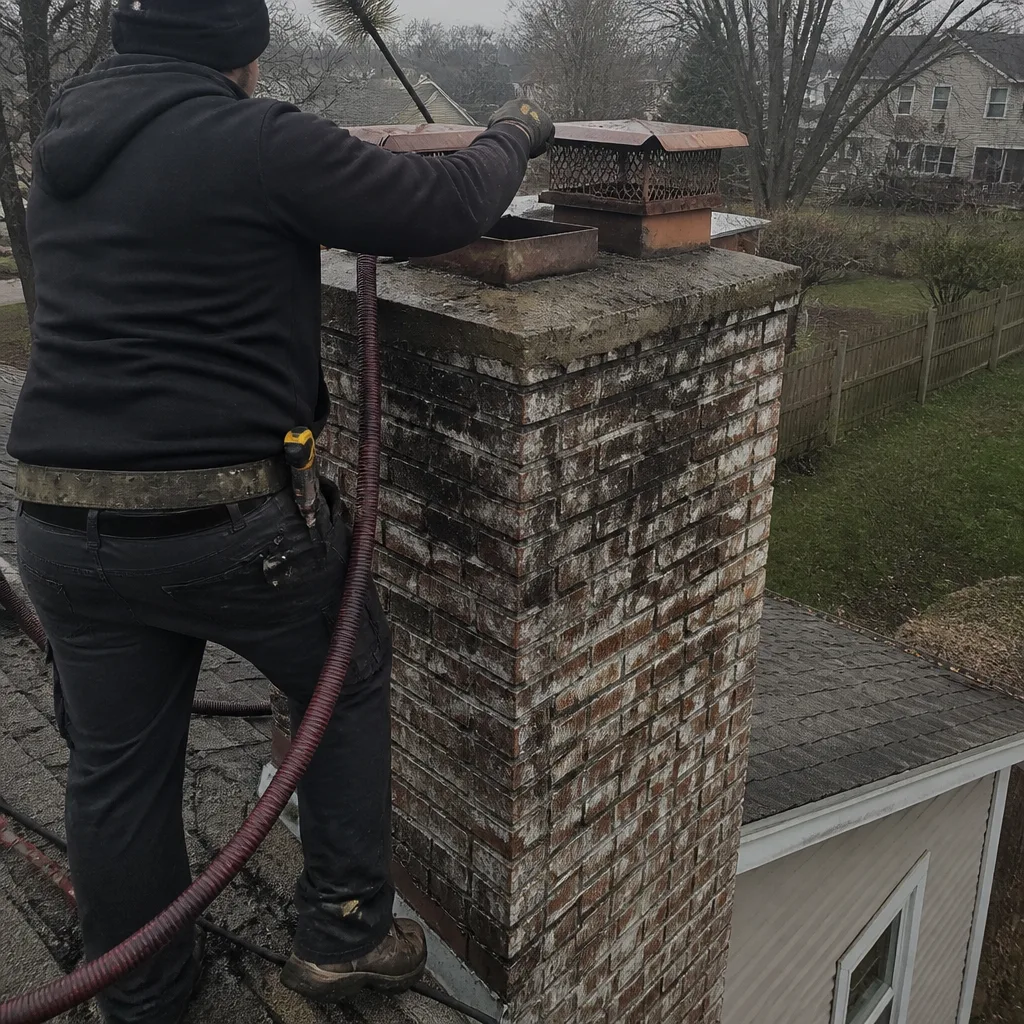 Before
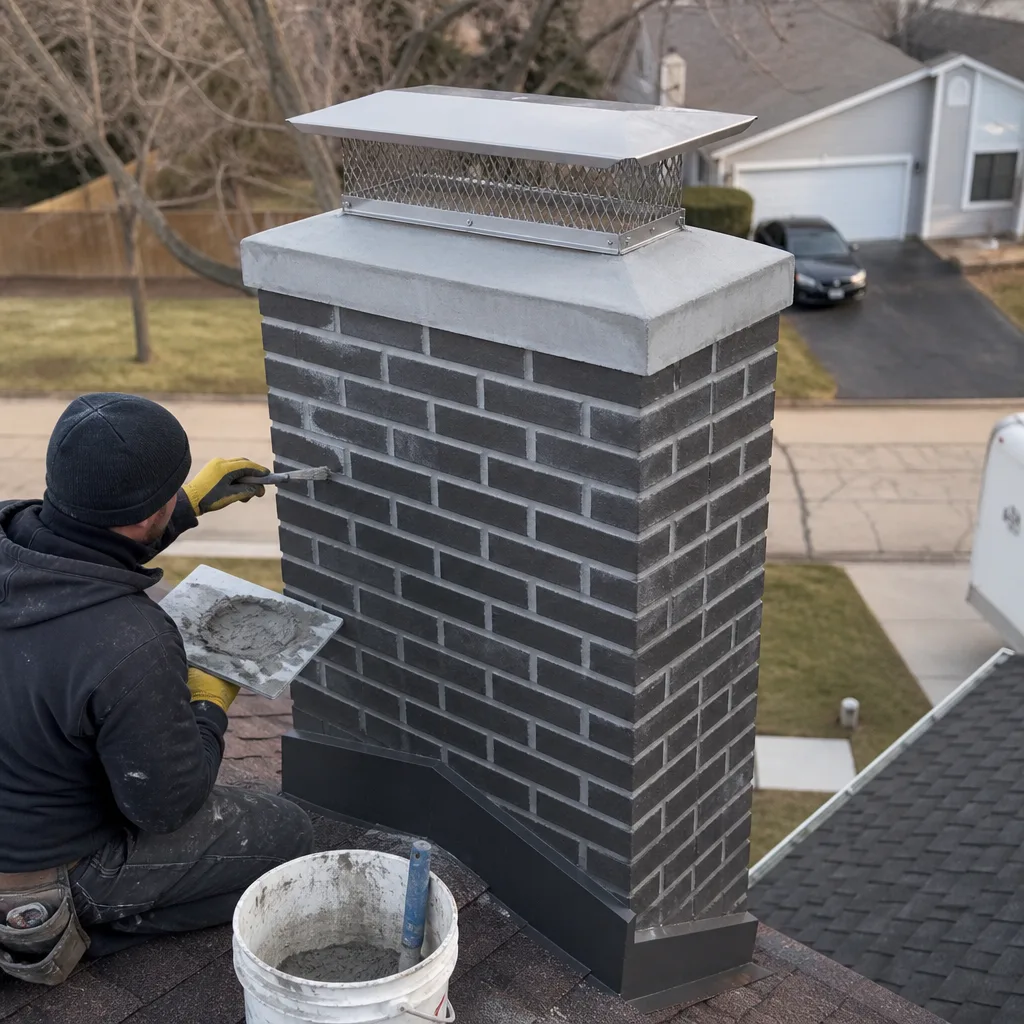 After
Step-by-Step: How to Perform a Basic Chimney Inspection From the Ground
You can spot many warning signs without climbing a ladder. Here’s a systematic approach we recommend to Bolingbrook homeowners.
- 1
Step back 30 feet. Stand in your yard where you can see the entire chimney from base to cap. Look for leaning, cracks you can see from a distance, or missing bricks.
- 2
Look at the crown and cap. If you can see the top of the chimney from the ground, check for cracked concrete, a rusted or missing cap, or vegetation growing out of the masonry joints.
- 3
Examine the brick face. Look for spalled areas where the brick face is missing, white efflorescence deposits, or crumbling mortar joints. Run your eye down every face of the chimney.
- 4
Check the flashing. Where the chimney meets the roof, look for gaps, lifted flashing, or rusted metal. Flashing failure is one of the most common water entry points.
- 5
Look at the surrounding roof. Are there shingle granules or concrete fragments near the chimney? This debris often signals crown deterioration or brick spalling.
- 6
Go inside and examine the firebox. Look at the floor for rust patterns, at the back wall for cracked panels, and at the damper for rust or misalignment.
- 7
Smell the firebox. A sharp campfire smell suggests creosote. A musty smell suggests water. A stale smoke smell suggests backdraft.
- 8
Check adjacent rooms. Look at walls and ceilings near the chimney chase for staining, peeling paint, or soft spots.
This ground-level inspection takes 10 minutes and catches the majority of warning signs a professional would find. For more guides & resources on chimney care, visit our blog. If anything on this list turns up a result you can’t explain, that’s the signal to schedule a professional evaluation.
What Each Warning Sign Actually Costs to Fix
Understanding what a warning sign leads to, in terms of repair scope and cost, helps you prioritize. Here are typical fix ranges in the Bolingbrook market. Costs vary by chimney height, accessibility, and material condition, but these ranges reflect what we typically see.
- Chimney cap replacement: $150 to $400 including installation. A missing or rusted cap is the cheapest fix that prevents the most expensive problems.
- Crown repair (patch): $300 to $700. Patching works for minor cracking. A crown that’s severely deteriorated needs a full recast.
- Crown rebuild: $1,200 to $2,500. A full pour with proper overhang and expansion joint.
- Brick spalling repair (spot tuckpointing): $500 to $1,500 depending on the number of bricks and accessibility.
- Chimney sweep and inspection: $200 to $350 for a standard cleaning in Bolingbrook.
- Flue liner repair or resurfacing: $2,500 to $6,000 depending on the method. A HeatShield application can restore liner integrity at a lower cost than full replacement in many cases.
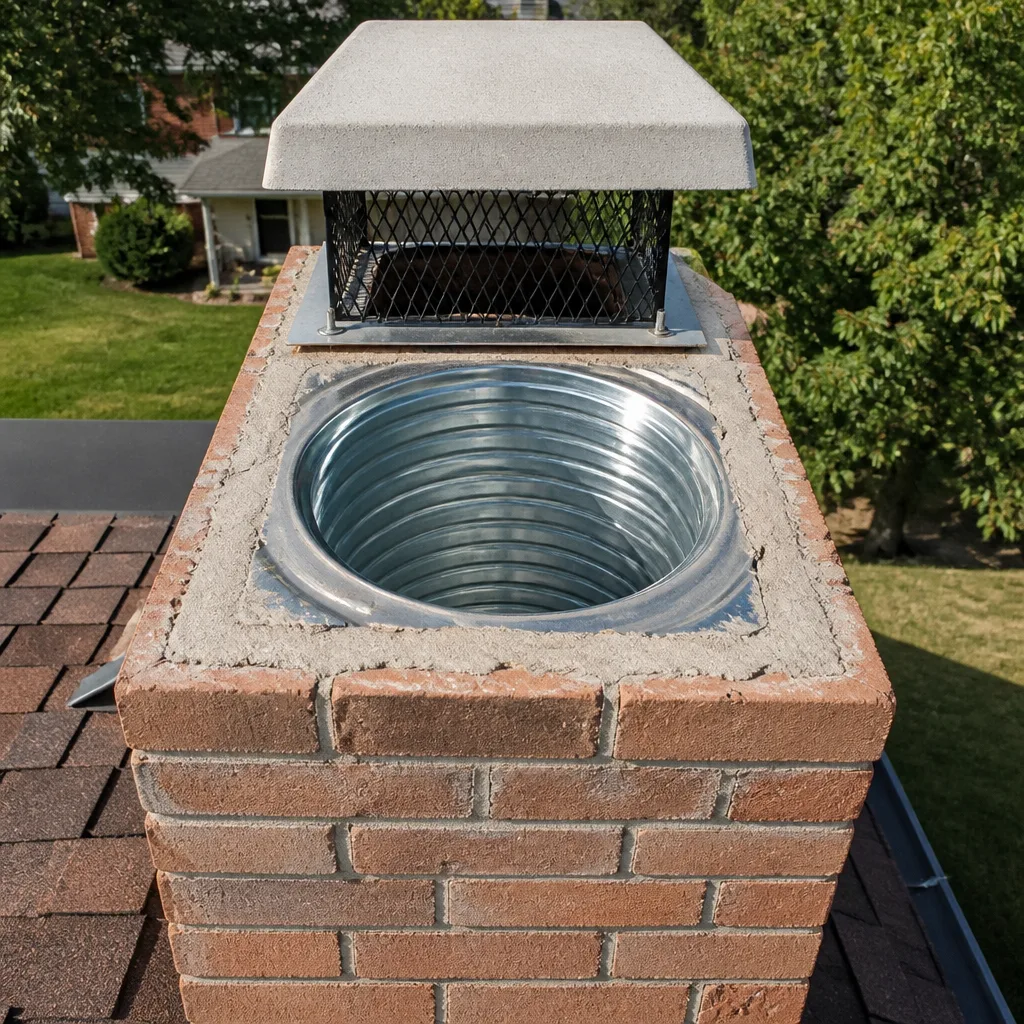
- Full flue reline: $4,000 to $10,000 depending on the liner material and chimney height. A DuraFlex flexible liner is often the right solution for older or offset chimney geometries.
- Refractory panel replacement: $300 to $900 per panel including labor.
- Dryer vent cleaning (related fire-risk venting): $100 to $200 in the Bolingbrook market. This is the venting system most homeowners never think about until it becomes a fire hazard.
These are ballpark numbers to help you understand scope. Exact pricing requires seeing the chimney, which is why Summit Peak Chimney Sweep home offers free estimates on all repair work.
Common Mistakes to Avoid
- Treating efflorescence with a wire brush and sealer. Efflorescence is a symptom of water movement, not a surface cosmetic issue. Removing the stain and sealing the brick traps water inside the masonry, which then freezes and spalls. Find the water source first.
- Ignoring a musty firebox smell because the fireplace “dries out” in summer. Water that enters in fall and spring doesn’t dry out fully in a Bolingbrook summer. The moisture is still working on your mortar and liner, even when the smell fades.
- Assuming a smoke-back problem means the flue is dirty. Smoke entering the room is often a draft or pressure problem, not a buildup problem. A cleaning won’t fix a negative-pressure backdraft caused by competing exhaust appliances.
- Patching a ceiling stain without checking the chimney. The most common misdiagnosed chimney leak in Bolingbrook shows up as a ceiling stain near the flue penetration. The roofer gets called, the flashing gets resealed, and the stain returns because the actual leak is at the storm collar or chase cover.
- Converting a wood fireplace to gas without evaluating flue size. A flue sized for wood combustion is often oversized for a gas appliance, which leads to condensation, rust, and liner damage. The conversion needs a flue evaluation, not just an appliance swap.
- Delaying a crown repair because the crack “looks small.” A hairline crown crack in October is a structural problem by March. Freeze-thaw cycles widen it relentlessly. Crown cracks never self-heal; they only get more expensive.
- Using a wood-burning fireplace heavily without scheduling an annual sweep. Creosote accumulates with every fire. In a Bolingbrook winter, where fires burn for months, a single season can produce enough creosote to sustain a chimney fire.
When to Call a Professional
Some warning signs are informational; some require immediate professional attention. Call a chimney specialist if you see spalling brick with missing faces, a cracked or visibly deteriorated crown, rust on a gas fireplace interior, water staining on ceilings or walls near the chimney, or if you smell a strong creosote odor that persists after cleaning the firebox. Smoke entering the room on multiple occasions, or a fire that requires constant attention to keep drawing, also warrants a professional evaluation. If you’ve spotted any warning sign described in this guide and you’re not certain what it means, get it checked before the next burn season. Summit Peak Chimney Sweep offers free estimates in Bolingbrook. Call (855) 382-3714 and we’ll diagnose what’s actually failing, not just clean and walk away.
Frequently Asked Questions
The National Fire Protection Association recommends a chimney inspection at least once a year, and a sweep whenever creosote buildup reaches 1/8 inch. For Bolingbrook homeowners who burn wood regularly through the winter, an annual sweep in late summer or early fall, before burn season begins, is the right cadence. Gas fireplaces need less frequent sweeping but still benefit from an annual inspection to check the venting system for condensation damage and blockage. Call (855) 382-3714 to schedule a sweep; we’ll give you an honest read on whether it’s needed now or can wait.
Many flue liners that look like they need full replacement can be resurfaced instead. A HeatShield application can restore the integrity of a deteriorated flue liner by coating the interior with a ceramic material, which is often less expensive and less invasive than a full reline. The decision depends on how much of the original liner remains structurally sound. We evaluate this with a camera inspection and show you the footage so you can see exactly what we’re recommending and why. If a full reline is genuinely necessary, we carry DuraFlex flexible liner systems, which handle older or offset chimneys that rigid liners can’t accommodate.
Creosote accumulates on the flue walls with every wood fire. Creosote is flammable, and when it ignites, the resulting chimney fire can reach temperatures high enough to crack flue liners, damage the chimney structure, and spread to the home’s framing. In a gas fireplace, skipping inspection allows condensation damage and corrosion to progress undetected, which can lead to carbon monoxide leakage into the living space. The risks are specific and preventable. A sweep costs less than any repair, and far less than a fire. Call (855) 382-3714 to get on the schedule before burn season.
A musty fireplace smell in summer means water has entered the chimney and is sitting in the masonry or firebox. Common sources in Bolingbrook include a cracked crown, spalling brick, a failed cap, or deteriorated flashing. The smell often becomes more noticeable in humid summer weather because the moisture in the chimney doesn’t fully evaporate. The fix is to find and seal the water entry point, not just to deodorize the firebox. Call (855) 382-3714 and we’ll trace the water path and show you what we find.
We handle dryer vent cleaning as a core service, not an add-on. A dryer vent is a chimney you never think about, and it’s one of the leading causes of house fires in American homes. Our dryer vent work uses Famco products and the same diagnostic approach we apply to chimneys: we inspect, we show you what we find, and we clean the full vent run. Handling chimney and dryer venting through one specialist means one call for both of the fire-risk venting systems in your home. If you’re in the Naperville area, you can learn more on our Dryer Vent Cleaning in Naperville page.
A standard chimney sweep and inspection in Bolingbrook typically runs $200 to $350, depending on the chimney’s height, accessibility, and the level of creosote buildup. If the inspection uncovers repair needs, we quote those separately and always show you the camera footage or photos that justify the recommendation. We don’t upsell work that isn’t needed, and we don’t recommend a liner replacement when resurfacing will do. For an exact quote, call (855) 382-3714. Estimates are free.
The Bottom Line
Chimney warning signs are readable if you know which component to look at. Exterior stains, interior odors, smoke behavior, and firebox rust each point to a specific failure mode, and fixing the right one is what prevents the problem from returning. In Bolingbrook’s freeze-thaw climate, water entry compounds quickly, and a small crack in October becomes a structural repair by March. If you spot a warning sign you can’t fully explain, get a professional diagnosis before the next burn season. Chimney Sweep in Naperville area homeowners trust us for the same reason Bolingbrook homeowners do: we diagnose, we show you what we find, and we carry the materials the job actually needs, from HeatShield to DuraFlex to Famco. For Chimney Repair in Naperville or here in Bolingbrook, call (855) 382-3714 and we’ll walk your chimney with you, component by component.
Written by the team at Summit Peak Chimney Sweep, serving Bolingbrook since 2018.