
Last updated October 30, 2026
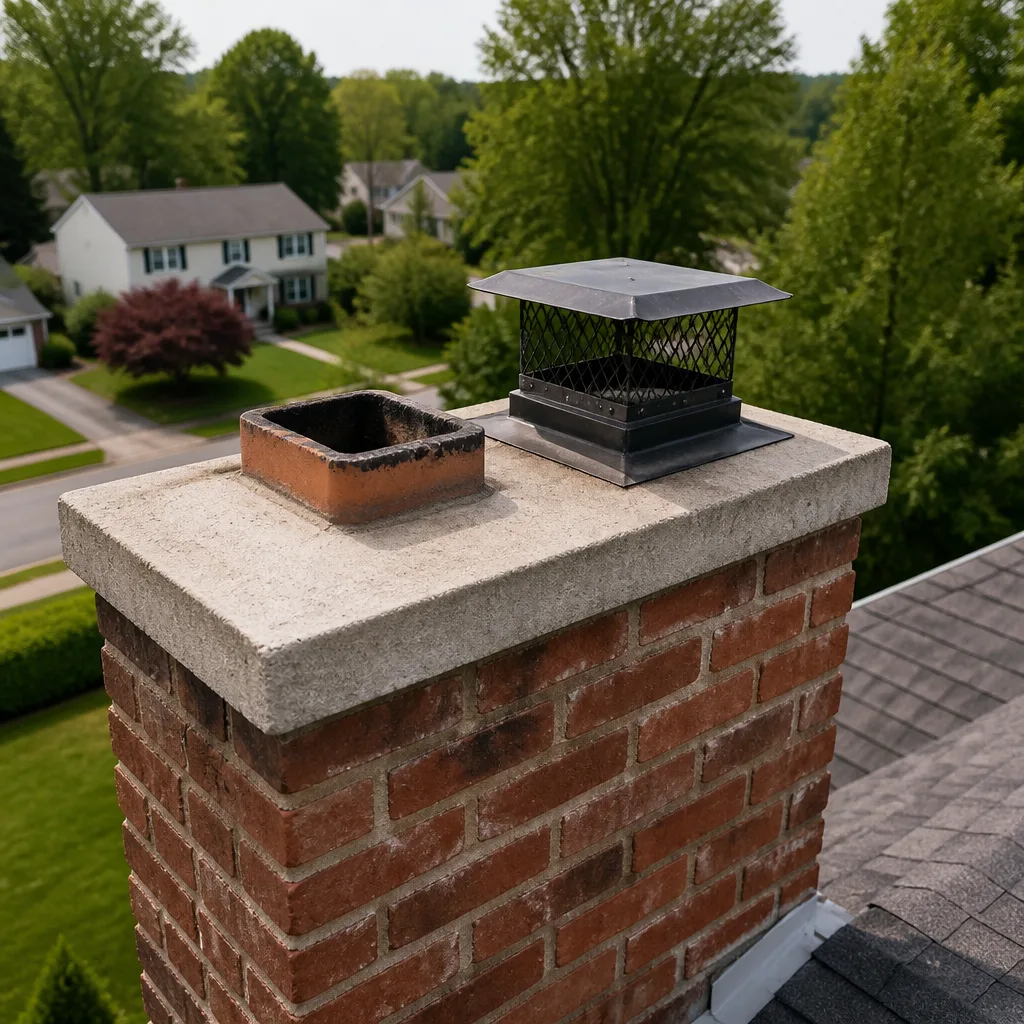 Sweep & inspection
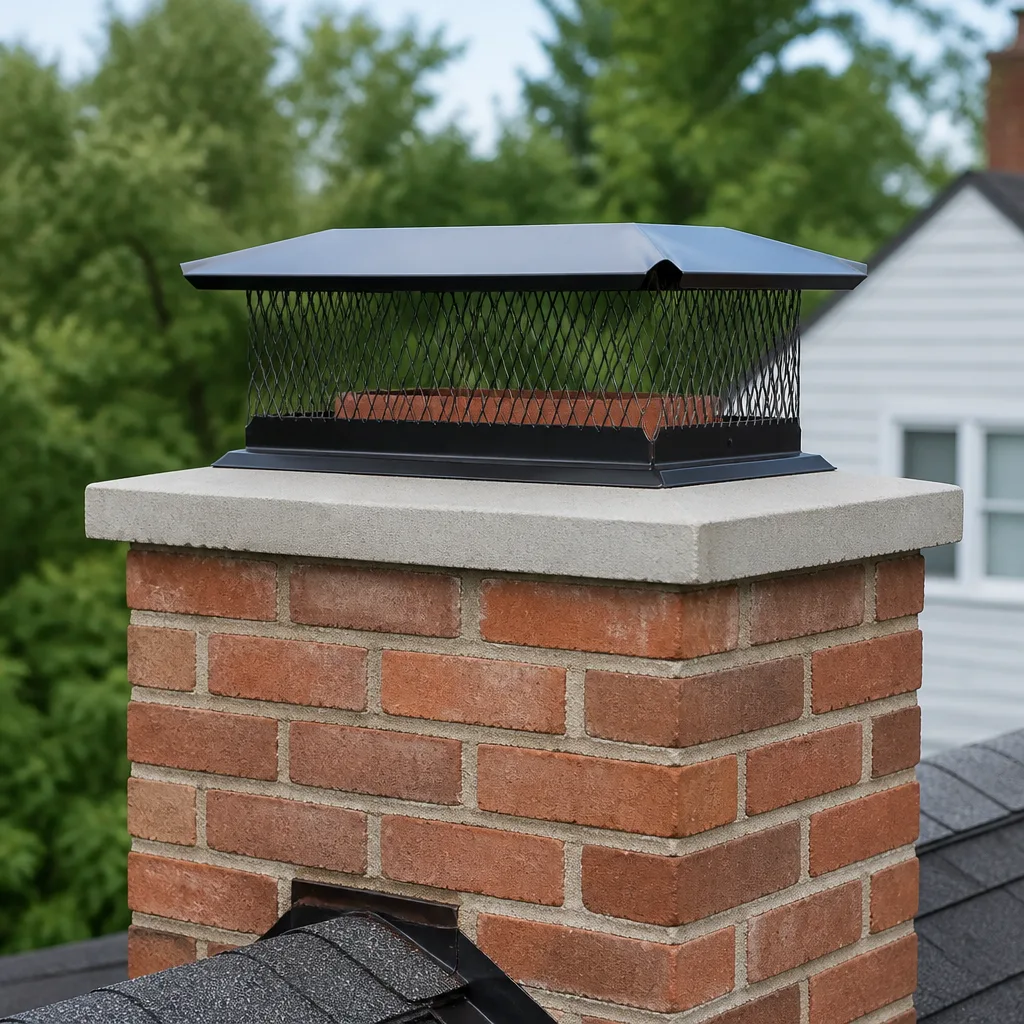 Caps & crowns
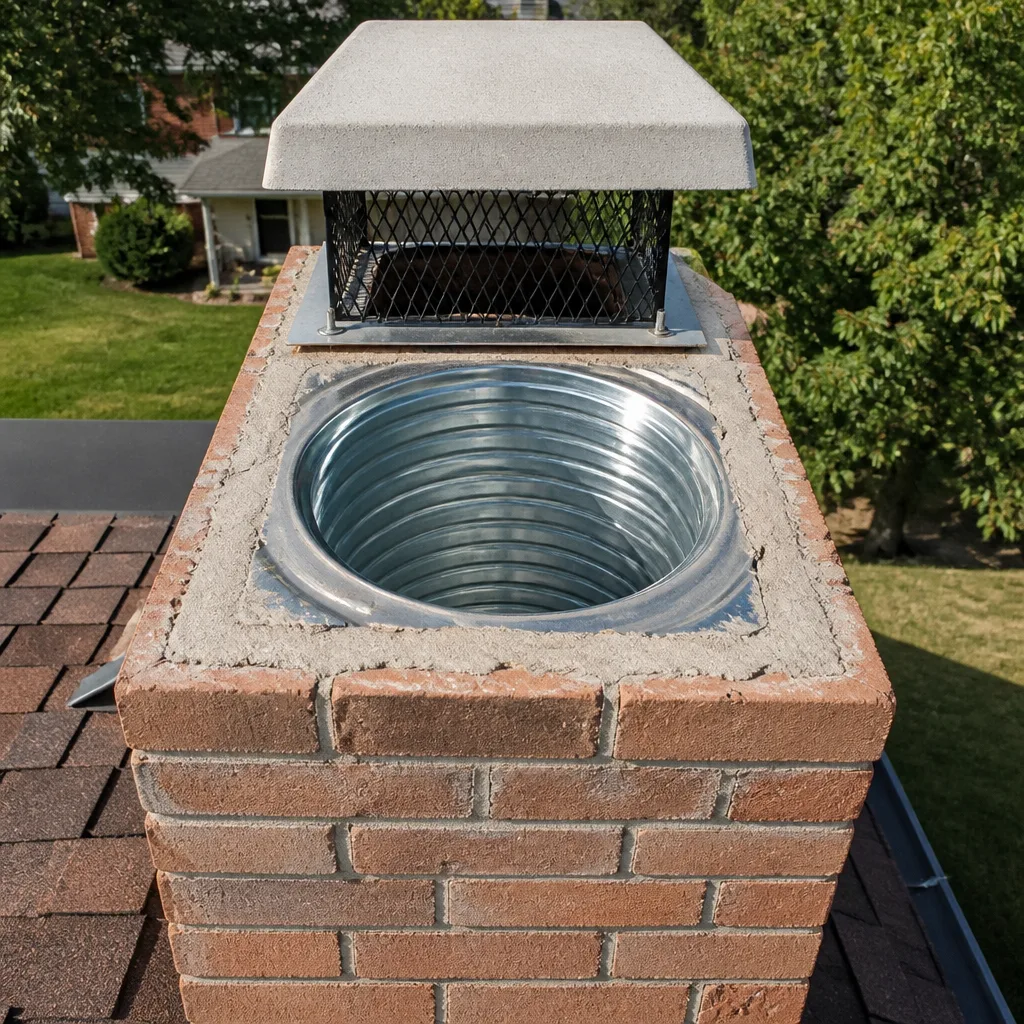 Flue relining
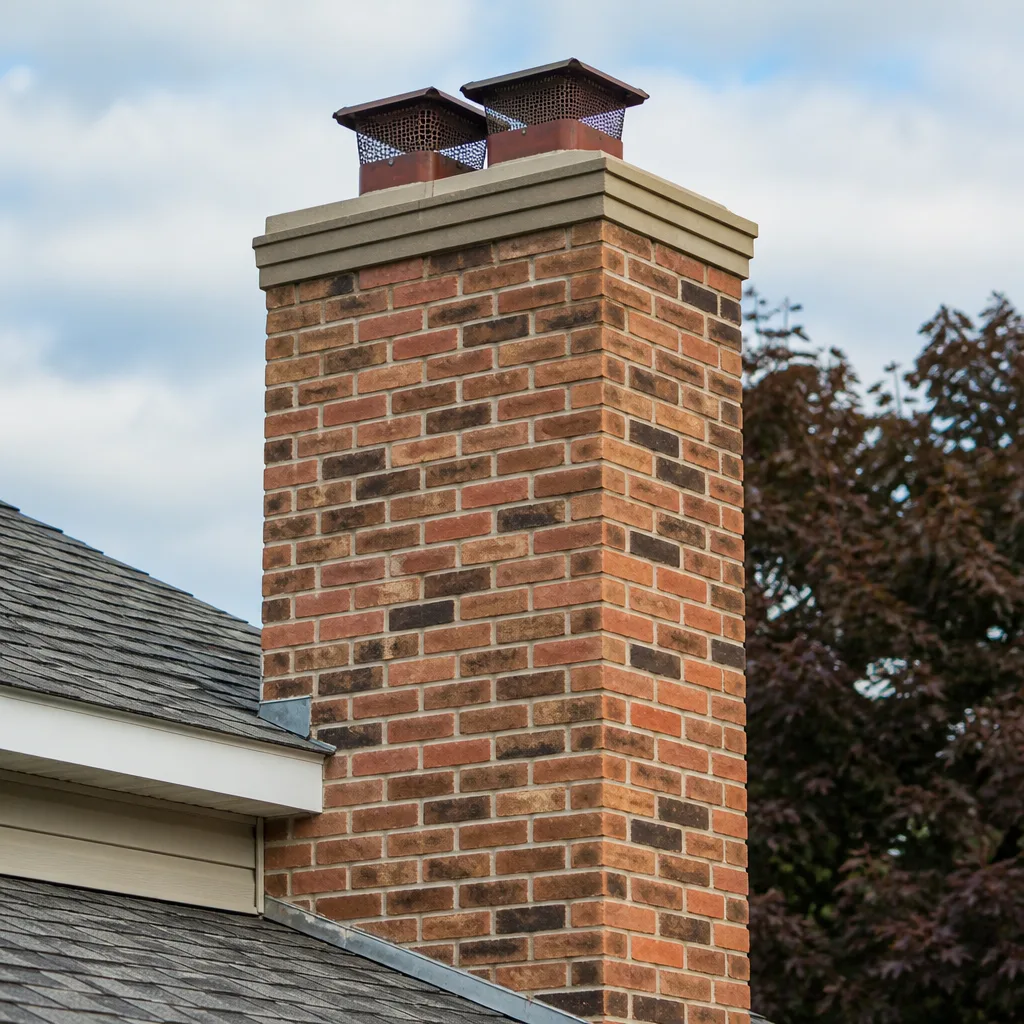 Masonry repair
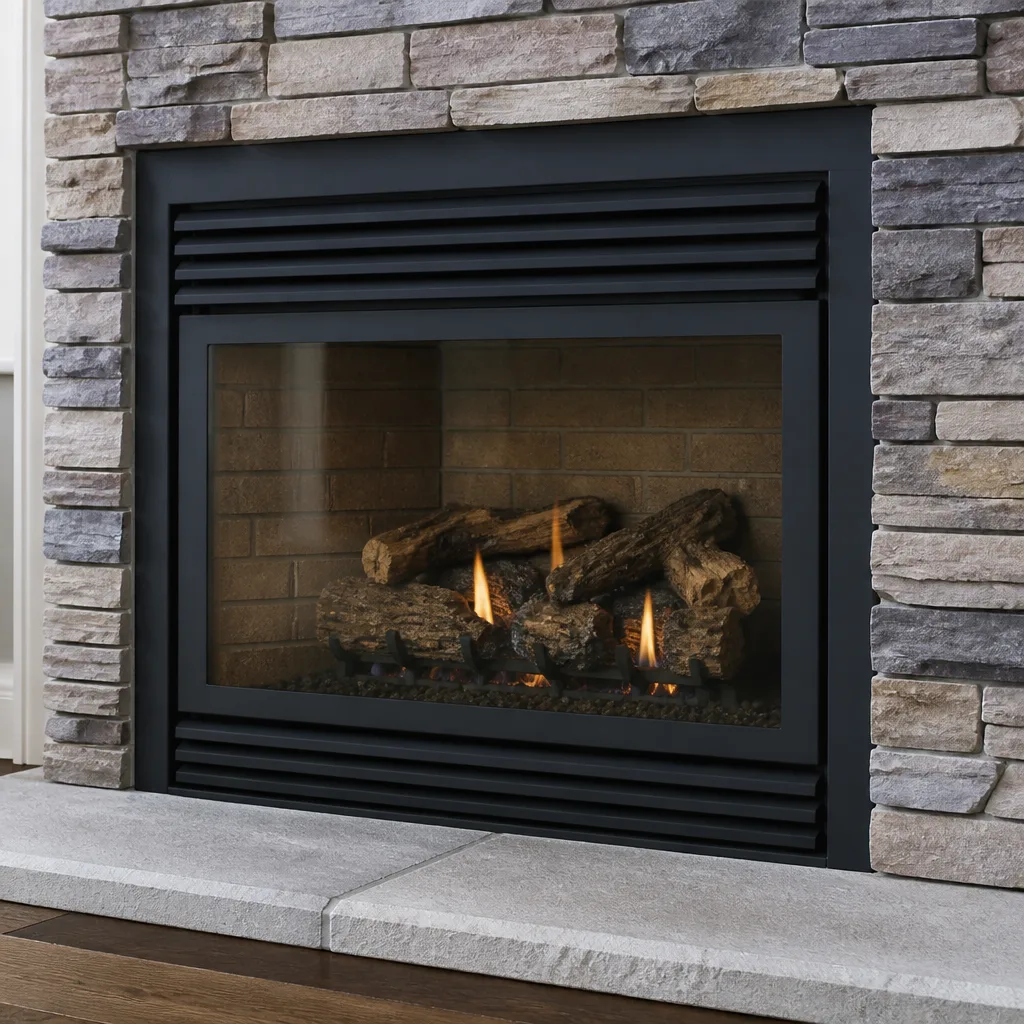 Gas fireplace service
Level 1 sweep and inspection to the NFPA 211 annual standard - flue, crown, cap, and flashing checked and photographed
Chimney sweep logs do not sweep chimneys. They loosen some creosote - which then falls where a brush and vacuum still have to collect it.
Chimney Sweep Maintenance Checklist for Bolingbrook Homeowners
Most published chimney checklists are written in alphabetical order or by season. Neither has anything to do with how chimney systems actually fail. A cracked flue liner doesn’t care whether it’s April or October, and a failing crown doesn’t wait for a convenient Saturday. This guide builds a maintenance checklist for Bolingbrook homeowners structured around failure priority: the order in which neglect actually costs you money, damages your home, or puts your family at risk. For Choosing the Right Chimney Cleaning Brand: A Buyer’s Guide for Bolingbrook, see our companion resource. We’ll cover what to inspect first, what you can evaluate yourself, what to document before calling a pro, and when “wait and see” is a defensible strategy versus a dangerous gamble.
Quick Answer
A proper chimney maintenance checklist for Bolingbrook homeowners prioritizes flue liner integrity first, then crown and cap condition, then damper function, then creosote accumulation. Wood-burning fireplaces need annual sweeping and inspection; gas inserts and oil-fired appliances follow different cadences but still require professional eyes on the venting system at least once a year. The freeze-thaw cycles Bolingbrook experiences every winter (typically 40 to 60) make masonry inspection the highest-consequence item on the list.
Styles & brands we work with
Table of Contents
- 1. Flue Liner Integrity: The Highest-Consequence Item
- 2. Crown and Cap: Your Chimney’s Umbrella
- 3. Damper Function: The Component Most Homeowners Ignore
- 4. Creosote Levels: Sweep by Measurement, Not by Calendar
- 5. Bolingbrook’s Freeze-Thaw Cycle and Masonry Spalling
- 6. What to Document Before a Professional Arrives
- 7. Maintenance Intervals by Fuel Type
1. Flue Liner Integrity: The Highest-Consequence Item
If you only do one thing on this checklist, do this one. The flue liner is the barrier between combustion gases and the combustible materials inside your walls. When a liner cracks, delaminates, or deteriorates, heat and carbon monoxide can enter wall cavities, chase spaces, and living areas. No other single chimney component failure carries the same combination of fire risk and carbon monoxide exposure.
Clay tile liners, common in Bolingbrook homes built before the 1990s, fail predictably. The tiles crack from thermal stress: rapid heating and cooling causes expansion and contraction that clay has limited tolerance for. A chimney fire will crack tiles almost every time. Over years, the mortar joints between tiles erode from acidic flue gas condensation, especially in oil-fired systems. The result is a liner that looks intact from the top but has significant gaps and fissures lower in the flue you cannot see from the firebox.
What you can check yourself:
- Shine a bright flashlight up from the firebox and look for cracks, gaps, or discoloration in the lower section of the liner.
- Check for pieces of tile or mortar accumulating in the firebox or at the base of the chimney cleanout.
- After a rain, check for water streaks or efflorescence on the chimney breast walls inside the house, which often signals liner or crown failure.
- If you have an older home with an unlined chimney (common in Bolingbrook houses from the 1950s and earlier), treat it as requiring a liner before any active use, period.
What a professional evaluates: a video scan of the entire flue length tells us exactly what we’re dealing with. This is the difference between a guess and a diagnosis. We look for spalled tiles, missing mortar, liner offset at joints, and any narrowing that would restrict draft. When we find deterioration, the repair decision depends on severity. For many Bolingbrook homes, a HeatShield resurfacing restores liner integrity without a full teardown. HeatShield is a ceramic refractory system that coats the existing flue walls, sealing cracks and restoring a smooth, insulated surface. It extends liner life significantly and costs substantially less than a full reline.
When damage is beyond resurfacing (severe spalling, collapsed sections, or a chimney fire that structurally compromised the tiles), a full reline is the answer. We keep DuraFlex flexible liner systems on hand for this work. DuraFlex is the same liner material professional chimney contractors specify nationwide for complex or offset chimneys. Older Bolingbrook chimneys with unusual geometry, offsets, or narrow flues sometimes defeat less-equipped contractors; the right flexible system makes a proper reline possible without demolishing the chimney.
Do not defer liner evaluation. A “clean bill of health” from a sweep ten years ago tells you nothing about what the liner looks like today.
2. Crown and Cap: Your Chimney’s Umbrella
Water is the enemy of every masonry system, and the crown is the first line of defense. A properly built crown extends beyond the chimney edge and directs water away from the flue and brickwork. A cracked, spalling, or improperly sloped crown lets water into the masonry itself. In Bolingbrook’s freeze-thaw climate, that water is not a nuisance; it’s a demolition crew in slow motion.
Here’s the mechanism: water penetrates masonry pores or cracks. Temperatures drop below freezing overnight. The water expands by roughly 9 percent as it turns to ice. That expansion pressure breaks tiny bonds in the mortar and brick. Repeated dozens of times each winter, this process is why we see spalling brick faces, deteriorated mortar joints, and eventually structural movement in Bolingbrook chimneys that never had a proper crown.
Self-inspection benchmarks:
- Stand back and look at the crown. You should see a visible overhang (at least 2 inches) beyond the brick face. No overhang means water runs directly down the brick, and that’s a design flaw.
- Check for cracks wider than a credit card. Hairline cracks are cosmetic for now; cracks that trap a fingernail are pathways for water.
- Look for standing water or ponding on the crown surface. A crown should slope away from the flue on all sides. Flat crowns pond, and ponding water penetrates.
- Examine the cap. A missing or damaged cap lets rain directly into the flue and invites animals. Raccoons, squirrels, and birds nesting in chimneys are a springtime constant in Bolingbrook.
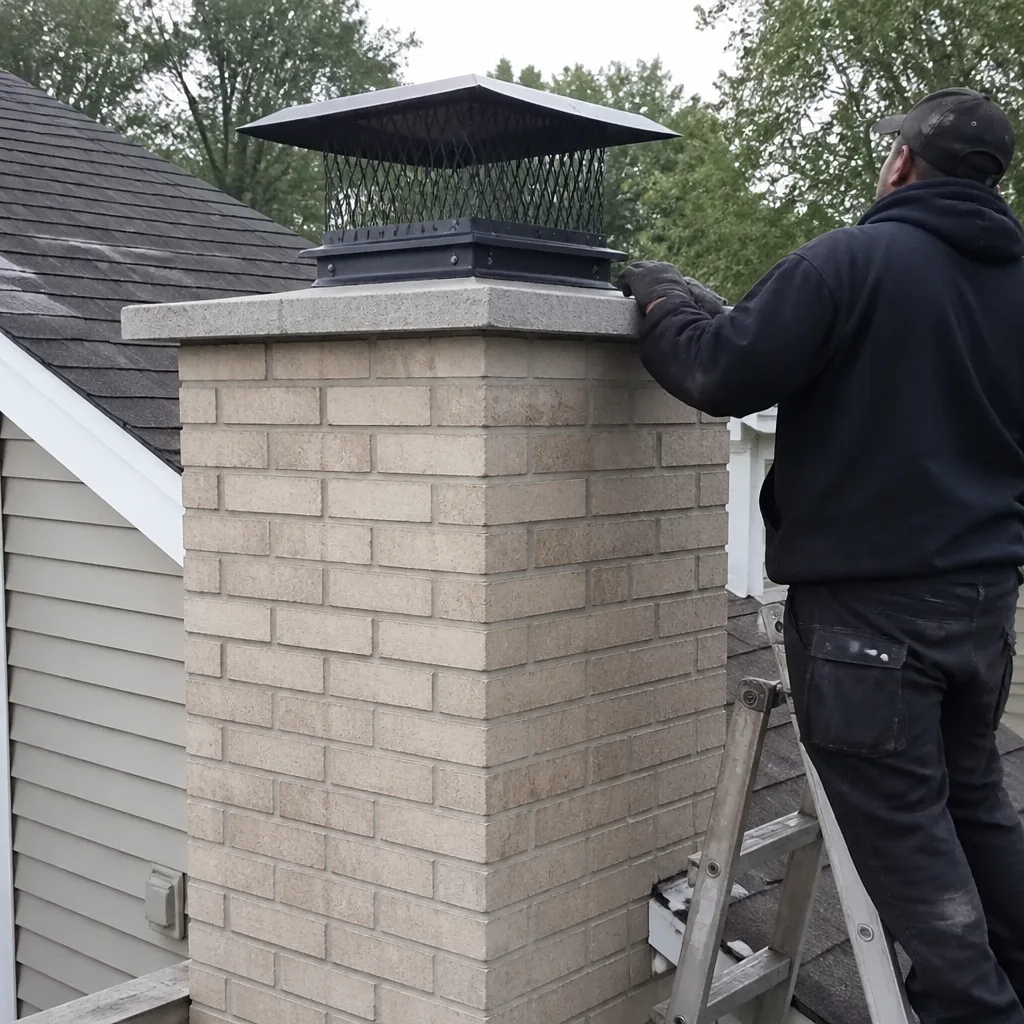
We replace crowns when they’re failing and repair them when the damage is confined. A proper crown replacement uses the right concrete mix and a new cap that fits your flue configuration. For flue tile protection, we carry Copperfield chimney caps, which are standard professional-grade components. This is not a hardware-store foil cap. It’s a fitted termination designed for your specific flue size and orientation.
One more detail: the cap does double duty on safety. Beyond water exclusion, it functions as a spark arrestor. Bolingbrook homeowners with wood-burning fireplaces need a cap with proper mesh sizing. It keeps embers from leaving the flue and landing on your roof or dry landscaping. That’s not a hypothetical; we’ve seen the results when a spark arrestor was missing or damaged.
3. Damper Function: The Component Most Homeowners Ignore
The damper is the movable plate just above the firebox that seals the flue when the fireplace is not in use. It gets ignored because it’s not glamorous and usually does not fail dramatically. It just slowly stops doing its job. A damper that does not seat properly leaks conditioned air out of the house year-round. In a Bolingbrook winter, that means your furnace works harder while 68-degree air rises up the flue 24/7. In summer, it means cooled air escapes the same way, and humid outside air can enter, which accelerates dampness problems inside the chimney.
Test yours in 60 seconds:
- Open the damper fully and use a flashlight to inspect the seating surfaces. Look for rust, warping, or built-up creosote on the edges.
- Close the damper and look for gaps around the perimeter. A properly seating damper will have little to no visible light around the edges.
- Feel for airflow. With the damper closed, hold a piece of tissue near the opening. Movement indicates leakage.
- If you have a top-mount damper (installed at the flue top rather than above the firebox), check the cable or mechanism for smooth operation and the gasket for deterioration.
Warped or rusted dampers are common in chimneys with historical water entry. A damp liner and throat area cause the metal damper frame and plate to rust and lose structural alignment. Sometimes the fix is cleaning and adjustment. Sometimes the damper is past saving and needs replacement. Either way, it’s a low-cost item to address relative to the ongoing energy loss. Bolingbrook’s temperature swings make damper function an overlooked efficiency item. It is easy to fix and pays back quickly.
4. Creosote Levels: Sweep by Measurement, Not by Calendar
Creosote is the byproduct of incomplete wood combustion. It condenses on flue walls as a dark, tar-like residue that ranges from flaky (first-degree) to hard and glazed (third-degree). It is also the fuel for chimney fires. The standard recommendation is to sweep when creosote reaches 1/8 inch thickness, regardless of when the last sweep occurred. That means some Bolingbrook households need sweeping twice a season, and some need it every other year. The only way to know is to measure.
What affects your creosote accumulation rate:
- Wood moisture content. Burning wood above 20 percent moisture cools the flue gases and dramatically increases creosote deposition. We see this constantly: homeowners burning “seasoned” wood that was cut six months earlier and stacked in a damp backyard.
- Fire size and air supply. Small, smoldering fires produce more creosote than hot, well-oxygenated fires. Restricting air to “keep the fire going longer” is a creosote-production strategy, not a fuel-saving one.
- Flue size and insulation. An oversized flue cools gases too quickly. An uninsulated exterior chimney (common on Bolingbrook ranches and split-levels) increases gas cooling and therefore creosote formation.
- Burn frequency and duration. Every fire deposits some creosote. Frequent, short fires that never fully heat the flue deposit more than fewer, longer, hotter fires.
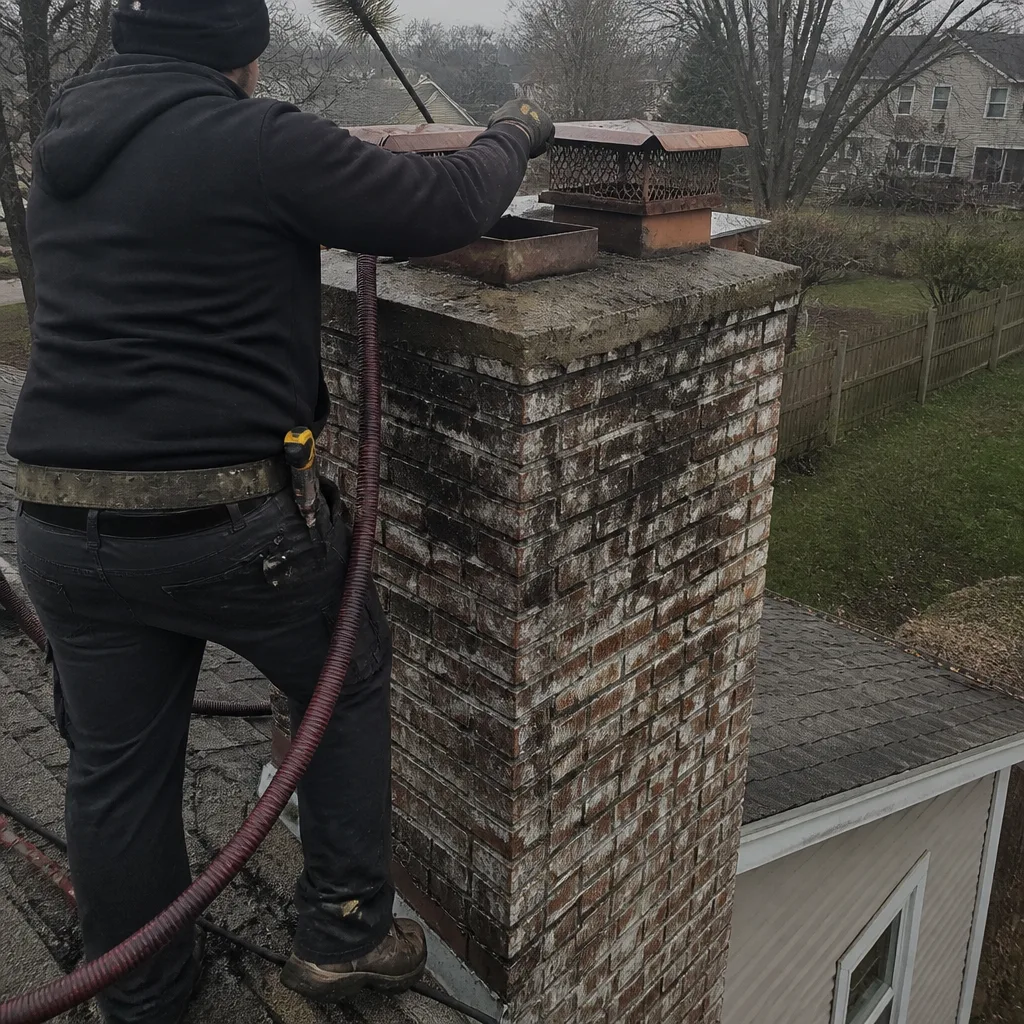
The measurement itself is straightforward. During a professional sweep, we use brushes sized to the flue and examine the residue type and thickness. For Bolingbrook homeowners who burn wood regularly, an annual sweep is a safe default, but we adjust that cadence after we see how your specific flue accumulates. First-degree creosote brushes out easily. Third-degree glazed creosote requires chemical treatment and aggressive mechanical cleaning, and it is far more expensive to address than first-degree buildup.
Do not skip sweeps based on intuition. “We barely used the fireplace last winter” does not nullify the risk. A single weekend of burning wet or resinous wood can lay down enough creosote to support a chimney fire.
5. Bolingbrook’s Freeze-Thaw Cycle and Masonry Spalling
Bolingbrook sits squarely in a climate zone that produces repeated freeze-thaw cycling every winter. The typical season includes 40 to 60 day-night temperature crossings of the freezing point. Each crossing is an opportunity for water inside masonry to freeze, expand, and damage mortar and brick. This is not a theoretical concern. It is the primary reason we see so much spalling in local chimneys: brick faces popping off, mortar joints receding, and chimney structures shifting long before their expected service life ends.
Where to look for early evidence:
- Mortar joint recession. Run your finger along horizontal joints on the chimney’s weather side. If the mortar has receded more than 3/8 inch from the brick face, water is entering and the freeze-thaw damage is already underway. Joints receded less than 1/8 inch are typically cosmetic. Between those depths, we evaluate whether tuckpointing now prevents more expensive repointing later.
- Brick faces shearing off. Spalling appears as thin slices of brick lying on the roof or ground. It’s most visible on the upper third of the chimney where water exposure and wind-driven rain are heaviest.
- White staining (efflorescence). Salt deposits left by water migration indicate water is moving through the masonry. It’s not damage by itself, but it’s a reliable early warning.
- Rust-colored staining near the thimble or cleanout door. This suggests water entering at the top and carrying rust from internal hardware or the liner system down through the masonry.
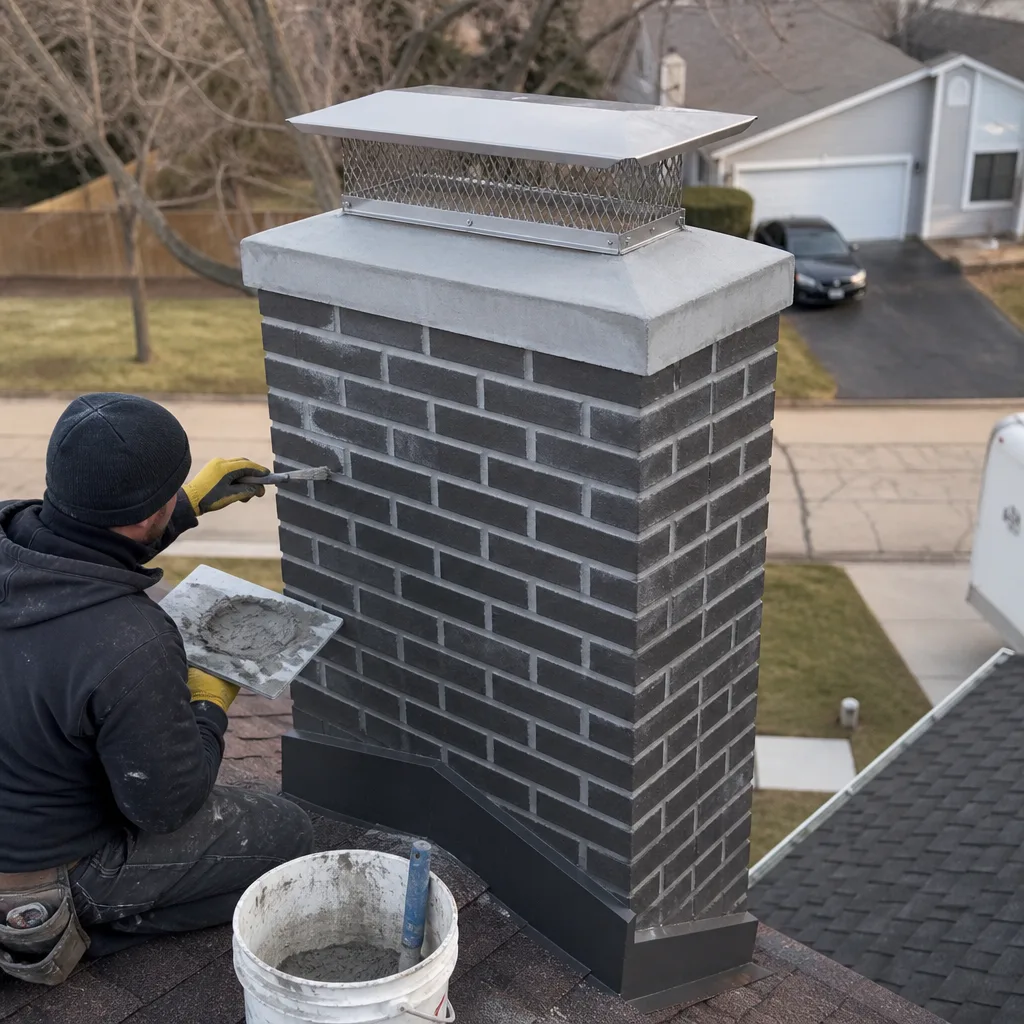
Once spalling starts, it accelerates. A few missing brick faces become a structural problem sooner than most homeowners think. Repointing (removing deteriorated mortar and replacing it) is the standard repair for early-stage joint recession. When brick units themselves are compromised, selective replacement or, in some cases, partial rebuild is necessary. The goal is always to intervene before the chimney leans or the flue separates from the masonry structure. Both are failure modes we have diagnosed in Bolingbrook homes, and both are far more expensive to correct than early-cycle repointing.
6. What to Document Before a Professional Arrives
A little preparation makes your service call faster, more accurate, and more useful. When you call for an inspection or sweep, having specific observations ready means the technician arrives with the right context and the right materials. This is also how you protect yourself: documentation reduces ambiguity about what was found and what was recommended.
Before you call, write down or photograph the following:
- Any visible cracks, stains, or spalling on the exterior chimney. Note the location (north face, near the crown, at the roofline) and approximate size.
- When you last burned a fire and the approximate number of fires per season. If you burn wood, note what type and how you store it.
- Any unusual smells or sounds. A smoky smell when the fireplace is not in use, visible smoke entering the room, or whistling sounds during windy days are all diagnostic clues.
- Damper behavior. Does it open and close smoothly? Does it stay open on its own? Does it leak air when closed?
- Water entry evidence. Water in the firebox after rain, dampness in the hearth area, or watermarks near the ceiling around the chimney chase.
- Animal activity. Nesting material, droppings, or sounds from the flue. Bolingbrook’s raccoon and squirrel populations make animal entry common in uncapped chimneys.
- Photos of the chimney from ground level, including close-ups of anything that concerns you.
This list makes the inspection faster and sharper. It also gives the technician something valuable: your lived experience with this specific chimney. You know how it behaves across seasons. We know failure modes and repair options. Those two bodies of knowledge together produce the most accurate diagnosis and the most appropriate recommendation. When we show up at a Bolingbrook home and the homeowner can point to exactly where they saw a crack or noticed a smell, we find problems faster and fix them at lower cost.
A note on our approach at Summit Peak Chimney Sweep home: we diagnose, we don’t just clean. Every sweep includes an inspection, and every inspection includes a written explanation of what we found, what it means, and what (if anything) needs attention. You should expect that from any professional you hire.
7. Maintenance Intervals by Fuel Type
Not all chimneys need the same schedule. The fuel you burn determines how quickly the system accumulates residue, how aggressively the liner degrades, and what kind of inspection makes sense. Here is the practical breakdown for Bolingbrook homes:
Wood-burning fireplaces and stoves: sweep annually based on 1/8-inch creosote threshold, with more frequent sweeping if you burn softwoods, unseasoned wood, or maintain low-heat fires. Full inspection (including video liner scan) at each sweep. Wood is the highest-residue fuel, and wood fires produce the thermal cycling that cracks clay tiles. This is the most demanding schedule in the group.
Gas inserts and gas fireplaces: sweep or service annually, though the residue is sulfur-based and does not burn like creosote. Gas systems still need venting inspection for blockages (nests, debris, failed dampers), burner cleaning, and verification that the venting is drafting properly. We check gas log sets, verify the pilot assembly is clean, and confirm the termination cap is not obstructed. Gas systems can produce carbon monoxide if vents are blocked or drafting is poor, so this annual check matters even without creosote concerns.
Oil-fired appliances: inspect and clean annually without exception. Oil combustion produces acidic flue gas residue that is corrosive to mortar joints and clay tile. Bolingbrook homes heated with oil need liners evaluated more carefully than wood-burning systems, because liner deterioration from acid attack is slower but more relentless. If you have an oil furnace venting through a masonry chimney, the liner should be video-scanned annually until you establish a baseline, then at regular intervals thereafter.
Non-vented appliances: follow manufacturer recommendations, and treat any venting system attached to the appliance as requiring annual inspection. Bolingbrook homes with older non-vented appliances often have venting pathways that were never properly evaluated. We will tell you what we see and what it means.
The calendar is a starting point, not a rule. The correct interval for your chimney depends on what we find when we look. We set our recommendations based on measured residue, observed liner condition, and your usage patterns. We would rather see you on an appropriate schedule than a convenient one.
Common Mistakes to Avoid
- Skipping the liner evaluation because the fireplace “works fine.” A fireplace that drafts well tells you nothing about liner integrity. Creosote accumulation can mask cracks from view, and a cracked liner often drafts well right up until it doesn’t. Bolingbrook homeowners frequently defer the liner check and then face a more expensive repair when symptoms finally appear.
- Waiting for visible problems before calling. By the time you see water stains, smoke in the room, or spalling brick faces, the underlying problem has been active for months or years. Early-cycle intervention (repointing, crown repair, cap replacement) always costs less than addressing full failure.
- Burning unseasoned wood because “it’s cheaper.” Wet wood costs you money in creosote accumulation and liner damage. The savings on firewood disappear into repair bills and more frequent sweeps. Use a moisture meter; anything above 20 percent is not ready.
- Assuming gas fireplaces don’t need service. Gas systems produce carbon monoxide when vents are blocked or drafting is poor. The absence of creosote does not mean the absence of risk. Annual service on gas systems is a safety calculation, not a preference.
- Using the wrong repair materials. Hardware-store caulk, generic mortar, and cheap metal caps fail quickly in Bolingbrook’s freeze-thaw conditions. Professional-grade materials (we carry Copperfield caps and source from the same suppliers commercial contractors nationwide rely on) last longer and are specified for the actual failure mode. The wrong material is not a repair; it’s a postponement with interest.
- Treating the fireplace as an isolated system. Your chimney connects to the house in ways that matter: air leakage at the damper, water entry at the crown, and structural movement in the chimney chase all affect the wider home. A chimney problem is never just a chimney problem for long.
- Scheduling maintenance by calendar instead of condition. A Bolingbrook home that burned 40 fires last winter needs a different schedule than one that burned 10. Using a fixed “once a year or so” approach means some chimneys get swept before they need it, and others get ignored too long.
See the difference
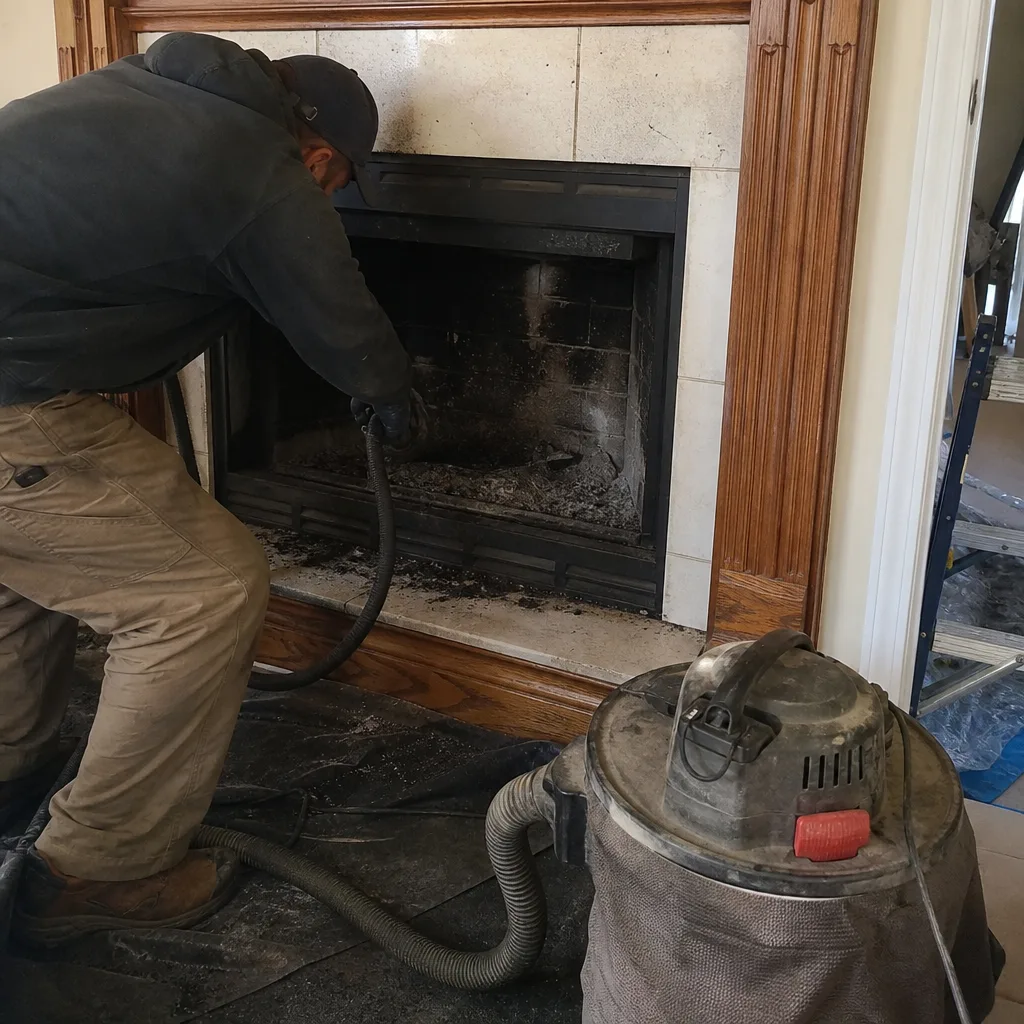 Before
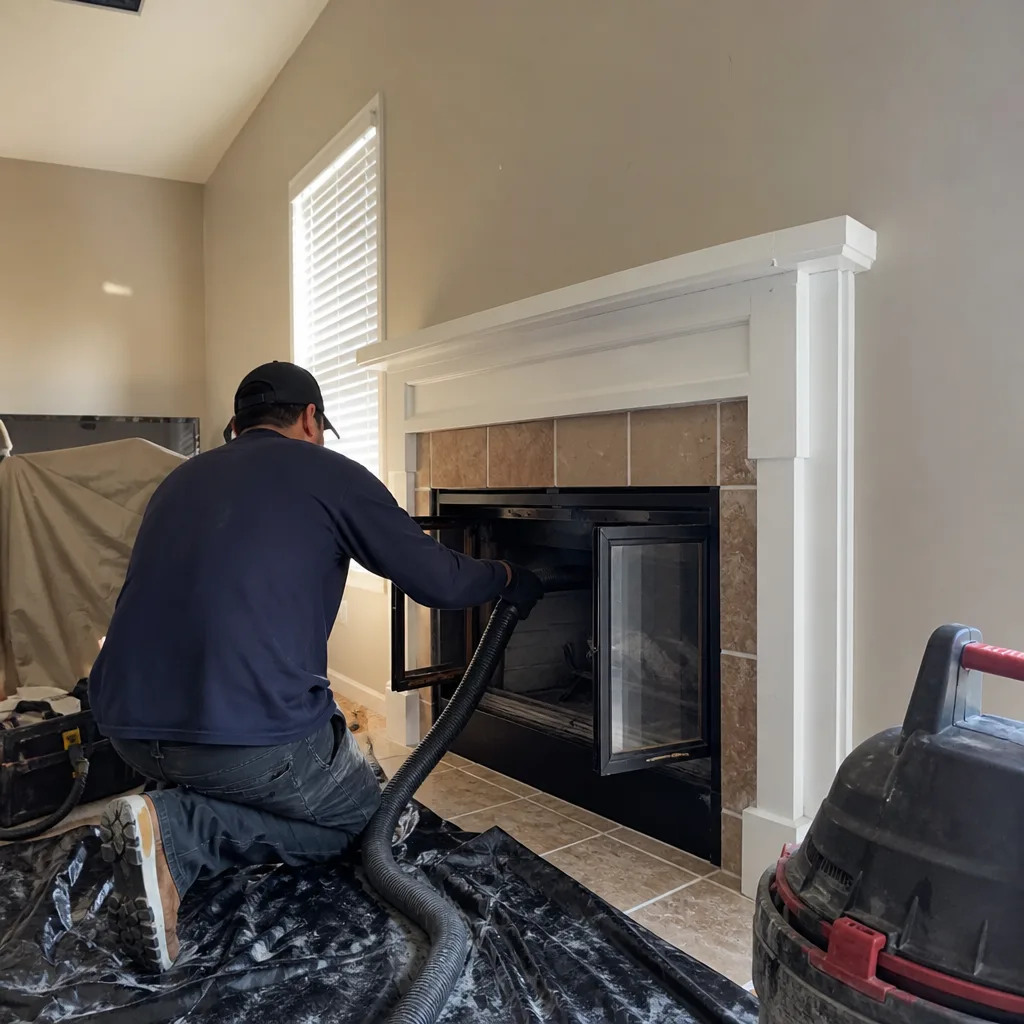 After
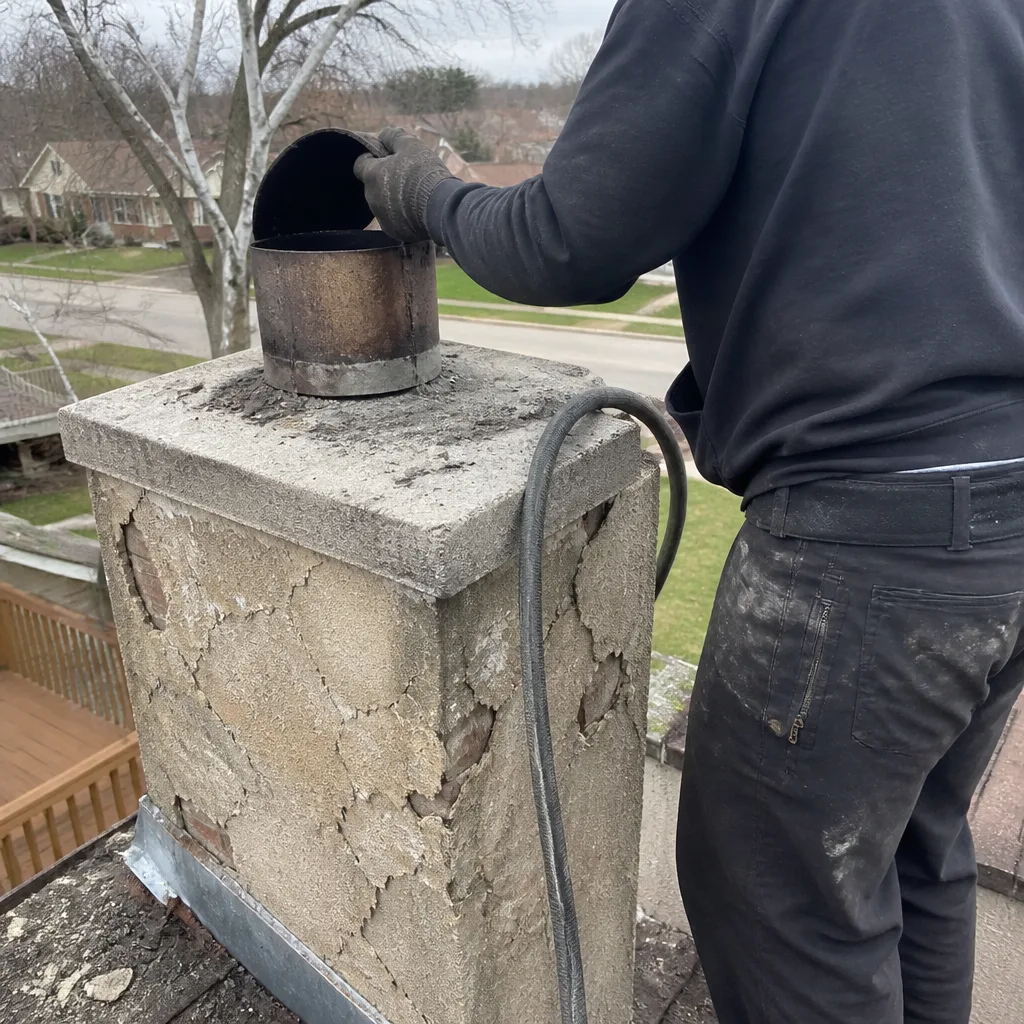 Before
 After
 Before
 After
When to Call a Professional
Call a professional when your self-inspection finds anything you cannot definitively rule out as harmless: cracks in the liner, water entry evidence, spalling brick, a damper that won’t seal, or creosote you can feel as a tar-like residue on the flue walls. Call when you buy a home with a fireplace and have no documentation of prior inspection; almost every Bolingbrook home sale includes a chimney that has not been professionally evaluated in years. Call after any chimney fire, even if it seemed small. Call if you smell smoke when the fireplace is off, if you hear animals in the flue, or if you simply want a baseline established before you start burning regularly. Summit Peak Chimney Sweep offers free estimates in Bolingbrook; call (855) 382-3714 to schedule an inspection or sweep.
Frequently Asked Questions
Wood-burning fireplaces should be swept when creosote reaches 1/8 inch thickness, which for most Bolingbrook homes means annually with normal use. Gas appliances should be serviced annually, and oil-fired systems require cleaning and inspection every year without exception. The correct answer for your specific chimney depends on fuel type, burn frequency, and measured residue, not on a fixed calendar.
Chimney sweep pricing in Bolingbrook typically ranges from $150 to $350 depending on flue size, accessibility, and the level of creosote present. More difficult jobs (third-degree glazed creosote, animal removal, or chimney height requiring special ladder work) may run higher. Any professional should give you a firm price before starting. Call (855) 382-3714 for an exact quote; estimates are free.
Flue liner integrity is the highest-consequence item on any chimney checklist. A compromised liner can channel heat and carbon monoxide into wall cavities, and liner failure is the mechanism behind many of the chimney fires and CO incidents we diagnose. Everything else (crown, cap, damper, creosote level) matters, but the liner is the safety-critical component.
Yes. Gas fireplaces and inserts do not produce creosote, but they produce sulfur-based residue that corrodes metal components, and their venting systems can become blocked by nests, debris, or failed dampers. A blocked gas vent can cause carbon monoxide to back-draft into the living space. Annual service on gas systems is the only way to verify safe operation.
Bolingbrook winters include roughly 40 to 60 freeze-thaw crossings, and each one gives water trapped in masonry a chance to freeze, expand, and break mortar bonds or brick faces. The damage appears first as receding mortar joints and efflorescence, then as spalling. Early intervention with repointing and crown repair stops the cycle before it becomes structural.
You can and should perform basic visual checks: crown condition, cap presence, damper operation, and visible masonry issues. What you cannot do is evaluate the interior liner surface, which is where the highest-consequence problems live. A professional video scan of the flue is the only reliable way to assess liner integrity. Call (855) 382-3714 to schedule an inspection; we will show you what we see and explain what it means.
Common Mistakes to Avoid: A Second Pass
One more mistake worth naming, because it is the most expensive one we see in Bolingbrook: treating the chimney as a “checked it once, done forever” system. Chimneys are active mechanical systems under constant thermal and moisture loading. What was fine five years ago is not fine now. The only way to manage the risk is to establish a baseline (video scan, residue measurement, masonry evaluation) and then trend that data over time. Homeowners who do this catch small problems early. Homeowners who don’t end up paying for full relines, partial rebuilds, or worse.
The Bottom Line
A chimney maintenance checklist ordered by consequence puts the flue liner first, the crown and cap second, the damper third, and creosote levels fourth, with Bolingbrook’s freeze-thaw climate threading urgency through every item. Measure don’t guess: check creosote by thickness, evaluate mortar by recession depth, and verify liner integrity by video scan. Document what you see before calling a professional, use the right materials when repairs are needed, and maintain a schedule based on your fuel type and usage patterns, not on a convenient calendar. Whether you need a sweep, a liner evaluation, or full chimney repair in the Bolingbrook area, call (855) 382-3714 for a free estimate. If you’re in a neighboring community, we also serve Chimney Sweep in Naperville and provide Chimney Repair in Naperville, and we offer Dryer Vent Cleaning in Naperville for the second venting system in your home that deserves the same level of inspection.
Written by the team at Summit Peak Chimney Sweep, serving Bolingbrook since 2018. Explore more guides & resources from our team.