Last updated October 30, 2026
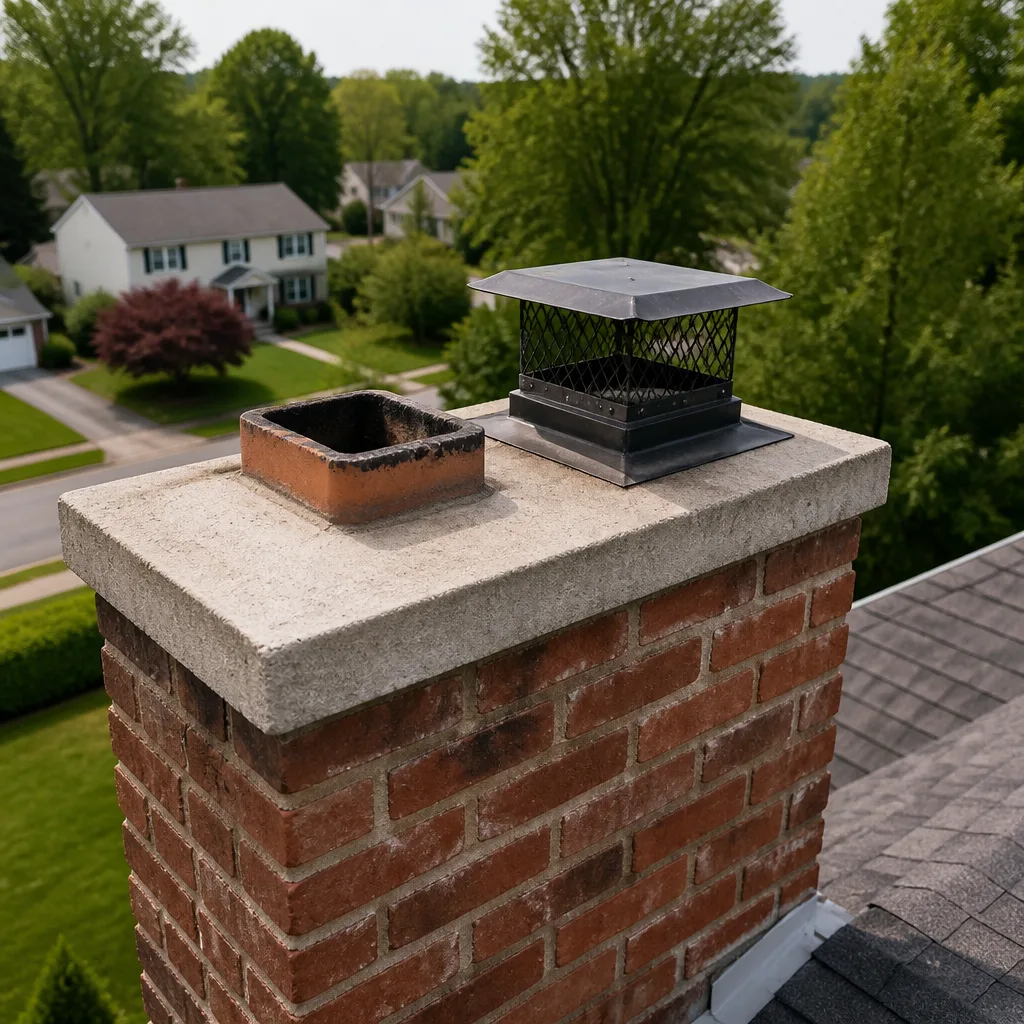 Sweep & inspection
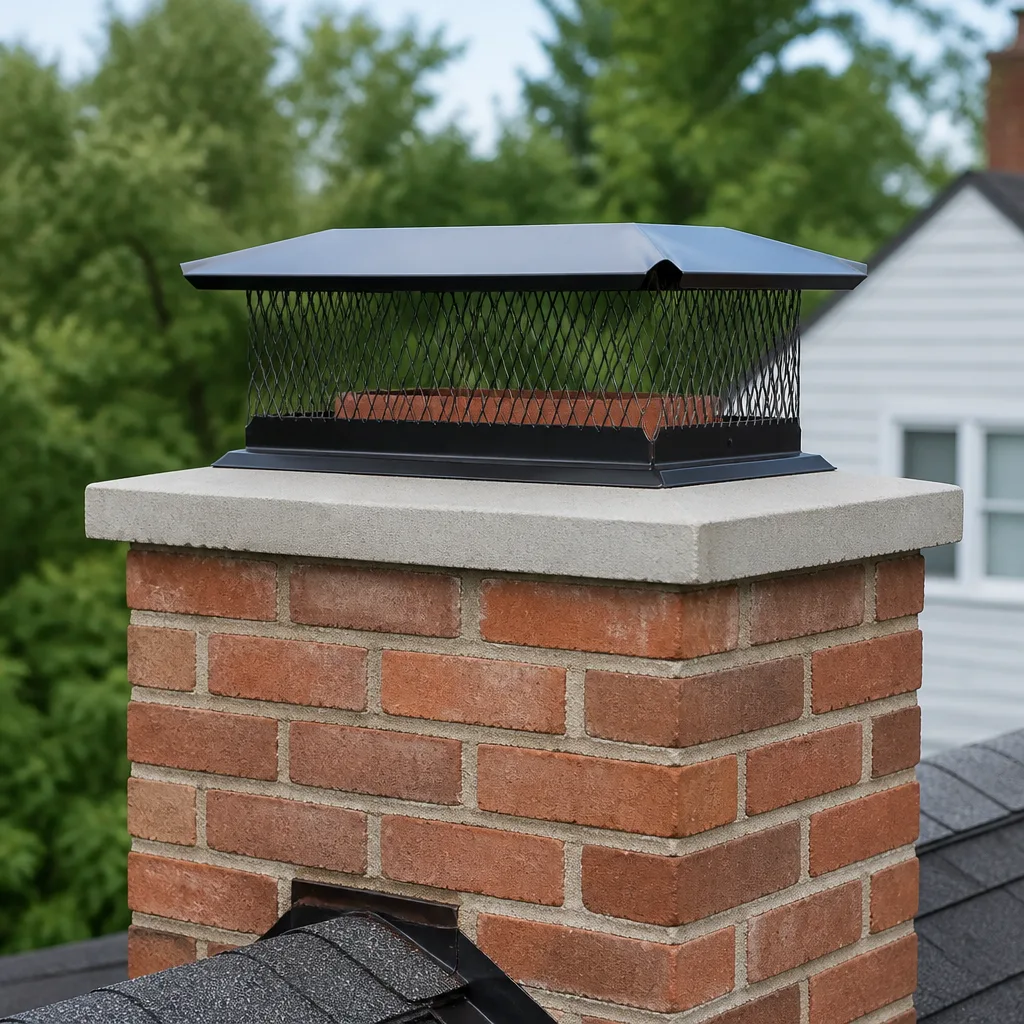 Caps & crowns
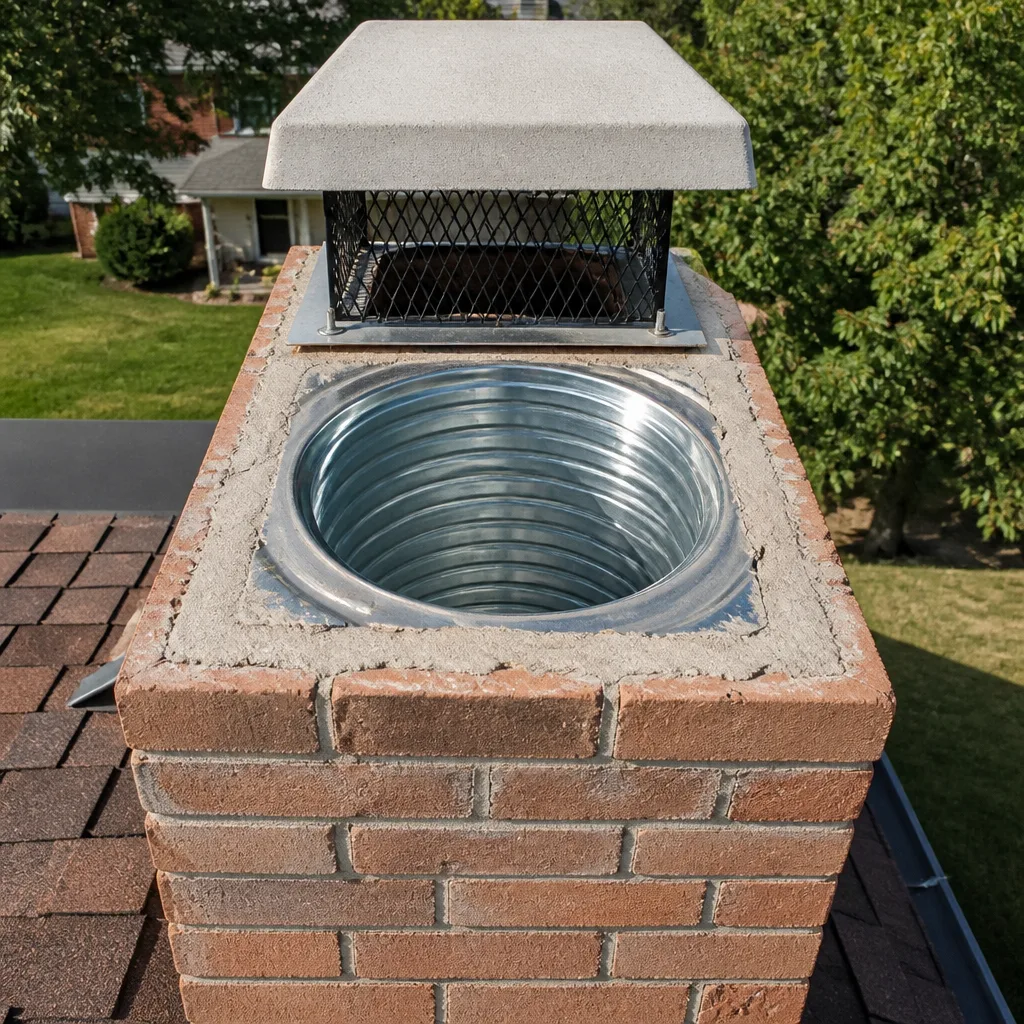 Flue relining
 Masonry repair
 Gas fireplace service
Level 1 sweep and inspection to the NFPA 211 annual standard - flue, crown, cap, and flashing checked and photographed
Chimney sweep logs do not sweep chimneys. They loosen some creosote - which then falls where a brush and vacuum still have to collect it.
How to Hire a Chimney Cleaning Contractor in Bolingbrook: A Step-by-Step Guide
Most Bolingbrook homeowners don’t realize that “chimney cleaning” means wildly different things depending on who you call. One contractor shows up with a brush, a shop vac, and a clipboard. Another arrives with a camera inspection system, liner repair materials, and the ability to fix what they find the same day. Both can claim to be chimney sweeps. Only one is actually equipped to protect your home. This guide walks you through the hiring process the way an industry insider would approach it, so you can separate the diagnosticians from the sweep-only operators in Bolingbrook before you ever sign a work order.
Quick Answer
To hire a chimney cleaning contractor in Bolingbrook, verify CSIA or NFI certification directly through the certifying body, ask the five capability questions below (including whether they carry commercial-grade repair materials on the truck), require a video inspection as part of every quote, and compare bids on equal terms by standardizing what each visit includes. A qualified specialist should diagnose problems with camera evidence, quote repairs using professional-grade components, and offer same-visit fixes rather than a clean-and-leave handshake.
Styles & brands we work with
Table of Contents
- What Certifications Actually Mean (and How to Verify Them)
- The Five Capability Questions That Separate Specialists from Sweep-Only Contractors
- Why Video Inspection Is the Non-Negotiable Starting Point
- How to Read a Chimney Cleaning Estimate in Bolingbrook
- What a Professional Truck Inventory Tells You Before You Hire
- How to Compare Structurally Different Quotes on Equal Terms
- Bolingbrook-Specific Considerations: Climate, Codes, and Common Problems
- The Hiring Checklist: A Step-by-Step Process
What Certifications Actually Mean (and How to Verify Them)
“Are you CSIA certified?” is a good first question, but it’s also a baseline question. The Chimney Safety Institute of America certifies that a person passed a test on chimney science and code. It doesn’t certify that they own a video inspection system, that they stock liner repair materials, or that they can rebuild a firebox. In our experience across the Bolingbrook area, the certification question is where homeowners stop, and that’s exactly the problem. A credential confirms knowledge. It doesn’t confirm equipment, inventory, or capability.
Still, credentials matter. You want someone who understands draft dynamics, clearance requirements, and the National Fire Protection Association standards that govern chimney construction and maintenance. Here’s how to verify a certification claim rather than taking a contractor’s word:
- Ask for the certification ID number. Every CSIA-certified sweep has one. If the contractor hesitates or deflects, that’s your first red flag.
- Go to the CSIA website directly. CSIA maintains a searchable database of certified professionals. Type in the company name or the individual’s name. Don’t rely on a badge on a website, which takes thirty seconds to fabricate.
- Check NFI separately. The National Fireplace Institute certifies gas hearth specialists. If you have a gas fireplace or insert, ask whether the technician holds NFI certification and verify it the same way through NFI’s online directory.
- Ask about continuing education. Building codes change. A contractor who got certified ten years ago and never attended another class may be working from outdated knowledge about clearances, liner requirements, or cap specifications.
A certification tells you someone studied for a test. It doesn’t tell you they showed up at a Bolingbrook home with a camera system and a truck stocked with DuraFlex liner components. That’s what the next section addresses.
The Five Capability Questions That Separate Specialists from Sweep-Only Contractors
Here’s the core problem we see in Bolingbrook: a contractor can answer “yes” to every certification question and still be completely unequipped to address what they find inside your flue. They clean, they hand you a receipt, and they leave. If the inspection reveals a cracked flue liner or deteriorating mortar joints, they tell you to call someone else. That’s not a specialist. That’s a brush operator with a credential. These five questions expose the difference.
1. Do you carry repair materials on the truck, or do you order parts after diagnosis?
This is the single most revealing question you can ask. A sweep-only contractor diagnoses and leaves. A full-service specialist diagnoses and fixes. At Summit Peak Chimney Sweep home, we stock professional-grade materials including DuraFlex flexible liner systems, HeatShield resurfacing products, Gelco components, and Olympia Chimney parts on every service vehicle. That means when our camera finds a problem, we can often address it the same day rather than scheduling a second visit that may never happen. If a contractor says they’ll need to “order parts” after the inspection, you’re hiring a cleaning service, not a chimney specialist.
2. Can you resurface a deteriorating flue liner, or is full replacement your only option?
Cracked or spalling clay tile liners used to mean one thing: a full reline, often costing thousands. HeatShield changed that. This ceramic resurfacing system can restore the integrity of a deteriorating flue without demolishing the old liner. A contractor who doesn’t know about HeatShield, or who doesn’t offer it, is either under-informed or economically motivated to sell you the more expensive job. Ask this question explicitly. The answer tells you whether you’re talking to someone who keeps up with materials science or someone who stopped learning when they got their credential.
3. What inspection standard do you follow, and what does it include?
The National Fire Protection Association defines three levels of chimney inspection. A Level 1 inspection is visual, checking accessible portions of the chimney. A Level 2 inspection adds video scanning of the flue interior and is required when the home is being sold, when the chimney has been damaged, or when the appliance or liner has changed. A Level 3 inspection involves opening up concealed areas and is only necessary when a major problem is suspected. A contractor who can’t explain these levels, or who describes an inspection as “looking everything over,” doesn’t operate from a defined standard. You want someone who can tell you exactly what level of inspection they’re performing and why.
4. Do you have offset-chimney experience, or are you only comfortable with straight vertical flues?
Many Bolingbrook homes built in the 1970s through 1990s have chimneys with offsets, smoke chambers with unusual geometry, or flues that were built to code requirements that have since changed. Older construction often means offset flues that are difficult to line. A contractor whose experience is limited to straight vertical chimneys may struggle with these configurations. DuraFlex flexible liner systems exist precisely for this problem, and a contractor who stocks them has practical experience with complex reline jobs. If the contractor seems hesitant about your chimney’s geometry, ask directly whether they work with flexible liner systems and how many offset relines they’ve completed.
5. Do you service dryer vents, and if so, what equipment do you use?
This question sounds unrelated, but it reveals depth. A dryer vent is a chimney you never think about. It runs hot, humid air laced with lint through your wall or ceiling, and a blocked dryer exhaust is one of the leading causes of house fires in the United States. Most chimney sweeps either don’t offer dryer vent cleaning or treat it as an afterthought with generic tools. At Summit Peak, we stock Famco components and treat dryer vent cleaning as a primary service, not a side gig. A contractor who ignores dryer vents is overlooking one of the two major fire-risk venting systems in your home. You want to ask this question because the answer tells you whether the contractor sees the whole picture of your home’s venting or just the fireplace. For those in nearby areas, our Dryer Vent Cleaning in Naperville service applies the same specialist approach.
Why Video Inspection Is the Non-Negotiable Starting Point
Any contractor who quotes a chimney repair without first putting a camera inside your flue is guessing. That’s not an opinion. That’s a structural fact. A flue liner can look perfectly fine from the top of the chimney and be cracked, separated, or missing mortar joints twenty feet down where nobody can see. Creosote buildup can hide behind the damper plate. Clay tiles can be spalled on the interior face while the outside appears intact. The only way to know what’s actually happening inside your chimney is to look, and the only way to look properly is with a video inspection system.
In Bolingbrook’s climate, this matters more than in drier regions. Freeze-thaw cycles do real damage to masonry chimneys. Water seeps into tiny cracks during the fall and spring, freezes during the winter, and expands, widening those cracks year after year. By the time you see spalling on the exterior brick, the interior liner has often been deteriorating for years. A video inspection catches this process early, when HeatShield resurfacing can restore flue integrity for a fraction of the cost of a full reline. Without the camera, you’re flying blind, and so is your contractor.
When you call a chimney company in Bolingbrook for a quote, a proper diagnostic visit includes a video scan of the flue interior. If the contractor quotes you a repair without this step, hang up. If they clean first and mention the video inspection as an optional add-on, insist on the video scan before any work happens. The inspection reveals what the cleaning needs to address. Reversing the order means you pay for a cleaning, then pay for a diagnosis, then pay for the repair. A competent specialist diagnoses first, then cleans, then fixes.
How to Read a Chimney Cleaning Estimate in Bolingbrook
Chimney cleaning estimates in the Bolingbrook market vary widely, and our Chimney Cleaning Cost Breakdown: The Bolingbrook Homeowner’s Reference for 2026 explains why—not because some contractors are gouging. The variation comes from structural differences in what the visit actually includes. A $99 sweep special from a low-bid operator often covers nothing more than brushing the flue and hauling away debris. It may or may not include a proper inspection. It almost certainly doesn’t include video scanning. It doesn’t include minor repairs. By the time the contractor adds those line items, you’re at or above the price of a full-service visit from a specialist, minus the specialist’s equipment and materials.
Here’s what a proper estimate should include, and what to look for in each line item:
- Inspection scope. The estimate should state exactly what level of inspection is being performed (Level 1 or Level 2) and whether video scanning is included. A vague line that says “inspection” with no scope definition is a red flag.
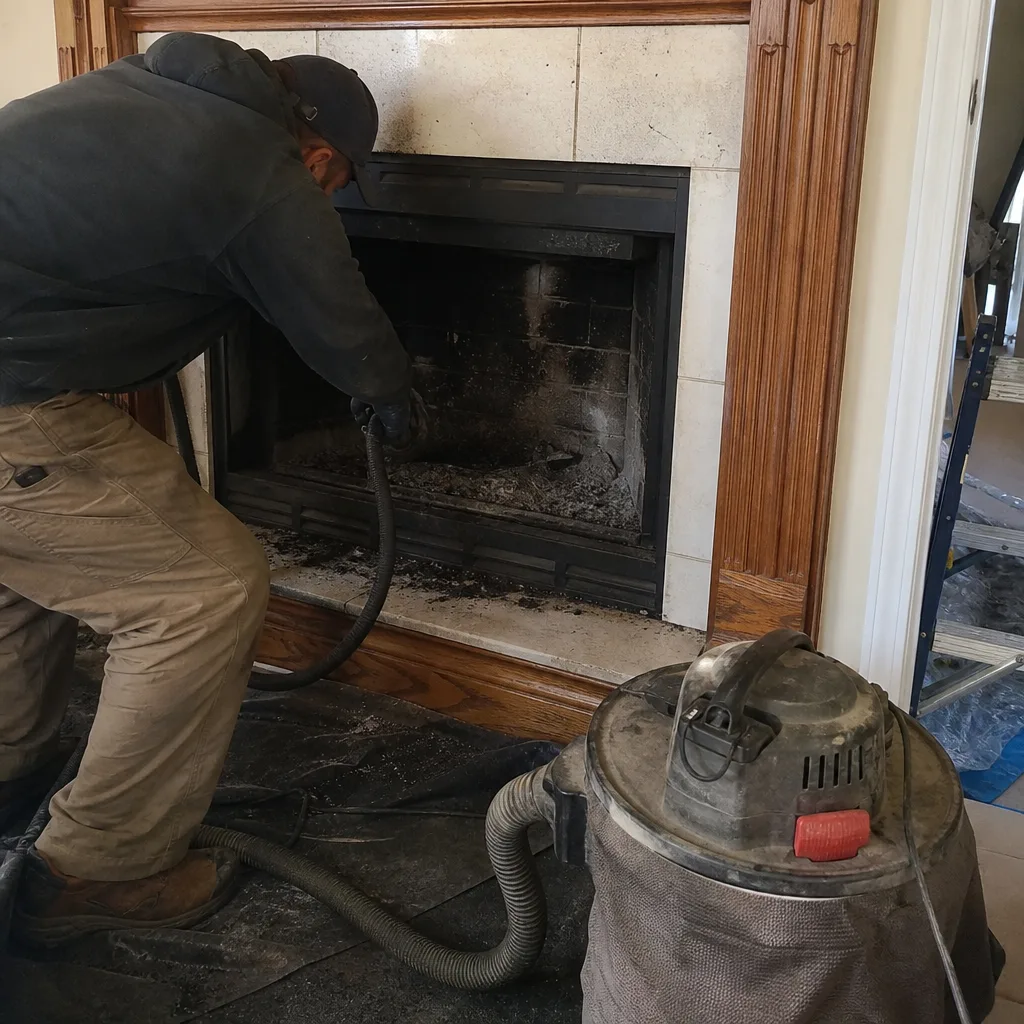
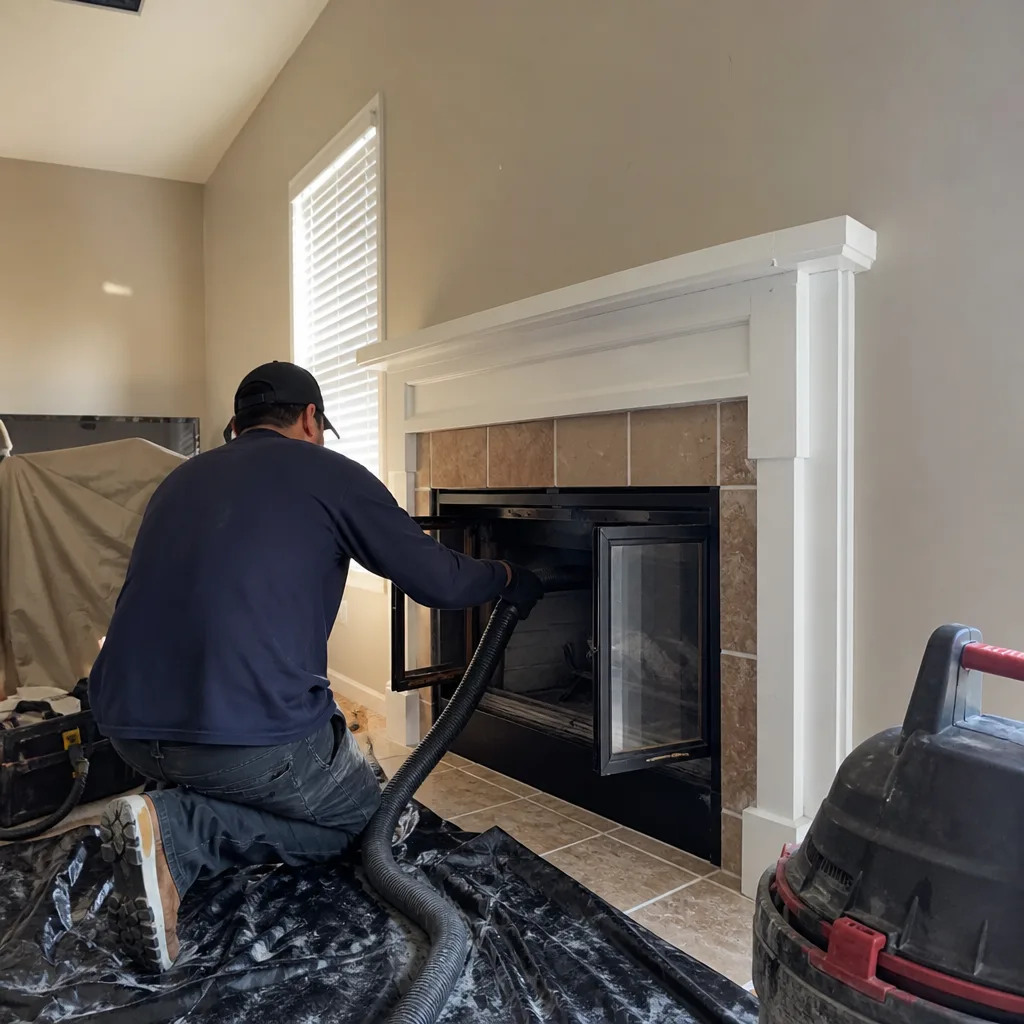
- Cleaning method. Will the contractor use rotary brushes, traditional rods, or a combination? Will they protect your home with drop cloths and a high-powered vacuum? The estimate should specify.
- Debris disposal. This should be included in the base price, not added as a separate line item. If it’s itemized, ask why.
- Repair pricing with specific materials. A quote that says “liner repair as needed” without specifying the material or method is a blank check. You want to see specific language: HeatShield resurfacing, DuraFlex liner installation, Gelco waterproofing treatment. The brand name tells you the contractor uses professional-grade components rather than whatever is cheapest at the hardware store.
- Warranty terms. What’s covered, for how long, and what voids the warranty. Not every contractor offers one, and the ones who do are usually worth the slightly higher price.
Our Chimney Repair in Naperville service operates on the same principle we apply throughout the western suburbs: nothing gets recommended without camera evidence a homeowner can see with their own eyes. You should expect the same from any contractor you hire in Bolingbrook.
What a Professional Truck Inventory Tells You Before You Hire
Here’s a practical hiring tactic most Bolingbrook homeowners never consider: look at the truck. Not the branding, not the logo, not the cleanliness. Look at what’s inside. A sweep-only contractor carries brushes, rods, a shop vac, and maybe a basic set of hand tools. A full-service specialist carries materials. The difference is visible from the curb if you know what to look for.
A properly equipped chimney service vehicle in Bolingbrook should include:
- Video inspection equipment. A camera system with a monitor, not just a flashlight and a mirror. If the technician can’t show you the inside of your flue on a screen, they can’t diagnose anything invisible to the naked eye.
- Flexible liner components. DuraFlex and similar brands come in coils. If the truck has liner material on board, the contractor can handle reline jobs on the spot. If not, they’re a cleaning service.
- Resurfacing materials. HeatShield comes in component form: primer, ceramic coating, application equipment. Not every repair job needs it, but a contractor who carries it can offer a restoration option instead of defaulting to full replacement.
- Chimney caps and flashings. These are common failure points. A contractor who stocks them in multiple sizes can fix a cap the same day. One who doesn’t orders parts and schedules a return visit.
- Proper dust control. A high-powered HEPA-filtered vacuum, not a shop vac, is the industry standard for keeping fine soot out of your living space during a cleaning.
You don’t need to audit the truck like a safety inspector. But if the van looks empty except for some brushes and a bucket, that’s a signal. A specialist arrives prepared to diagnose and repair, not just to clean and leave. In Bolingbrook, where many homes are thirty to fifty years old and showing age-related chimney deterioration, that preparation is the difference between one visit that solves the problem and two or three visits that don’t.
How to Compare Structurally Different Quotes on Equal Terms
Here’s the scenario every Bolingbrook homeowner faces: you call three chimney companies, get three quotes, and the prices are all over the map. $149 from one, $289 from another, $425 from a third. The natural instinct is to compare the numbers directly. That’s a mistake. Those quotes aren’t for the same service. They’re for three different services that happen to share a name.
The $149 quote is almost certainly a sweep-only visit. Brushing, vacuuming, a visual glance. No video inspection. No load-bearing diagnosis. The $289 quote likely adds a basic inspection. The $425 quote should include a full Level 2 inspection with video scanning, same-day minor repairs if needed, and a documented report with photos. Comparing these numbers directly is comparing a bus ticket to a car to a helicopter.
Here’s how to compare quotes on equal terms:
- Ask every contractor what their price includes. Get it in writing. A verbal “we take care of everything” means nothing.
- Standardize the scope. Tell each contractor: “I need a Level 2 inspection with video scanning, a cleaning if needed, and a written report.” Then compare prices for that identical scope.
- Ask about repair capability. If the quote includes a cleaning but the contractor can’t fix a cracked liner, that quote has less value regardless of the price. You’ll be paying someone else to handle the repair later.
- Ask about the photo report. A contractor who includes photos of the flue interior in their inspection report is giving you documentation you can use for insurance claims, future home sales, or simply your own peace of mind. A contractor who doesn’t offer photos is asking you to take their word.
- Weight the materials. If one quote specifies HeatShield for a repair and another just says “liner repair,” the first quote is telling you more about what you’re actually buying. Specificity in an estimate is a professional signal.
Never choose based on price alone in the Bolingbrook chimney market. The cheapest quote often becomes the most expensive when you realize what it didn’t include.
Bolingbrook-Specific Considerations: Climate, Codes, and Common Problems
Chimney problems in Bolingbrook follow patterns. If you’ve lived here for a few winters, you’ve seen the freeze-thaw cycle at work on driveways and sidewalks. Your chimney experiences the same forces, and the damage accumulates silently. Water penetrates hairline cracks in the crown, freezes, expands, and widens those cracks. Over a decade, a perfectly functional chimney becomes a water-intrusion risk that deteriorates from the inside out.
We also see specific issues in Bolingbrook’s housing stock. Homes built in the 1960s through 1980s often have clay tile liners that are now fifty to sixty years old. Clay tile liners fail in two ways: the tiles crack from thermal stress, or the mortar joints between tiles dissolve from acidic condensate. Either failure exposes the chimney’s masonry to heat and combustion gases. A HeatShield application can restore many of these liners without a full replacement, but only if the deterioration is caught before the structural damage spreads to the surrounding masonry.
Village of Bolingbrook code requirements follow International Residential Code standards for chimney construction and maintenance. The IRC requires that chimneys be inspected annually and cleaned as needed to prevent creosote accumulation. The practical application is that if you burn wood in Bolingbrook, you should schedule a cleaning and inspection every year regardless of how often you use the fireplace. A chimney that burns one cord of wood per season still accumulates creosote. A chimney that burns wet or unseasoned wood accumulates it faster.
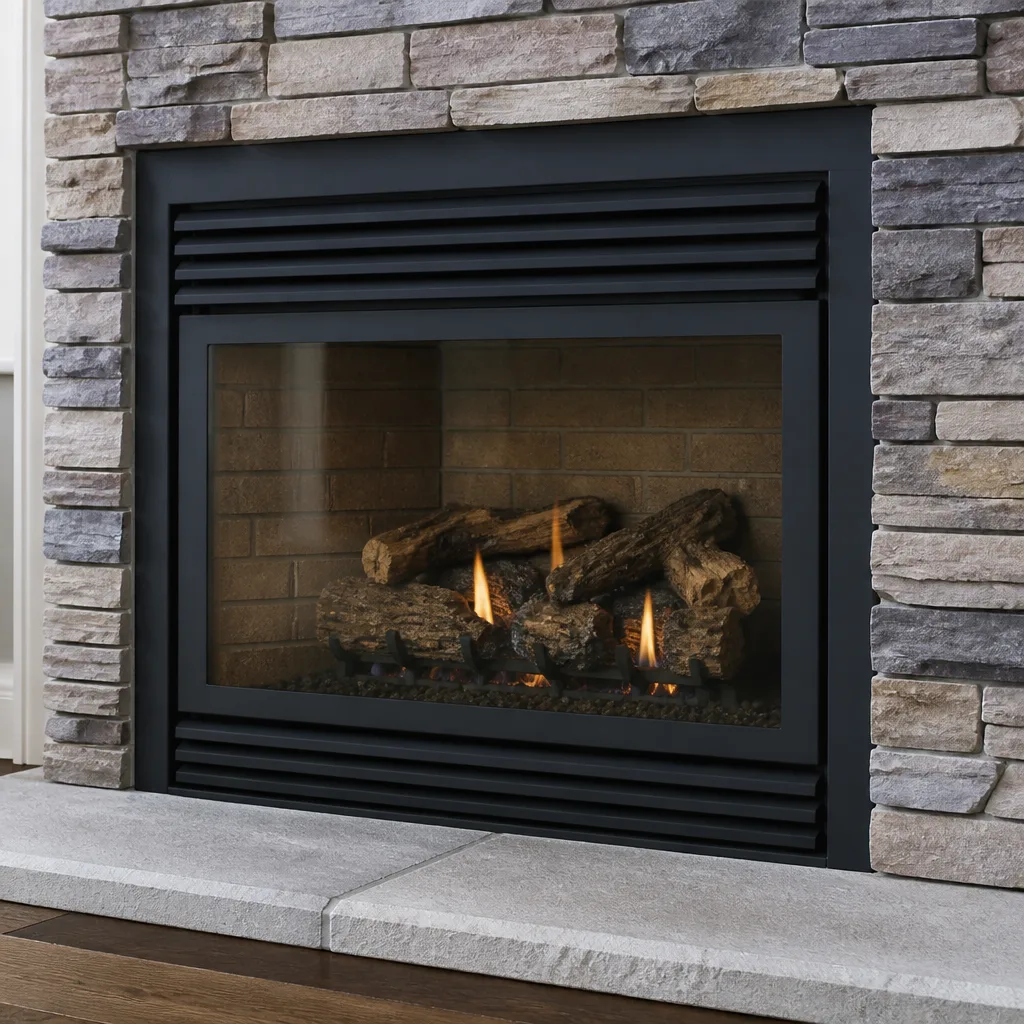
Gas fireplaces in Bolingbrook have their own considerations. The gas logs produce minimal creosote, but they do produce acidic condensate that can damage clay tile liners over time. A gas chimney may not need annual sweeping, but it does need annual inspection. An NFI-certified technician can assess the liner condition, check the venting, and verify that the gas logs are burning cleanly.
For homeowners in neighboring communities, our Chimney Sweep in Naperville service handles the same concerns with the same specialist approach, because the climate patterns across the western suburbs are identical.
The Hiring Checklist: A Step-by-Step Process
Here’s the complete process for hiring a chimney cleaning contractor in Bolingbrook, condensed into a checklist you can use on the phone or during an estimate visit:
- Verify certifications. Ask for CSIA or NFI certification IDs. Look them up on the certifying body’s website. Don’t accept a logo on a business card.
- Ask the five capability questions. Materials on the truck? HeatShield experience? Inspection standards? Offset chimney experience? Dryer vent service?
- Require video inspection. Confirm that the quote includes a Level 2 inspection with video scanning before any repair recommendations are made.
- Request a written, itemized estimate. Specific line items with specific materials. “Repair as needed” is not a quote.
- Ask about the photo report. You want documentation of what the camera found, not just a verbal summary.
- Check the truck. Brushes and a bucket are not enough. Look for liner material, inspection equipment, and dust control.
- Compare quotes on standardized scope. Tell every contractor exactly what you want included, then compare prices for that identical service.
- Schedule before the burning season. Bolingbrook chimney companies book up fast in September and October. Summer is the best time for a thorough inspection and any necessary repairs.
Common Mistakes to Avoid
- Hiring on price alone. The $99 sweep special in Bolingbrook usually turns into a $2,000 liner replacement that could have been caught earlier with a proper inspection. Cheap cleaning is not cheap maintenance.
- Assuming certification equals capability. CSIA certification proves knowledge. It doesn’t prove the contractor owns a video inspection system or stocks repair materials. Ask about equipment and inventory separately.
- Accepting a quote without a video inspection. Any contractor who quotes repairs based on a visual check is guessing. Flue damage is invisible from the top of the chimney.
- Skipping the inspection and just booking a cleaning. The inspection is the valuable part of the visit. The cleaning addresses creosote. The inspection catches structural problems before they become fire hazards.
- Ignoring the dryer vent. Your dryer exhaust is a fire risk equal to your chimney, and most Bolingbrook homeowners haven’t cleaned it since they moved in. Hire a contractor who handles both.
- Choosing a generalist over a specialist. A handyman with a brush is not a chimney contractor. The tools, the materials, and the diagnostic capability are fundamentally different.
- Deferring maintenance because the fireplace “works fine.” Chimney deterioration is invisible and progressive. By the time you notice a problem, it’s usually expensive. Annual inspection in Bolingbrook is cheaper than emergency repair.
See the difference
 Before
 After
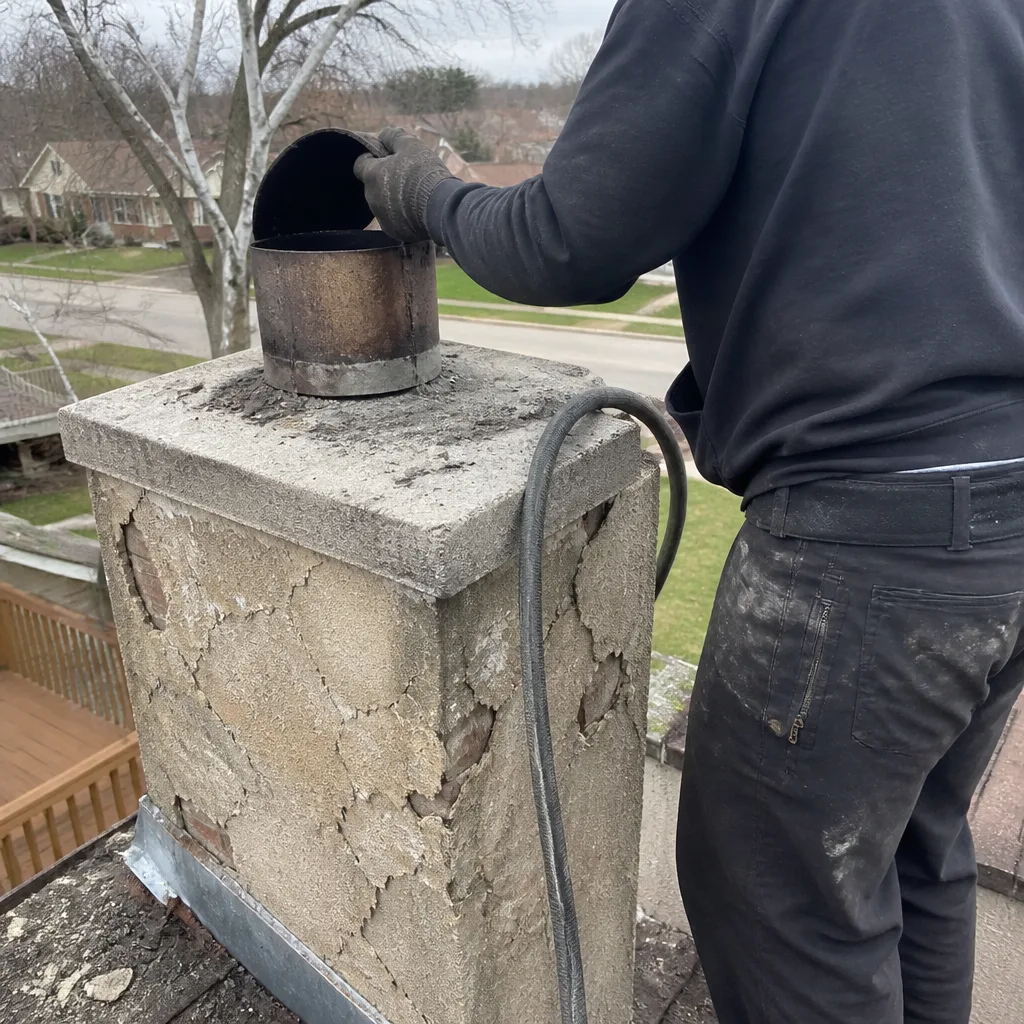 Before
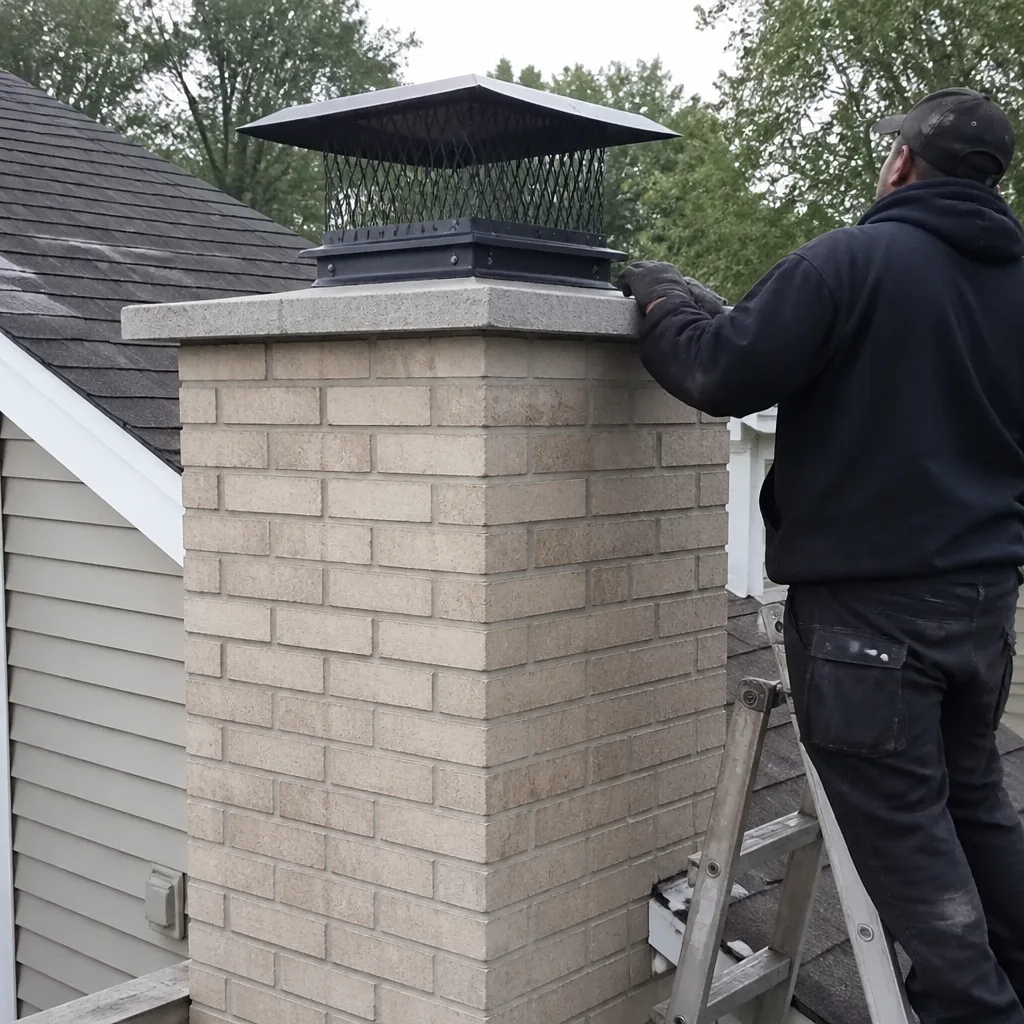 After
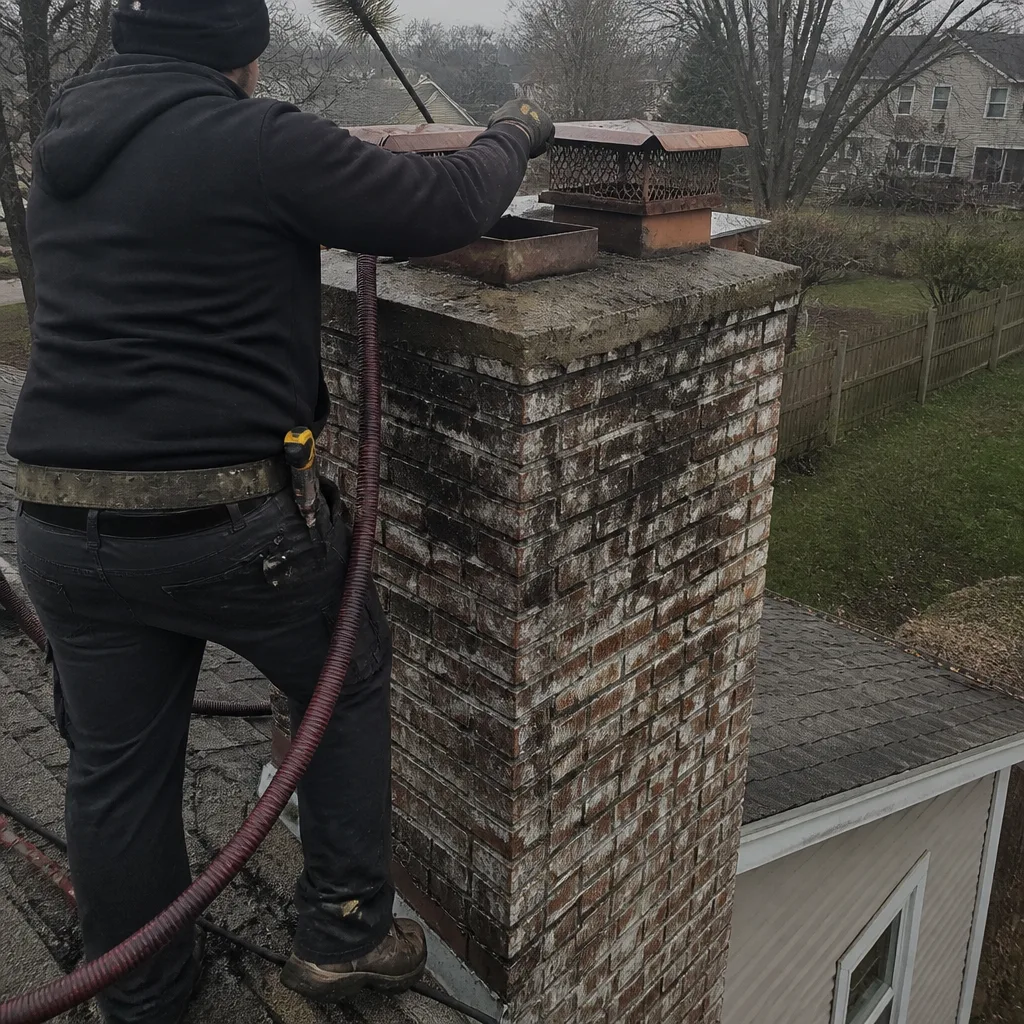 Before
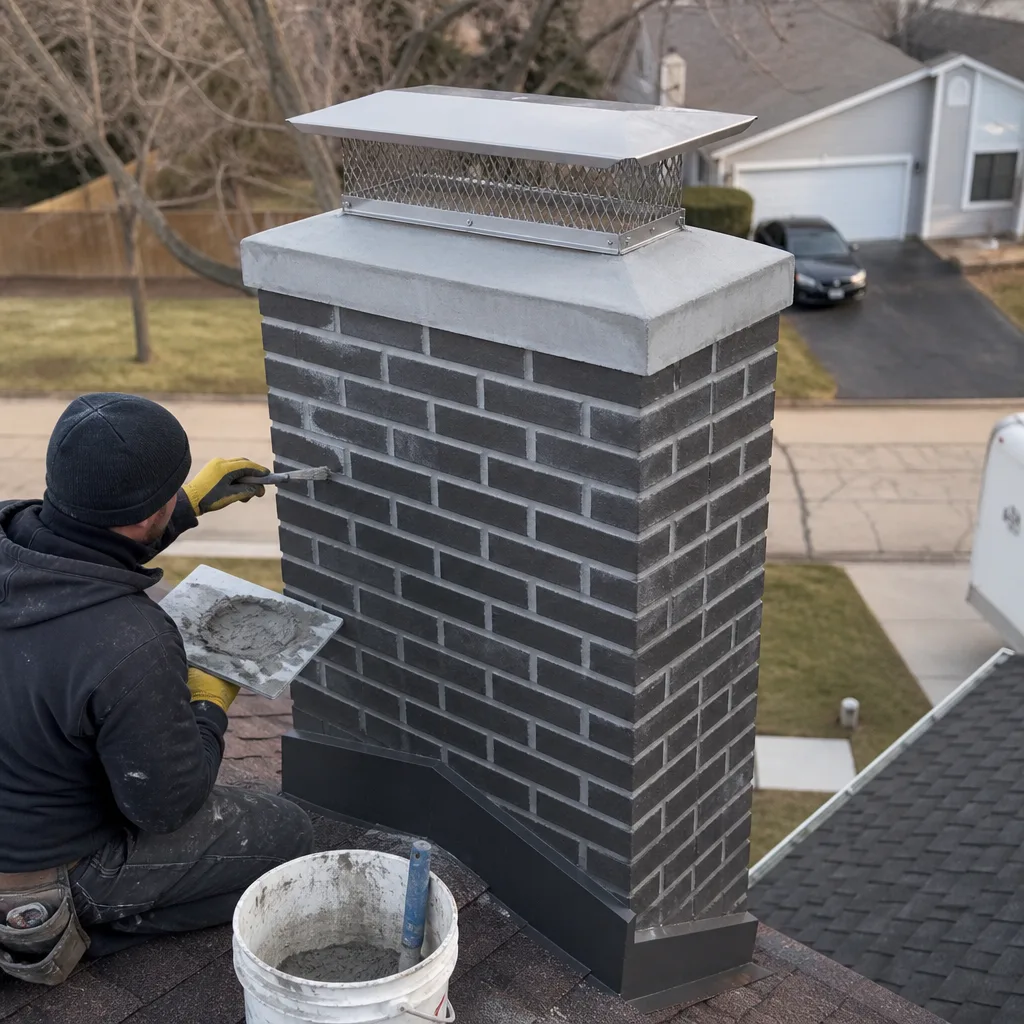 After
When to Call a Professional
Schedule a chimney inspection if you’ve lived in your Bolingbrook home for more than a year without one. Schedule a cleaning if you burn wood regularly, if you notice a smoky smell in the house when the fireplace is running, if you see dark staining around the damper, or if you can’t remember the last time anyone looked inside the flue. Trees near your chimney in older Bolingbrook neighborhoods mean animal entry is a real risk, so if you hear scratching sounds or see debris falling into the fireplace, call immediately. The same applies to your dryer vent: if clothes take longer than forty minutes to dry, if the laundry room gets abnormally hot, or if you smell a musty odor near the dryer, call a specialist. Summit Peak Chimney Sweep offers free estimates in Bolingbrook. Call (855) 382-3714 to schedule a diagnostic visit.
Frequently Asked Questions
A basic chimney sweep in Bolingbrook typically runs between $149 and $199, but that price rarely includes a proper video inspection. A full-service visit with Level 2 video inspection, cleaning, and a written photo report usually falls in the $275 to $425 range depending on the chimney’s condition and accessibility. Repairs are quoted separately and should always include specific material designations, not generic line items. Call (855) 382-3714 for an exact quote, and check our Chimney Sweep in Naperville pricing page for reference points in the same market.
The National Fire Protection Association recommends annual chimney inspection and cleaning as needed. For wood-burning fireplaces used regularly during Bolingbrook winters, that means an annual sweep to prevent creosote accumulation from reaching dangerous levels. Gas fireplaces need annual inspection but less frequent sweeping. Homes that burn wet or unseasoned wood may need cleaning twice per season. Book in summer when availability is better and prices are often lower than the September rush.
A video inspection is not an upsell. It’s the diagnostic baseline for any meaningful chimney assessment. Without a camera scan, the contractor cannot see cracks in the flue liner, separation in mortar joints, or hidden creosote pockets. A visual inspection from the roof or hearth catches surface problems. A video inspection catches everything else. Any contractor who quotes repairs without first doing a video scan is guessing, and you shouldn’t pay for guesses.
HeatShield is a ceramic resurfacing system that coats the interior of a deteriorating clay tile liner, restoring its structural integrity without demolishing the old liner. It’s significantly less expensive than a full reline and works well for liners with moderate cracking or joint deterioration. A full reline, typically using a flexible system like DuraFlex, is necessary when the liner has collapsed, when the flue geometry requires a new liner, or when the chimney is being converted to vent a different appliance. A specialist with access to both options will recommend the right fix based on camera evidence, not on what’s most profitable.
It depends on the contractor. A full-service specialist stocks materials like chimney caps, flashing, and HeatShield components on the service vehicle, which enables many repairs to happen the same visit. A sweep-only contractor diagnoses and leaves, then orders parts if they even offer repair at all. Ask before hiring: “If your camera finds a problem, can you fix it the same day, or will I need a second visit?” The answer tells you everything about the contractor’s capability.
Yes. We provide free estimates for chimney cleaning, inspection, and repair throughout Bolingbrook and the surrounding communities. Every estimate includes a video inspection of the flue interior, and we never recommend a repair without showing you the camera evidence that justifies it. Call (855) 382-3714 to schedule your free estimate.
The Bottom Line
Hiring a chimney cleaning contractor in Bolingbrook is not about finding the cheapest brush. For more guides & resources, explore our blog. It’s about finding someone who can diagnose what’s actually happening inside your chimney with camera evidence, fix it with professional-grade materials, and document the work so you can hold them accountable. That means verifying credentials through the certifying body, asking capability questions that go beyond certification, requiring video inspection as part of every quote, and comparing estimates on standardized scope rather than headline price. A specialist arrives prepared to sweep, repair, and restore in one visit. A sweep-only operator arrives with a brush and leaves with your money. The difference is visible in the questions you ask before you hire.
Written by the team at Summit Peak Chimney Sweep, serving Bolingbrook since 2018.