Last updated October 30, 2026
 Sweep & inspection
 Caps & crowns
 Flue relining
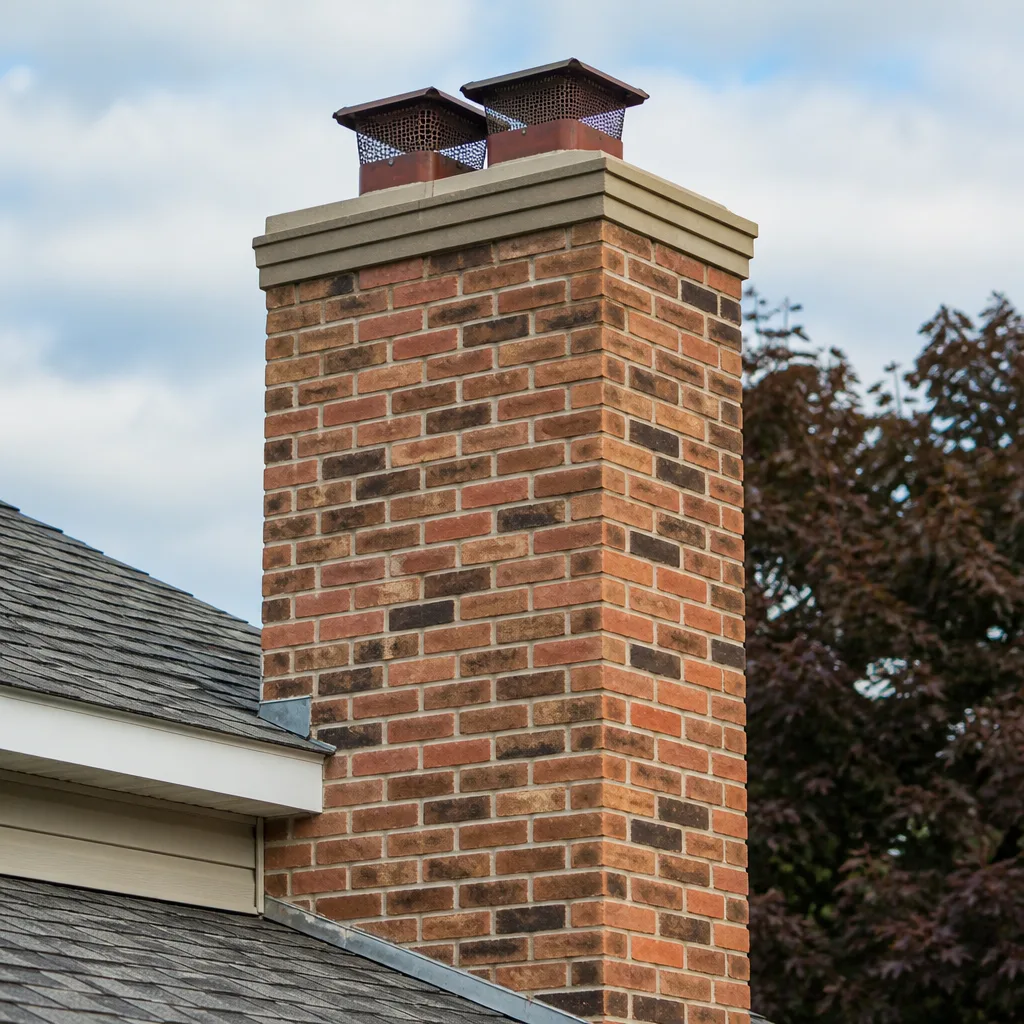 Masonry repair
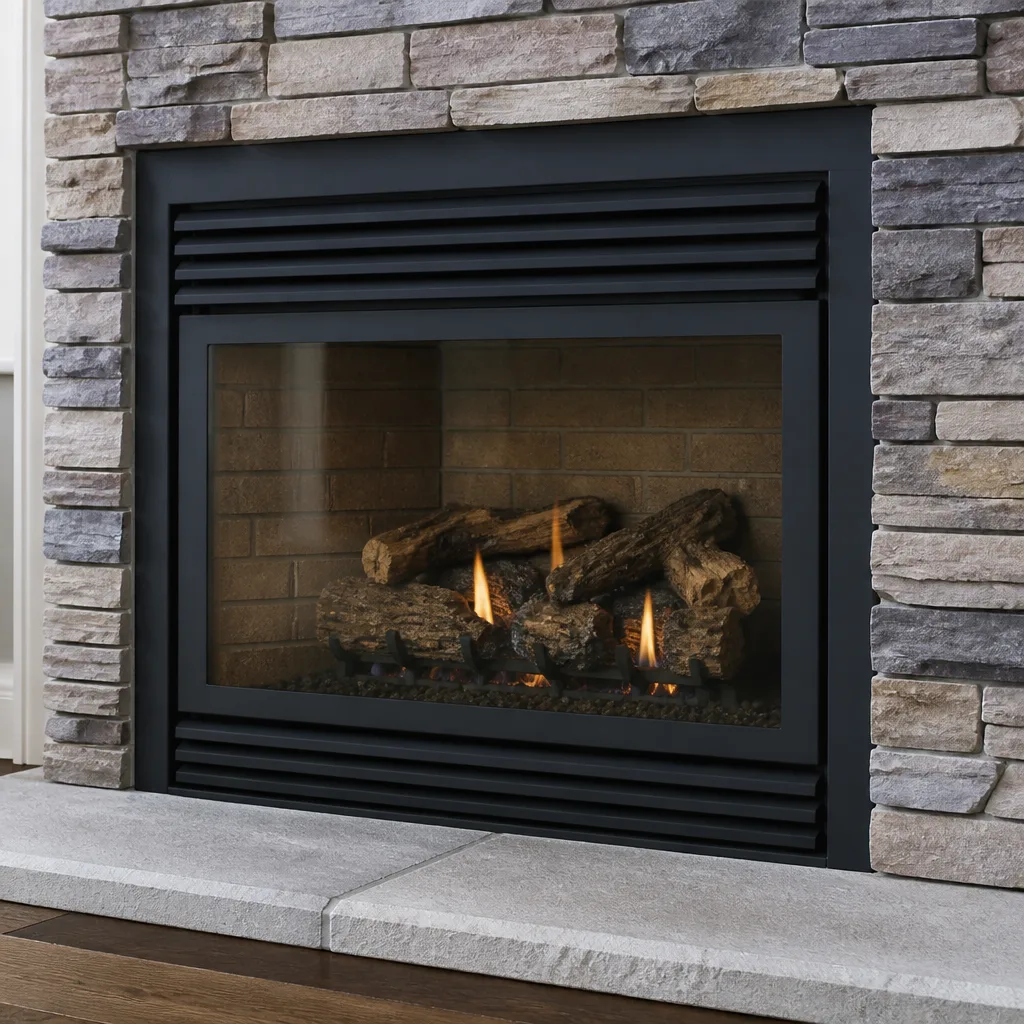 Gas fireplace service
Level 1 sweep and inspection to the NFPA 211 annual standard - flue, crown, cap, and flashing checked and photographed
Chimney sweep logs do not sweep chimneys. They loosen some creosote - which then falls where a brush and vacuum still have to collect it.
DIY vs Professional Chimney Cleaning: The Bolingbrook Homeowner’s Decision Guide
A rotary cleaning kit from a big-box store can remove Stage 1 creosote effectively. It cannot tell you that the tile liner behind that creosote has a longitudinal crack that will channel flames into your wall cavity on the next fire. That distinction, between cleaning what you can see and diagnosing what you cannot, is the entire DIY-versus-professional debate in one sentence. This guide gives Bolingbrook homeowners a working framework for deciding when a Saturday-morning sweep makes sense, and when the risks outrun the savings, alongside our more guides & resources on chimney care. We’ll cover what DIY can legitimately accomplish, which fuel types and system ages make it safer or more dangerous, the specific diagnostic equipment professionals use, what your insurance carrier expects, and the real math behind both paths.
Quick Answer
DIY chimney cleaning is a reasonable maintenance chore for Bolingbrook homeowners who burn seasoned hardwood in a modern, inspected fireplace with minimal creosote buildup and no history of liner damage. It is not a reasonable substitute when the chimney is older than 15 years, has ever burned pine or green wood, shows Stage 2 or Stage 3 creosote, is venting a wood stove or insert, or has not had a professional camera inspection in the last two years, as detailed in our guide on How to Hire a Chimney Cleaning Contractor in Bolingbrook: A Step-by-Step Guide. The core risk is not that you will fail to remove creosote; it is that you will remove the creosote that was hiding a crack, a separated flue section, or a failing mortar joint, and light the next fire believing the system is sound.
Styles & brands we work with
Table of Contents
- What DIY Chimney Cleaning Can Legitimately Accomplish
- The Diagnostic Gap: What a Brush Cannot Tell You
- The Insurance Reality for Bolingbrook Homeowners
- The True Cost Comparison: Equipment, Time, and Risk
- The Decision Framework: Three Conditions for DIY, Four Against
- Common Mistakes to Avoid
- When to Call a Professional
- Frequently Asked Questions
What DIY Chimney Cleaning Can Legitimately Accomplish
Let’s start by being fair to the do-it-yourselfer. A homeowner with a basic rotary cleaning kit, a drop cloth, and a few hours of daylight can remove loose soot and Stage 1 creosote from a straight-run masonry chimney. Bolingbrook homes built in the 1980s and 1990s often have simple vertical flues with minimal offsets, and those are the easiest systems to clean from the top down, though Seasonal Chimney Cleaning Care for Bolingbrook: Year-Round Homeowner’s Guide explains why timing still matters. If you burn dry oak or maple seasoned at least 12 months, if you burn hot fires rather than smoldering them, and if your chimney was professionally inspected within the last two years, a DIY sweep between inspections is not reckless. It is maintenance, the same way changing your own oil is maintenance between full service appointments.
What DIY cleaning does well:
- Removing loose soot and light creosote dust from the flue walls, especially in straight chimneys with an easy roof access.
- Clearing a light bird nest or leaf accumulation near the top of the flue, provided the obstruction sits above the damper and within arm’s reach of a brush.
- Verifying the damper opens and closes and that no obvious blockage sits in the firebox throat, which takes no specialized equipment.
- Keeping a wood stove’s interior baffle area free of ash between professional service visits, which is routine operator maintenance.
But here is what we have seen in Bolingbrook across hundreds of inspections: the homeowners who DIY their cleaning are the least likely to have caught the structural issues that actually cause chimney fires. They remove the symptom, creosote, and never see the disease underneath. The National Fire Protection Association’s position is blunt. NFPA 211, the standard governing chimney maintenance, states that chimneys must be inspected and maintained annually, and specifically notes that cleaning alone does not constitute an inspection. A mechanical sweep with a brush and rods removes deposits. It does not evaluate the liner, the flue tile joints, the crown, or the clearance to combustibles. An Illinois homeowner who sweeps without an inspection has done half the job, and it is the less important half.
The Diagnostic Gap: What a Brush Cannot Tell You
This is where the DIY-versus-professional debate actually lives. A chimney brush does one thing: it scrubs the interior surface of the flue. It tells you nothing about what that surface was hiding, what surrounds it, or whether the system can safely contain the next fire. The failure modes that cause Bolingbrook chimney fires are structural, not cosmetic, and every one of them sits behind the layer of creosote a DIY sweep removes.
A professional chimney inspection uses equipment that no homeowner owns or rents:
Camera Inspection Systems
A small waterproof camera on a flexible push rod travels the length of the flue and records what the interior actually looks like after cleaning. This is the tool that finds the longitudinal crack mentioned at the top of this guide. It finds separated flue tile joints where mortar has failed and the tiles have shifted, creating a gap through which heat and combustion gases can reach the framing. It finds perforated stainless liners rusted through from years of acidic condensate, invisible from the firebox below. Without this footage, a homeowner has no way to know whether the chimney that just looked “clean” is a fire waiting for the next cold Friday night.
Draft Testing
A properly drafting chimney creates a negative pressure that pulls smoke up and out. Draft depends on flue height, diameter, interior surface smoothness, outdoor temperature, and the home’s internal air pressure. A professional measures draft at the firebox and at the appliance outlet with a manometer, identifying restrictions that no brush can fix: an improperly sized flue for the appliance, an overpowering kitchen exhaust fan that reverses the draft, or a structural constriction from a shifted flue liner. Bolingbrook’s flat topography and suburban tree cover do not create the wind pressure problems of exposed rural chimneys, but interior renovation work, especially new high-efficiency furnaces and whole-house fans, can and does change draft dynamics unpredictably.
Smoke Pencil and Damper Evaluation
A smoke pencil, a small device that emits a controlled stream of visible smoke, reveals how air moves through the system at each damper position. It shows whether the damper seals completely when closed, which matters far more than most homeowners realize: a leaking damper in a Bolingbrook winter costs you heated indoor air around the clock, and in summer it lets air-conditioned air escape up the flue. It also reveals whether the chimney is experiencing backdrafting, where smoke spills into the room rather than rising up the flue. Backdrafting points to negative pressure in the house, a problem a brush will never diagnose.
Liner Integrity Assessment
Clay tile liners crack for predictable reasons: chimney fires no one knew about, water freeze-thaw cycling through Illinois winters, or simply 40 years of thermal expansion and contraction. Stainless liners fail from corrosion, especially when venting a gas appliance through an improperly sized or unlined masonry chimney. A professional assessment determines whether the liner can be restored, whether it needs a full replacement, or whether a product like HeatShield can resurface the flue with a ceramic refractory material. This is the diagnostic finding that most often changes a homeowner’s near-term plan. We have inspected chimneys in Bolingbrook where the homeowner planned a routine cleaning, and the camera revealed a liner that would have failed within one more burning season. That is information worth having before the fire, not after.
The Insurance Reality for Bolingbrook Homeowners
Here is the part of the DIY conversation that rarely appears in YouTube tutorials or big-box brush kit marketing: your homeowner’s insurance policy contains language about chimney maintenance, and it works against you if a DIY-cleaned chimney is involved in a fire loss.
Most Illinois homeowners policies cover fire damage as a named peril, subject to the policy’s conditions. Those conditions almost universally include a clause requiring the homeowner to maintain the property to prevent loss. In chimney terms, that means the carrier expects evidence of regular professional inspection and cleaning when a wood-burning fireplace is in active use. If a structure fire originates in or around the chimney and the investigation finds creosote accumulation as a contributing factor, the adjuster will ask a simple question: when was this chimney last professionally inspected? If the answer is “I clean it myself,” the claim enters contested territory.
The specifics vary by carrier and policy, but the pattern is consistent in our experience with Bolingbrook homeowners who have filed claims. The insurer may:
- Deny the claim outright on the grounds that the homeowner failed to maintain the system to NFPA 211 standards.
- Pay the claim but then schedule a policy non-renewal or a substantial premium increase, reasoning that the DIY cleaning indicates undisclosed wood-burning use or poor maintenance discipline.
- Reduce the payout by arguing comparative negligence, meaning the homeowner’s failure to professionally inspect contributed to the severity of the loss.
None of this matters until the night it matters. A $89 brush kit and a Saturday of work look less like savings when a $40,000 fire claim depends on a paper trail of professional inspections. The smartest Bolingbrook homeowners we encounter treat DIY cleaning as a supplement between professional visits, never as a replacement for the inspection record. The inspection report, the camera footage, and the receipt from a professional sweep are documentation that directly supports an insurance claim. A photo of your own brush in the chimney is not.
The True Cost Comparison: Equipment, Time, and Risk
Let’s do the math honestly, because the DIY pitch always starts with the satisfying simplicity of a one-time purchase beating a recurring service call. A basic rotary chimney cleaning kit with rods, a brush head, and a drill attachment runs $40 to $90 in Bolingbrook’s hardware stores. Add a ladder tall enough for a two-story roof line, somewhere around $150 to $300. You will want a drop cloth, gloves, safety goggles, and a N95 mask: another $30. Total initial outlay: roughly $220 to $420, assuming you already own a drill and do not need to rent a taller ladder or a roof harness. The first DIY sweep pays for the kit. The second one is “free.”
But the cost comparison only looks like a win if you ignore what the professional service includes. A professional chimney sweep in Bolingbrook is not selling you a brushing. The service includes:
- The cleaning itself, done with rotary or manual equipment matched to the flue size and creosote stage. Stage 3 creosote, the hard, shiny, tar-like glaze, will not yield to a homeowner’s brush. It requires chemical treatment followed by aggressive mechanical removal, and attempting it with a consumer kit simply polishes the surface of a still-dangerous fuel load.
- A camera inspection of the flue interior, producing footage you can watch and ask questions about. This is the diagnostic core that DIY cannot replicate.
- Documentation: a written report describing what was found, what was cleaned, and what needs attention. This is the paper trail your insurer wants.
- Time. A professional sweep for a typical Bolingbrook masonry fireplace takes 60 to 90 minutes, including setup and cleanup. A homeowner doing it for the first time should budget four plus hours, plus a second trip up the ladder because something was left in the garage, plus the vexing discovery that the brush does not quite reach the smoke shelf and there is no way to know if that matters.
Then there is the risk column, which is where the ledger tilts. In our experience, Bolingbrook homeowners who DIY their chimney cleaning fall into three categories: those who get lucky, those who do not, and those who never learn what they missed. Consider the value of knowing with certainty, with video evidence, that the flue liner is intact after cleaning. If a professional inspection finds a minor crack that can be sealed affordably, the cost of the professional visit just cancelled itself out against the avoided fire or the avoided full reline later. If a DIY cleaning happens to create a problem, and it can, displacing a flue tile with an aggressive rotary brush, cracking a clay liner with too much force, or dislodging a poorly seated rain cap, you will wish the professional ladder had been the one leaning against your house.
The Decision Framework: Three Conditions for DIY, Four Against
Here is the practical framework, stated without condescension. We have no interest in telling Bolingbrook homeowners they cannot touch their own chimneys. We are interested in telling them exactly when touching it is reasonable and when it is not. The three conditions for a reasonable DIY cleaning:
Three Conditions Where DIY is Reasonable
- Your chimney was professionally inspected within the last 24 months, with clean camera footage. You are not flying blind. You know the liner is intact, the flue tiles are seated, the crown is sound, and the only thing between you and a clean system is a layer of Stage 1 creosote dust. You are doing maintenance, not diagnosis.
- You burn seasoned hardwood exclusively and run hot, clean fires. If the wood has been split and stacked under cover for 12 months or more, and you avoid smoldering overnight fires, your creosote production is minimal. The material you are removing is soft and loose. A consumer brush can genuinely handle it.
- You have easy, safe roof access and a strong comfort level with ladder work. A one-story ranch in Bolingbrook with a low-pitch roof and a clean walking path to the chimney is a far different proposition than a two-story colonial with a steep-pitch roof and the chimney at the ridge line. If you are uneasy about the roof, the DIY project is not about chimney cleaning anymore; it is about fall risk, and the medical bill will dwarf any savings.
Four Conditions Where DIY Is Not Reasonable
- The chimney has not been professionally inspected in more than two years. You will be cleaning a system whose structural condition is unknown. Every stroke of the brush is now your responsibility, including any damage you may find and not know what it means.
- You burn pine, green wood, or manufactured logs. Pine and green wood produce copious Stage 2 and Stage 3 creosote. Manufactured logs, despite their marketing, produce a paraffin-based deposit that coats a flue in a manner consumer brushes are not designed to remove effectively. Bolingbrook’s big-box stores sell a lot of these logs for convenience, and we see the results every year.
- Your system vents a wood stove, insert, or gas appliance rather than an open fireplace. These systems have different liner requirements, different clearances, and different failure modes. Cleaning a wood stove chimney from the top down without understanding the connector pipe, the baffle, and the stove collar risks damaging the appliance and its venting. Gas appliance venting should never be treated as a DIY-brush project: the deposits are different, the clearances are different, and the stakes are carbon monoxide, not just smoke.
- You are buying this house, or you just bought it, and you have no idea what the chimney has been through. A pre-purchase chimney inspection is a separate conversation from routine maintenance, but the logic extends: when the system’s history is unknown, the first professional action should be inspection, not DIY brushing. The previous owner may have burned unseasoned wood for a decade, experienced a chimney fire they never mentioned, or never cleaned the system at all. The camera finds what the brush cannot.
If you fall into the DIY-reasonable camp, the best practice we can offer is this: do your cleaning as planned, then still schedule a professional inspection within the same season. The DIY work removes the deposits, making the camera inspection cleaner and more conclusive. The professional confirms the system is sound and adds to your inspection record. This is the highest-information, lowest-risk path, and it costs less than most Bolingbrook homeowners assume when they see the invoice for a cleaning that includes inspection.
For homeowners in nearby communities, our Chimney Sweep in Naperville service operates on the same framework: inspection first, cleaning second, documentation always. The logic does not change at the county line.
Common Mistakes to Avoid
- Assuming clean looking equals safe. Creosote removal reveals what was underneath. Without a camera, you cannot know whether what you revealed is a sound liner or a crack with a clean edge. This is the single most dangerous assumption we see among Bolingbrook DIYers.
- Using the wrong brush for the flue type. A wire brush on a stainless liner scores the surface and creates crevices for creosote to grab; a poly brush on heavy Stage 2 deposits does almost nothing. If you do not know your flue material, you should not be choosing a brush.
- Cleaning a chimney that has already had an undiagnosed chimney fire. A chimney fire often sounds like a freight train or a low roar, but some are quieter. The heat can crack clay tiles without obvious exterior damage. A homeowner who sweeps a fire-damaged chimney may dislodge displaced tiles and worsen the structural failure. The only way to know is a camera inspection before the brushing.
- Treating a gas fireplace chimney like a wood fireplace chimney. Gas venting deposits are not creosote; they are acidic condensate byproducts that attack liners and mortar in different ways. Brushing a gas chimney with wood-cleaning tools does nothing useful and can damage the venting. This is a system where the inspection is the entire point, not the sweeping.
- Relying on the chimney sweep log products sold in hardware stores. Chemical cleaning logs claim to reduce creosote, but they do not clean a chimney. They may make Stage 3 creosote slightly more brittle, which helps a professional with professional tools; they do not remove it, and they do not inspect anything. Treat them as a maintenance aid, never as a service replacement.
- Going up on a Bolingbrook roof in February because you finally got around to cleaning. Cold roofs are icy; asphalt shingles get brittle in freezing temperatures; ladders slip. If the outdoor temperature is below freezing or the roof has any frozen precipitation on it, this is not the day for DIY chimney work. The fall risk is higher than the chimney risk, and the chimney can wait.
- Cleaning the chimney but ignoring the dryer vent. A dryer vent is a chimney you never think about, and while you are in home-maintenance mode, it deserves the same attention. Lint accumulation in dryer exhaust vents is a leading cause of house fires in Illinois, yet most homeowners have never had the vent cleaned. If you are already thinking about venting safety, think about both systems. Our Dryer Vent Cleaning in Naperville service addresses exactly this, and the same logic applies in Bolingbrook.
When to Call a Professional
Call a professional when the system is unknown. A house you just bought, a chimney that has not been inspected in two-plus years, a fireplace that has burned manufactured logs all winter, a wood stove with a strange smell or sluggish draft. Call when you see Stage 2 or Stage 3 creosote, that shiny, hardened, black glaze that a consumer brush will not move. Call when the fireplace smokes into the room despite an open damper, because that is a draft or design problem, not a cleaning problem. Call when you hear animals in the chimney, when water stains appear on the ceiling near the chimney chase, when the mortar crown is visibly cracked and admitting water. And call when you want the documentation. The inspection report and camera footage from a professional service are what your insurance carrier wants to see if the unthinkable happens. In Bolingbrook, Summit Peak Chimney Sweep home offers free estimates and service at (855) 382-3714. If you have reached the end of this guide still uncertain which camp you are in, the answer is simple: schedule the professional inspection, then decide about the DIY brushing from a position of knowledge instead of guesswork. For those who need repair advice after the inspection, our Chimney Repair in Naperville page outlines the restoration options we commonly recommend, from flue resurfacing to liner replacement.
Frequently Asked Questions
A professional chimney sweep in Bolingbrook generally runs $179 to $350 for a standard open fireplace cleaning with inspection, depending on system height, creosote stage, and whether the flue has any accessibility challenges, as broken down in our Chimney Cleaning Cost Breakdown: The Bolingbrook Homeowner’s Reference for 2026. A wood stove or insert typically adds a modest amount due to the additional connector pipe and baffle disassembly. Houses with two-story flues, steep roofs, or difficult access sit at the higher end of the range. The camera inspection, in our view, is the value center of the service, not an add-on: you are paying for the diagnosis, and the cleaning is the prerequisite that makes the diagnosis possible. Call (855) 382-3714 for an exact quote for your Bolingbrook chimney; estimates are free.
You can physically brush a wood stove chimney, but we advise against it for several specific reasons, and this is one area where DIY plumbing or carpentry skills do not transfer. Wood stove systems include a connector pipe, a baffle assembly that must be removed and properly reseated, and often a catalytic combustor that can be damaged by careless brushing. The creosote produced by modern airtight stoves, especially when burning less-than-ideal wood, is frequently Stage 2 or Stage 3, which requires chemical treatment and rotary equipment with a higher removal aggressiveness than a consumer kit provides. And if you do the brushing and something is already wrong with the liner, you will not know it. Wood stoves are the system where our recommendation is strongest: leave this one to a professional sweep with stove-specific experience.
The NFPA standard and the Chimney Safety Institute of America both state that a chimney should be swept when it has accumulated 1/8 inch or more of creosote, and inspected annually regardless of buildup. For a Bolingbrook homeowner who burns one or two fires per week during a typical five-month heating season, that usually translates to a professional sweep every one to two years. If you burn more frequently, burn wood that is not fully seasoned, or use the fireplace as a primary heat source, plan on an annual cleaning. The annual inspection is non-negotiable even if the creosote is minimal, because it is the inspection, not the sweeping, that catches liner damage before it becomes a house fire. Call (855) 382-3714 and we can tell you what your system’s timeline looks like after one look at it.
It can, and the risk flows entirely against you. Illinois homeowners policies generally require that the homeowner maintain the chimney to a reasonable standard, and insurers interpret that standard as professional inspection and cleaning according to NFPA 211. A fire claim involving a chimney that was only ever DIY-cleaned gives the carrier grounds to contest the claim on maintenance failure. The cleanest defense is a paper trail: professional inspection reports, cleaning receipts, and camera footage from dates before the loss. A DIY cleaning between professional visits is unlikely to be held against you if the record shows regular professional oversight. A DIY-only history is a gamble that no amount of brush kit savings justifies, especially in Bolingbrook where winter fireplaces are heavily used. Call (855) 382-3714 to get your chimney documented properly.
Creosote is the condensed residue of wood smoke: a mixture of tar, soot, and unburned wood particles that deposits on flue walls as the smoke cools on its way up a chimney. Stage 1 is a fluffy, gray or brown dust that brushes off easily. Stage 2 is a granular, crystalline deposit, harder and more fuel-rich. Stage 3 is a shiny, hard, tar-like glaze that forms when creosote is repeatedly heated and cooled, and it is extremely difficult to remove without professional chemical treatment and rotary tools. Stage 3 creosote is also the most flammable form: it is essentially concentrated fuel coating the interior of your flue, and a hot fire or a chimney fire can ignite it. If you see shiny black coating in your chimney, do not light another fire until it has been professionally addressed. Call (855) 382-3714 and we can evaluate what you are seeing.
In the hands of a professional, chimney cleaning is safe for both roof and structure, and that is because we are not having to improvise. Roof protection includes drop cloths at the work area and on the path to the chimney, and we use equipment that matches the flue size without striking the interior liner with metal rods. A DIY cleaning on a Bolingbrook roof carries risks to the roof itself: dropped tools, scuffed shingles from a moving ladder, and the wear of foot traffic on an asphalt surface. The chimney risks are less visible but more consequential: a wire brush on a stainless liner, a rotary head that catches a flue tile and cracks it, or a rain cap dislodged by the brush and left unsealed. The chimney itself is not harmed by a professional cleaning, and the roof should show no evidence that we were there at all when we leave.
See the difference
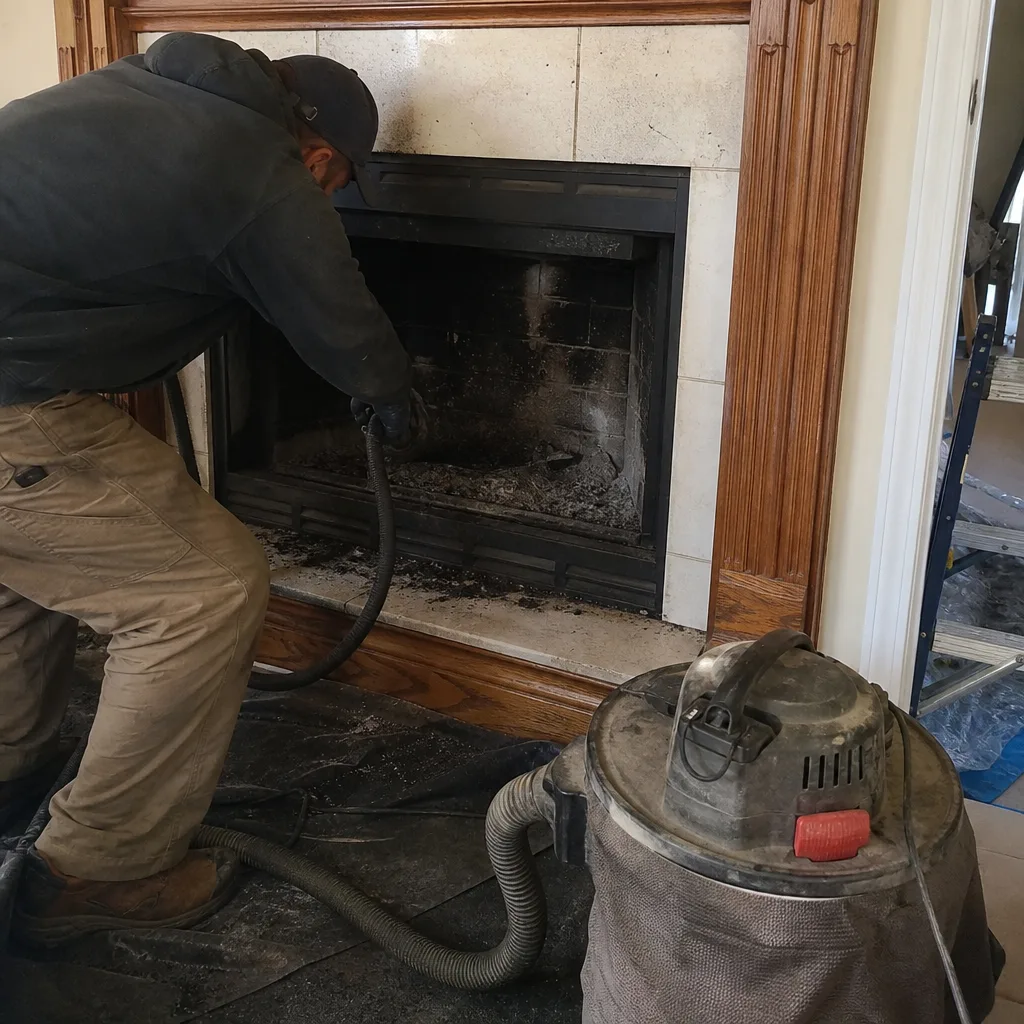 Before
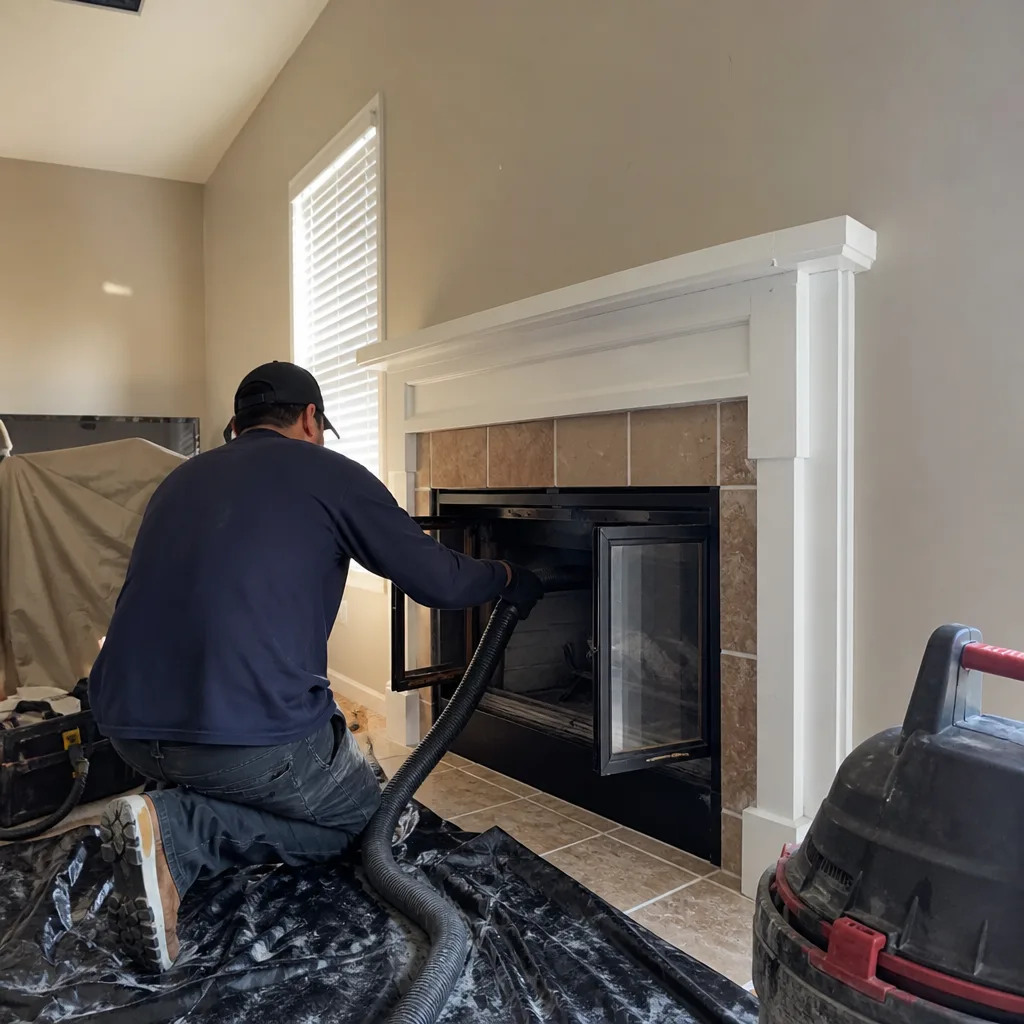 After
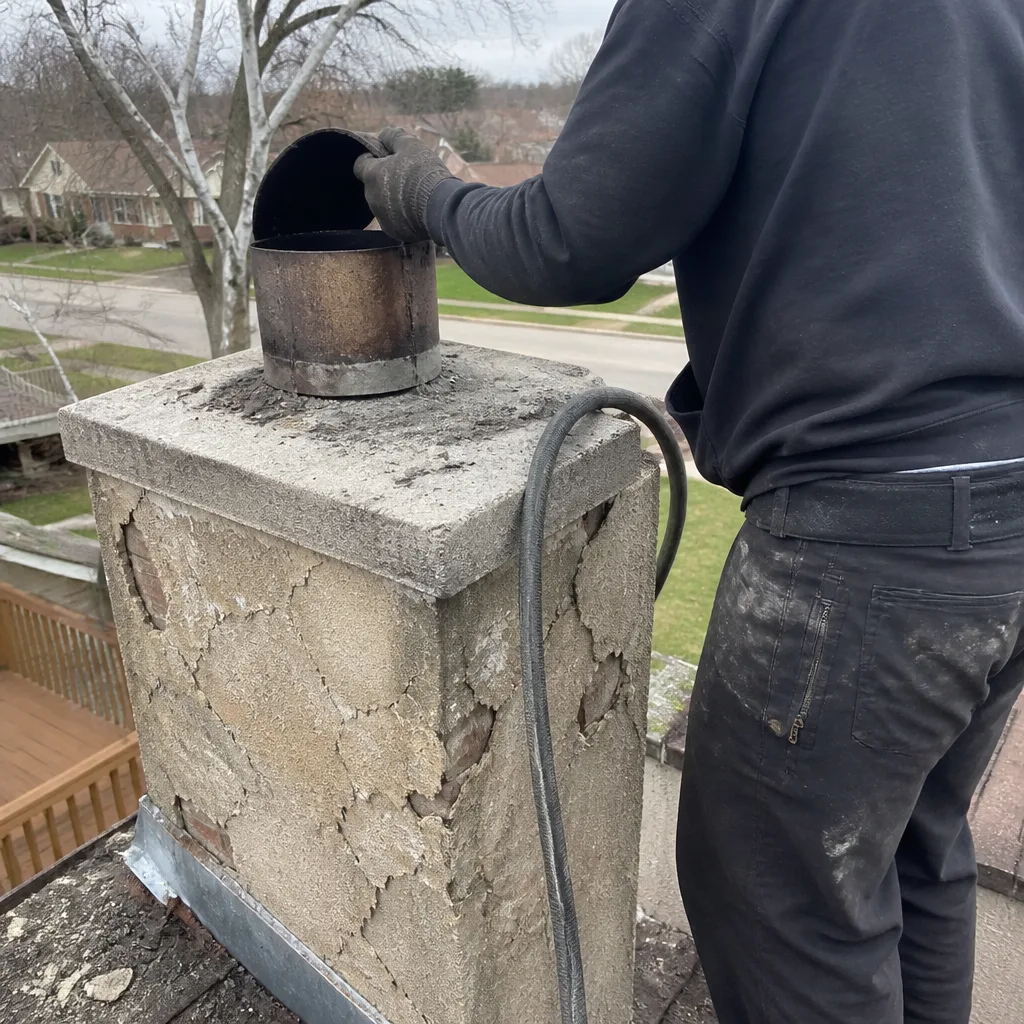 Before
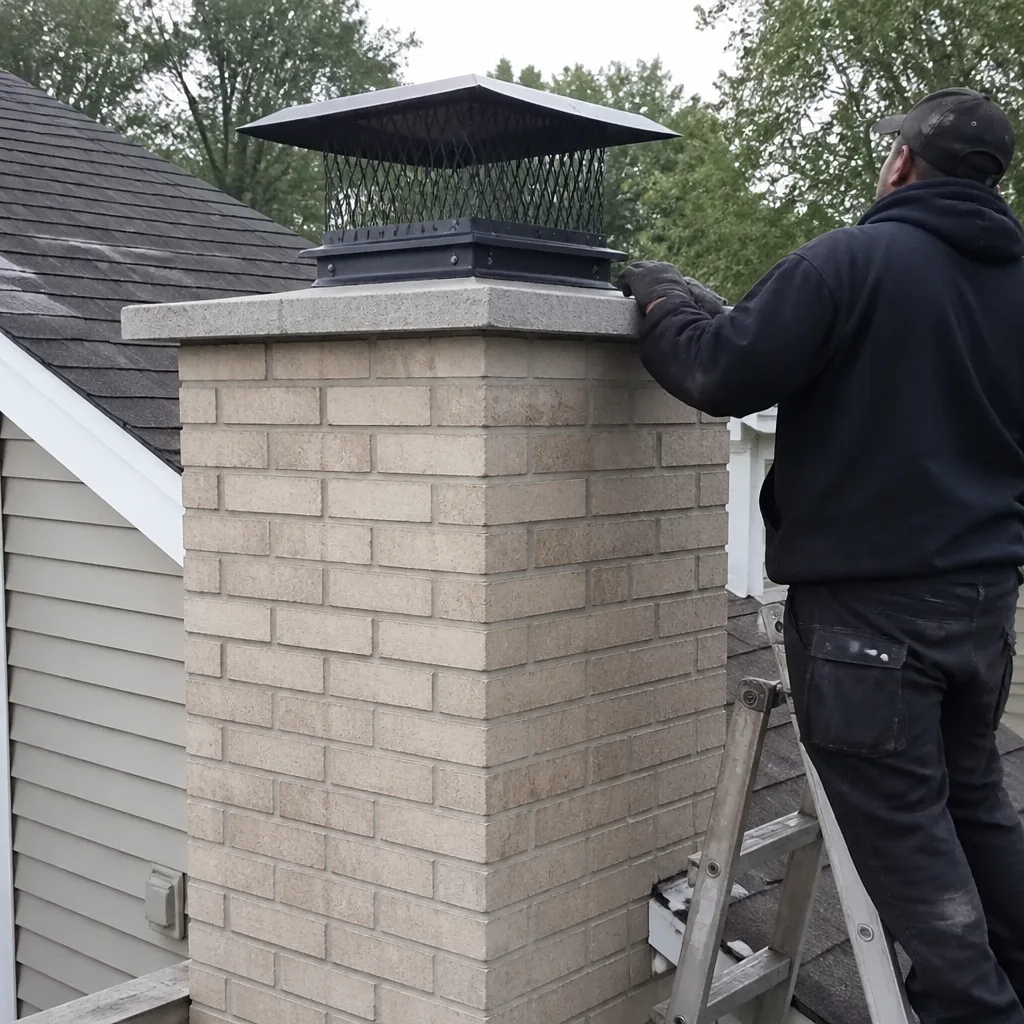 After
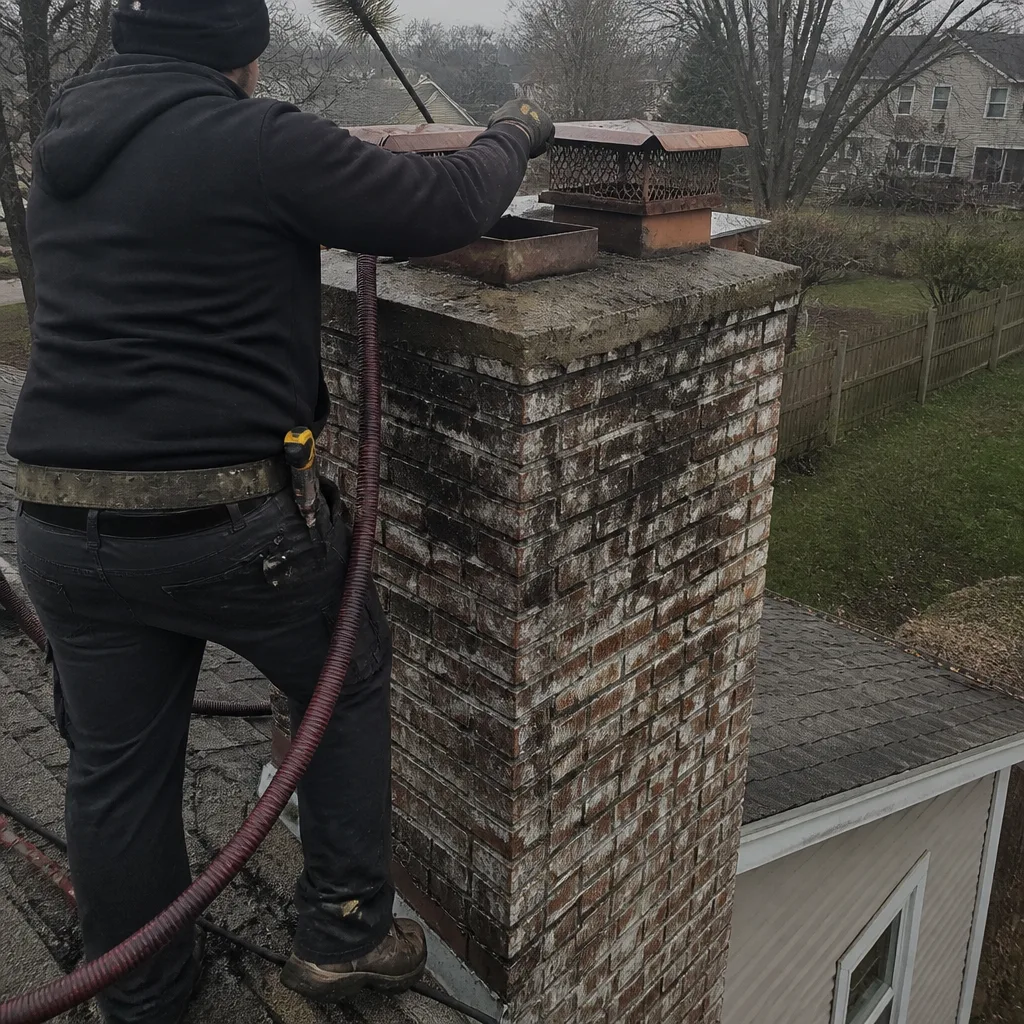 Before
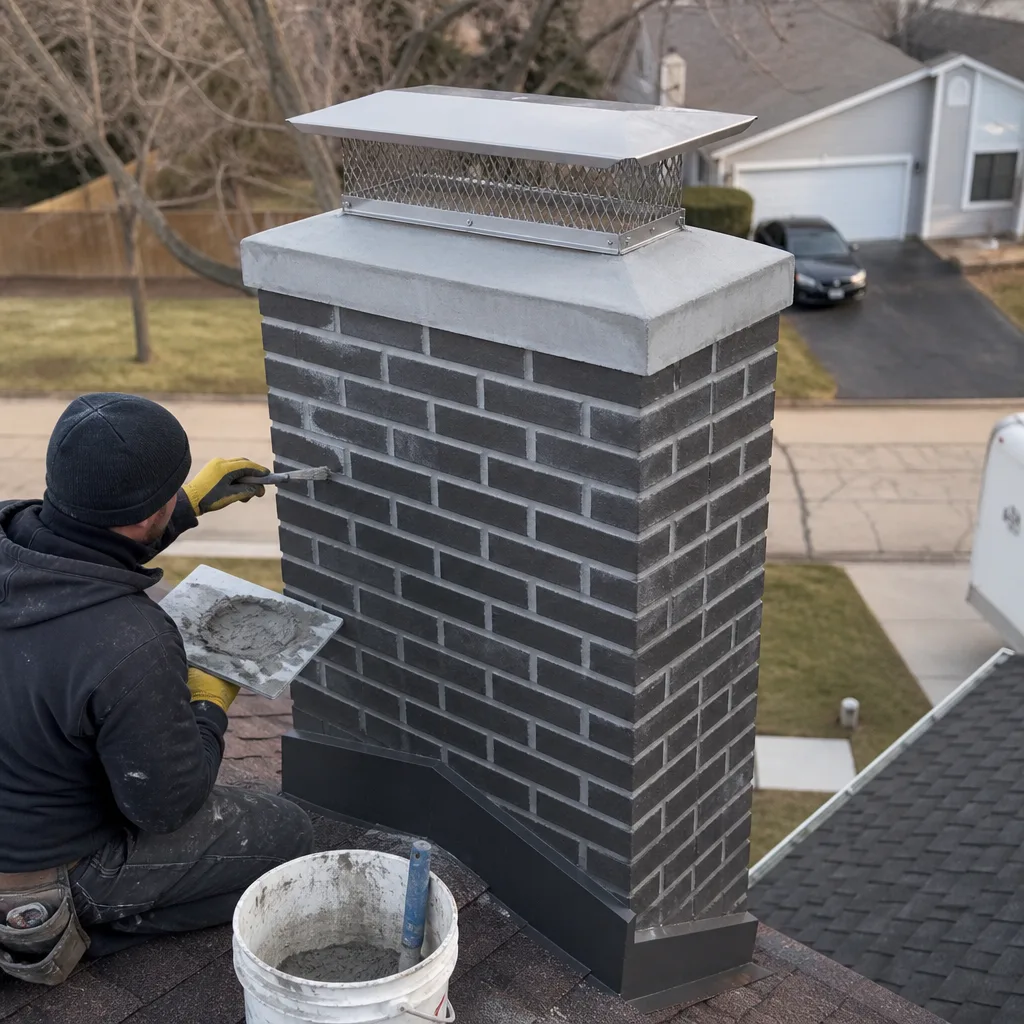 After
The Bottom Line
The DIY-versus-professional chimney cleaning question in Bolingbrook is not a question of capability; it is a question of information. You can remove creosote yourself. You cannot determine whether that creosote was sitting on a sound liner or a failing one. You can save $200 this year, and you can also re-light a fire in a chimney that was one flue tile away from a house fire, with no way to know it. The homeowners who get the most from their chimneys treat DIY cleaning as supplemental maintenance within a professional inspection routine, not as a substitute for it. For the cost of one or two family dinners, you get a documented professional cleaning, a camera inspection of the entire flue, and a paper trail that protects your family and your insurance standing. That is the decision framework. The brush is the easy part. The knowing is what you are actually paying for.
Contact
Need a professional chimney sweep or inspection in Bolingbrook? Summit Peak Chimney Sweep home offers free estimates and straightforward scheduling at (855) 382-3714. We serve Bolingbrook and the surrounding communities, and we are glad to walk you through what your chimney needs, or what it does not need, with camera footage and a straight answer either way.
Written by the team at Summit Peak Chimney Sweep, serving Bolingbrook since 2018.